The 7 steps Goodyear follows to manufacture a new tyre
 Francisco Javier
13 August 2014
7 min.
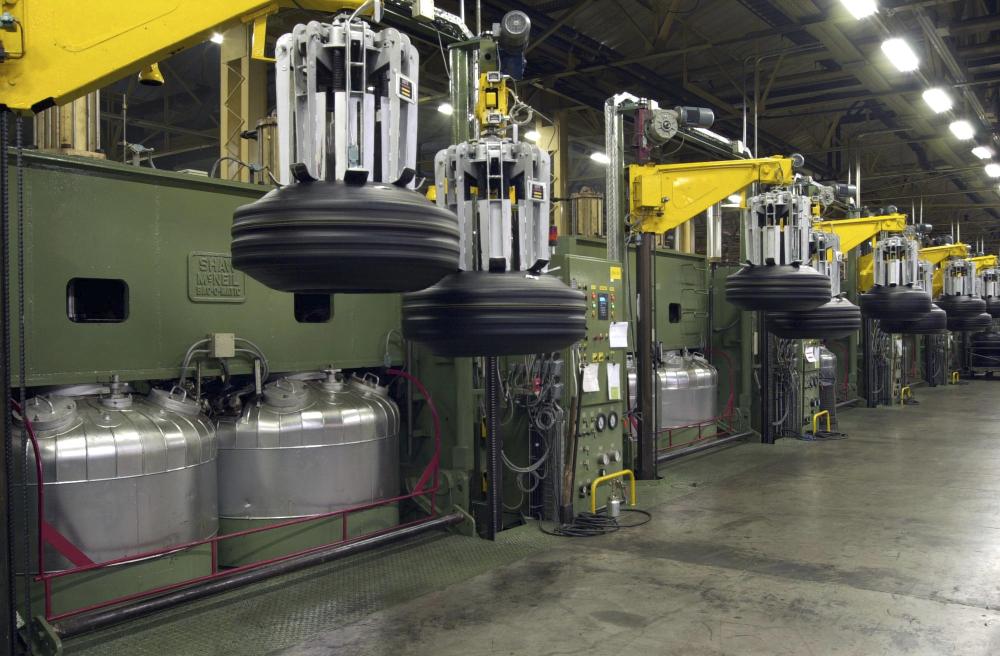
Wheels are one of the most important components, whether on a motorcycle, car, truck, and so on, because they keep the vehicle in contact with the ground and transmit everything that happens on the road. Therefore, their good condition and regular maintenance are essential.
To ensure that a tyre meets quality standards and delivers optimal performance, Goodyear reveals the 7 steps it follows in the tyre creation process, from the initial idea to final manufacture.
- Step 1: defining development objectives
Before developing a new product, which can take around three years or more, a study is carried out to assess customer needs in the relevant segment. This analyses market preferences and potential future opportunities.
Engineering teams also work closely with the various automotive manufacturers, defining the requirements of future models and designing a product that matches their exact specifications.
The main goal of this first phase is to establish specific performance targets for the new product. The different operating characteristics are taken into account, such as fuel efficiency, dry and wet grip, among many others. Goodyear considers more than 50 criteria when developing a new tyre.
- Step 2: the role of designers
There are two types of designers involved in the tyre development process. There is the creative designer, who focuses on the appearance of the tread and sidewalls. They take into account aspects such as aesthetics, consumer expectations and demands, and the brand. The technical designer focuses on the effects of the design on performance, that is, they work on criteria such as grip, resistance to aquaplaning, handling and noise levels.
Design can make all the difference when a customer has to choose between one tyre and another. For a tyre to succeed, it must offer advantages such as:
Functional technical design:
Given that performance is undoubtedly the most important criterion for Goodyear, the design must contribute to achieving the tyre’s performance objectives. Each tyre designed has different performance targets.
Enhanced performance communication:
When customers perceive that a tyre will meet their expectations and needs, this scores many points. Snow tyres and low-rolling-resistance tyres are examples of what can be conveyed through their appearance and design.
Improved perceived quality:
The details of the tread design are key to the final appearance of the product. Uniformity throughout is essential in a first-class product.
Increased product differentiation:
It ensures a coherent image across products from the same brand.
- Step 3: the structure
The structure of a tyre is a fundamental point in the manufacturing process. Materials such as steel, polyester or aramid fibres are used.
Radial tyres are the ones currently manufactured worldwide, although bias-ply tyres are still produced for certain applications. In radial tyres, interlaced steel cords run from the bead through the tyre, parallel to each other and at right angles to the centreline of the tread. This structure favours better control, fuel savings and longer tread life.
The larger the contact area and the more uniform the pressure distribution across the tyre, the better the traction and handling performance.
Tyre balance, its strength at high speed and in corners, grip, load and rolling resistance, braking distance and tread wear are the performance characteristics of a tyre that are directly influenced by how the carcass is manufactured.
Variations in the carcass can also be used to produce a tyre with specific exclusive features, such as the RunOnFlat technology, which uses reinforced sidewalls to support the tyre in the event of a total loss of pressure.
- Step 4: the compound and the art of mixing
Creating a compound requires bringing together all the necessary ingredients to make the substance homogeneous. To get the order right, up to seven stages may be needed. The ingredients used in the compound and the way they are mixed have a major impact on tyre performance.
There are different types of compound ingredients including natural and synthetic rubbers that provide elasticity and grip; carbon black, which makes up a high percentage of the rubber compound, providing reinforcement and abrasion resistance; and sulphur, which cross-links the rubber molecules during vulcanisation. In high-performance tyres, silica is used instead of carbon black to achieve low rolling resistance and excellent wet grip.
A passenger car tyre can contain up to 25 different components and more than 15 different compounds. An engineer uses more than 100 different materials to develop their compounds.
- Step 5: building the prototype
Once the specific materials, compounds, components and tread have been defined, prototype tyres are manufactured so they can subsequently be tested. The results are sent to the R&D department for review.
Prototype tyres are made by hand, and in Goodyear’s case this process takes place at the Innovation Centre in Luxembourg. The final product is a green tyre, as it has not yet been vulcanised; that process is carried out in a specific mould. Once vulcanisation is complete, the tyre is thoroughly inspected and sent to the testing department.
- Step 6: tyre evaluation
Tyres undergo rigorous testing in the laboratory, on test tracks and also on public roads. Tyres designed for specific needs require additional tests. This is the case for winter tyres, which are tested on snow, slush and ice in very low temperatures at facilities in Finland, Sweden, Switzerland and New Zealand.
Braking and handling tests are carried out on both wet and dry surfaces, aquaplaning tests on straights and bends, comfort and stability at high speed, and noise tests both on track and in a sound laboratory. Rolling resistance, tread wear and other tests are also carried out under controlled laboratory conditions.
All test results are transferred to the R&D department which will work to improve the areas where the tyre does not meet the pre-established performance parameters.
- Step 7: industrialisation and manufacturing
Once the prototype verification phase is complete, production infrastructure is prepared for the final manufacture of the product.
Once all the processes the tyre undergoes during manufacture are complete, a series of inspections and tests are carried out to verify that it meets the established quality standards before it is distributed for sale.
Source |
Goodyear


 Peugeot E-208 GTi: a battery-powered toy that revives the spirit of the 1980s sports cars
 New Lexus ES: luxury grows and goes electric
 First contact with the Dacia Sandero Hybrid 155: power and efficiency from €19,890
Deja un comentario