The cradle of American power: the evolution of the iconic Dodge Viper on video
 Javier López @jlopezbryan96
9 April 2018
3 min.
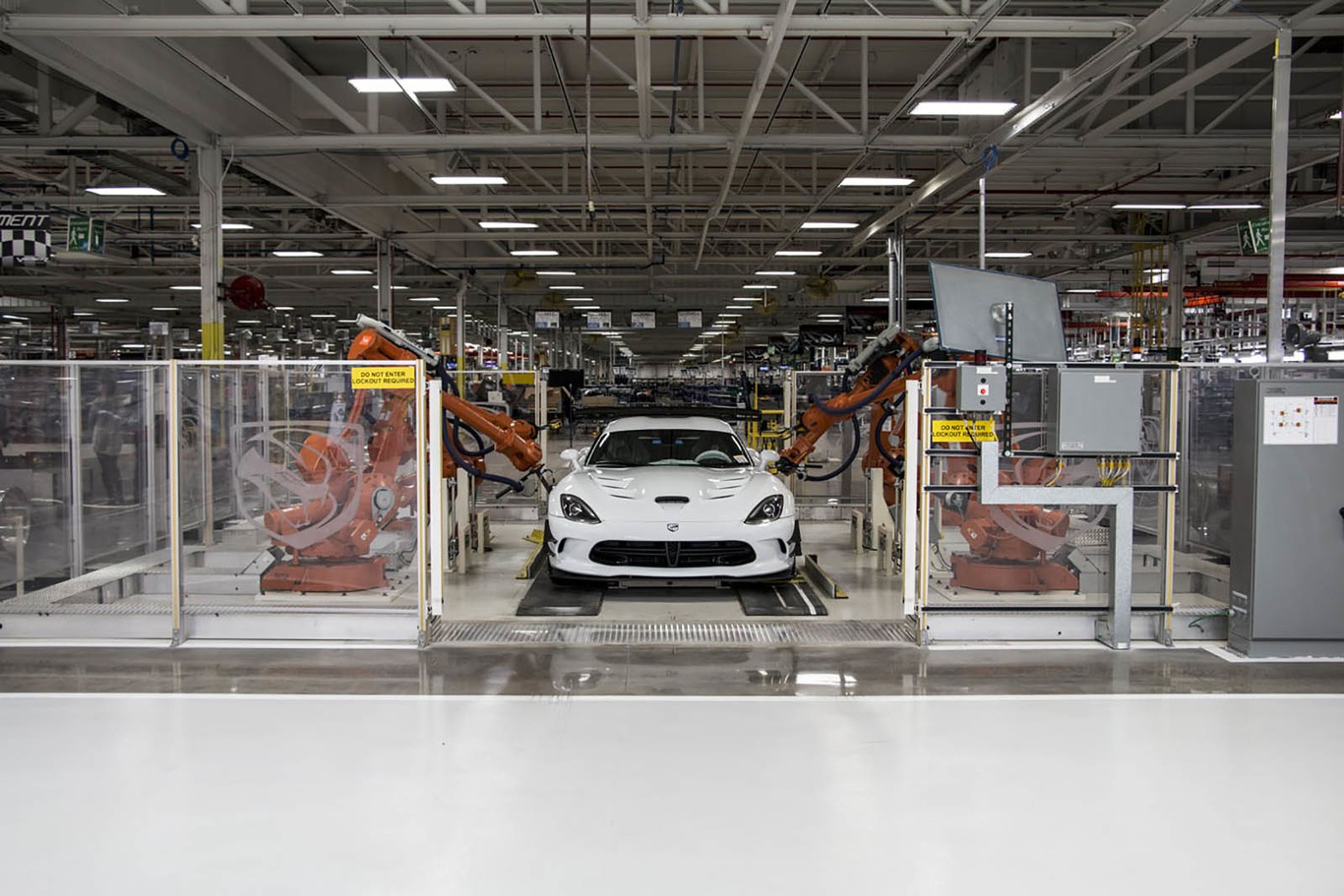
Dodge has been one of the most iconic brands of all time, something it has achieved thanks to the Viper. In this video we will review its entire history.
Every region of the world has a quintessential automotive representative, which is tasked with showcasing the main traits and characteristics of its country. In the case of the United States we have plenty to choose from, since muscle cars cover a large part of the automotive culture that America draws on but, if we look at supercars, we find the Dodge Viper. This model has been a clear reflection of raw American power and today we will analyse its journey through the world in this video.
It was in 1992 when the American company wanted to take on the Chevrolet Corvette and show Europeans that over there they also knew how to build real supercars. This model aimed to break the mould in every sense and it achieved this thanks to an imposing design and a mechanical package that exceeded the expectations of a high-performance vehicle of that era.
The first generation of the Dodge Viper had a very American design in which the long bonnet that dominated its silhouette housed a powerful engine tasked with transmitting all its force to the rear, a rear end that was short and featured a small tailgate for access to the boot. At the same time, its timeless design allowed it to quickly carve out a niche among its rivals. It housed within an 8.0-litre V10 capable of producing 400 CV, a figure worthy of brands such as Ferrari or Lamborghini.
After several versions of this first generation, which added more power and safety improvements, it was not until 2003 that we saw the second Dodge Viper. The differences were considerable, since 11 years separated the two models, but the American supercar still exuded that raw and radical essence so characteristic of it. In this second generation we find a clearly more modern design and an 8.3-litre V10 engine producing 500 CV.
The aesthetic innovations are found in much more contemporary aerodynamics and in a detail that further defined the Viper’s personality, the side exhaust outlets. As with the first model, the company gradually presented different versions of the supercar, until in 2008 the most radical variant, the Viper ACR, hit the market. These initials gave the Dodge a much more radical look and, at the same time, a state of tune to match.
The ACR became the most powerful Dodge Viper ever built, since the American company managed to extract up to 600 CV from its engine, a figure that allowed it to become king of the circuits. However, that title wobbled when in 2013 Dodge presented the third and final generation of the Viper. On this occasion the company also made sure its supercar did not lose an ounce of identity, so its silhouette remained faithful to the one we saw at the start of the 90s.
https://www.youtube.com/watch?v=Nh8t51CHd2E
Its engine continued to be the same V10 block that brought to life all the previous generations, but with an output of 640 CV. The ACR also wanted to win us over with this latest model and, as with the previous one, Dodge managed to create one of the most effective vehicles on the track. This version develops 645 CV and features an imposing rear spoiler that keeps the most radical Viper pinned to the tarmac.
Without a doubt, this model has marked a before and after in the automotive history of America and, although its production is in decline and we do not know whether we will see a fourth generation, the Dodge Viper has carved out a place in our hearts.


 Kia offers an electric range of 10 models, 50 versions and 400 possible combinations
 The seven finalists for the 2027 European Car of the Year (COTY) are exclusively electric
 Peugeot E-208 GTi: a battery-powered toy that revives the spirit of the 1980s sports cars
Deja un comentario