The EfficientDynamics technology of BMW celebrates 10 years of success
 David Lopez @espacionblanco
12 February 2018
5 min.
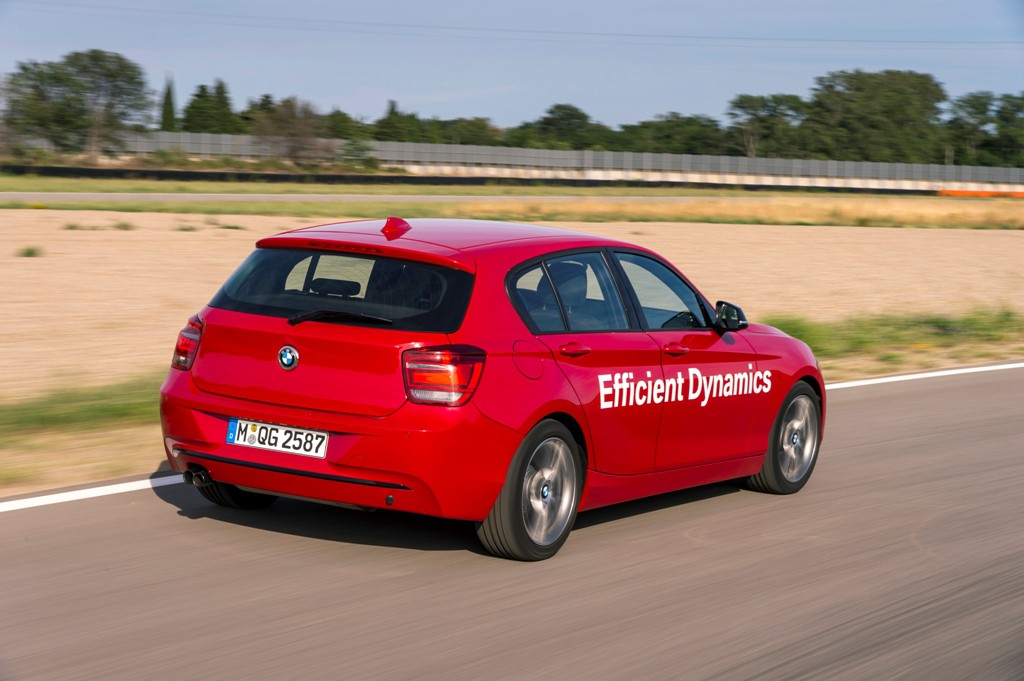
10 years ago EfficientDynamics was born, a collection of technologies designed to create efficient models with lower fuel consumption and emissions
Today, the vast majority of brands, if not all of them, incorporate technical solutions into their engines to achieve reductions in consumption and emissions that were unthinkable just a few years ago, all without losing an ounce of power, quite the contrary, since in many cases power has increased. However, most of these technologies are still relatively recent implementations, due to the latest reforms applied by governments regarding pollution.
Although nobody was yet imposing requirements as radical as they are today, some brands got ahead of successive regulations, as demonstrated by BMW with its now famous EfficientDynamics technology. This technology is relatively recent: this year marks the tenth anniversary of its introduction, a technology that has allowed BMW to reduce its average CO2 to 124 g/km, a 48.6% reduction compared to the 186 g/km of 2006.
All this reduction in CO2 emissions begins with introducing EfficientDynamics technology into the engines. All the 3, 4 and 6-cylinder units not only share TwinPower Turbo technology, but also share up to 60% of their components with the same combustion system, with 40% commonality between petrol and diesel engines, such as the intake and exhaust. Among engines using the same fuel we find shared elements, such as the High Precision Injection direct injection system for petrol engines, or the common rail for diesel engines, among others.
Alongside these engines, since the first generation of EfficientDynamics the Auto Start&Stop system has been associated with them. It has evolved to such a degree that, by processing data received from a series of sensors, it is able to decide when to switch the engine off or on. For example, when the vehicle in front of us moves off, the Start&Stop system acts automatically when it detects the movement and starts the engine without delay, preparing the vehicle so the driver can resume driving.
Connectivity technology has also evolved enormously over these 10 years, with the birth of the BMW Connect app, which includes the ECO PRO function. This function analyses various parameters of our driving style, offering advice to improve it and make it more efficient. If we press the ECO PRO button, parameters for the accelerator, transmission and climate control are automatically adjusted, helping to reduce consumption by up to 20%. Another way to reduce consumption through efficient driving is to change gear at the appropriate moment, as indicated on the instrument cluster; by following its indications we can save 4% in fuel.
However, EfficientDynamics technology is not based solely on engines: to reduce consumption and emissions, other important factors also play a role, such as weight and aerodynamics. Regarding weight, BMW has developed the BMW LightWeight system, reducing weight by using parts or components wherever it truly can, while guaranteeing body rigidity and occupant safety. In terms of aerodynamics, BMW has introduced innovative systems that reduce consumption and emissions and extend engine life, such as the AirVent Control, which closes the air intakes located at the front of the radiator as needed, the active rear spoiler, or the AirCurtain, which reduces air resistance at the wheel arches.
Another place where a vehicle loses energy, and consequently worsens its consumption, is during braking and in the quality of the tyres used. For braking, BMW uses Brake Energy Regeneration, which controls the alternator to recharge the battery with the excess kinetic energy produced during braking, when the vehicle is coasting or decelerating, saving 3% in fuel. In this regard, driving on the tyres specified by BMW will also help reduce emissions and consumption, as these have been developed jointly with tyre manufacturers to reduce rolling resistance.
EfficientDynamics technology has evolved in the areas above to what we know today, but it has also evolved so that it can be applied to the electric and hybrid vehicles of BMW. The BMW eDrive architecture could be described as the crown jewel of the EfficientDynamics offering in electric models. It allows driving on electric power alone, which means zero emissions, together with the possibility of covering long distances when the combustion and thermal drive systems work together. Furthermore, together with the eBoost function, they can combine their torque during acceleration. Finally, the eDrive technology is modular, and can be adapted and optimised for each model of BMW, which also reduces costs.


 Peugeot E-208 GTi: a battery-powered toy that revives the spirit of the 1980s sports cars
 New Lexus ES: luxury grows and goes electric
 First contact with the Dacia Sandero Hybrid 155: power and efficiency from €19,890
Deja un comentario