The electric SUVs with the most boot space
 Iván Navarro
11 August 2026
5 min.
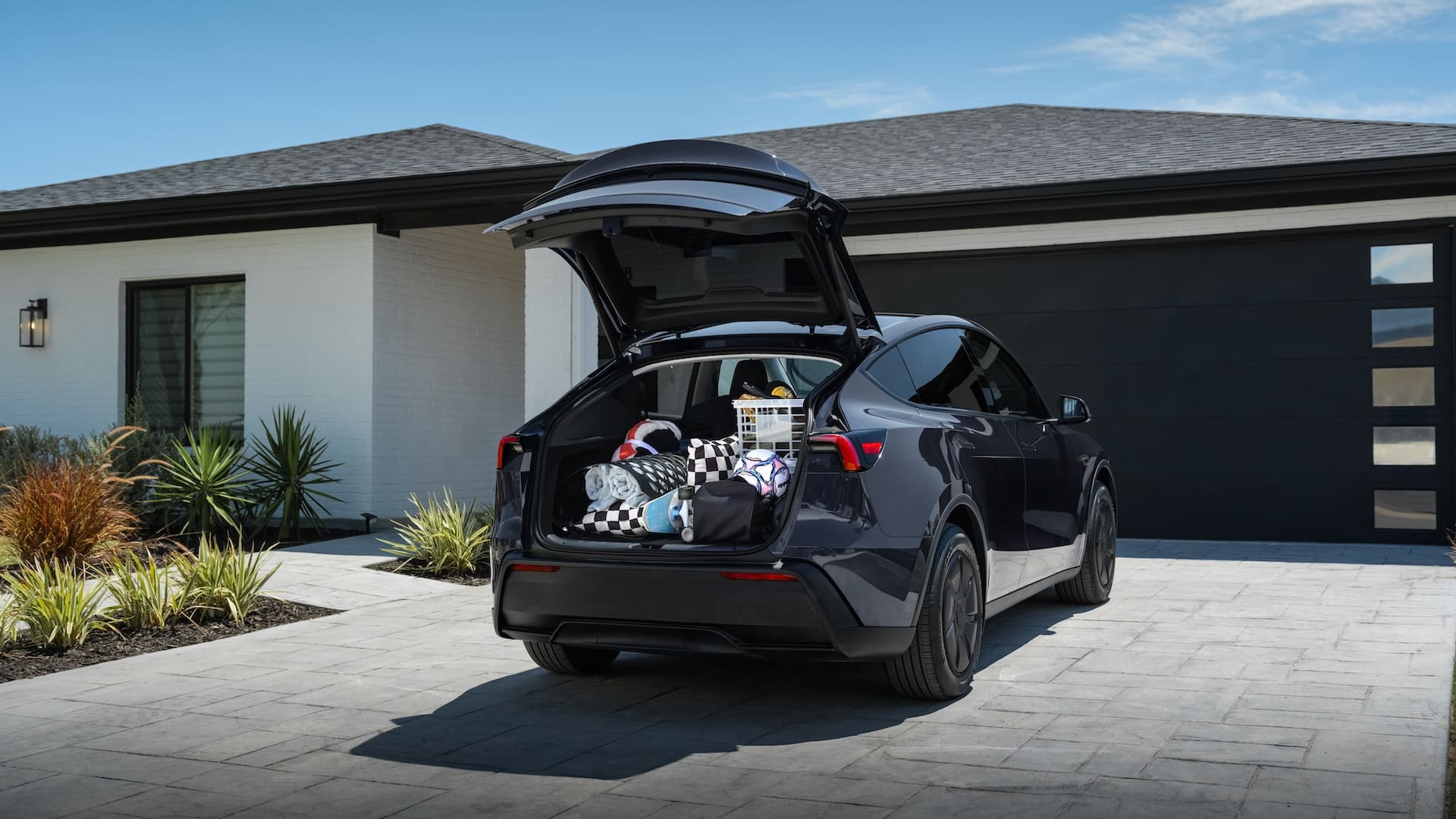
Premium ranking of 100% electric SUVs on sale in Spain with the largest boot capacity. VDA litres, frunk and modularity for family use and long journeys.
The boot is the silent yardstick of any SUV. In electric mobility, however, cargo space has become a decisive argument: dedicated platforms free up centimetres where transmission tunnels used to be, and many models add a front frunk that revives the old pleasure of having an extra compartment for cables or delicate luggage. We review the electric SUVs with the most boot space that can be registered in Spain today, ranked by real litres under the VDA standard.
Why boot space leads on a family electric SUV
An electric SUV is almost always bought with families and long distances in mind. The battery occupies the underfloor, the wheelbase grows and the silhouette stretches: the result is a cabin with dimensions unheard of in combustion vehicles of the same size. The cargo capacity of an electric SUV is measured not only in litres, but in useful geometry: flat floor, discreet wheel arches, double floor and front compartment.
How we measure: VDA litres, frunk and modularity
We take the VDA method (200x100x50 mm blocks) as our reference, with the rear seats in their normal position. Where it exists, we add the frunk capacity — decisive for storing the Mode 3 cable — and we assess modularity: 40/20/40 split bench, sliding seats, double floor and maximum load with everything folded down.
Tesla Model Y — from €40,990
The Model Y remains the benchmark. It offers 854 litres with five seats in use (Tesla measurement, a generous VDA-equivalent) plus 117 litres of frunk. With the second row folded, the figure rises above 2,100 litres and an almost flat floor appears that can take an inflatable double mattress. Its great asset is the electric seatback modularity and a huge double floor under the load area.
| Power kW | Power CV | Top speed | Range | Consumption | Label | Fuel |
|---|---|---|---|---|---|---|
| 220 kW | 299 CV | 201 km/h | 525 km | 14.9 kWh/100 km | Zero | Electric |
Kia EV9 — from €73,500
The Korean giant plays in a different dimensional league. With its three rows in use it offers 333 litres, but with the third row folded the capacity rises to 828 litres VDA and exceeds 2,318 litres with everything folded. It also adds 52 litres of frunk in rear-wheel drive. It is today the reference family electric SUV for seven real seats.
| Power kW | Power CV | Top speed | Range | Consumption | Label | Fuel |
|---|---|---|---|---|---|---|
| 283 kW | 385 CV | 185 km/h | 505 km | 20.2 kWh/100 km | Zero | Electric |
Mercedes-Benz EQS SUV — from €116,000
The tall saloon from Stuttgart takes advantage of its 5.13 metres to deliver 645 litres in five-seat configuration and up to 2,100 litres with the second row folded. It has no frunk — the front compartment houses the high-voltage electronics — but the double floor and the electric rails on the dashboard make up in luxury what it loses in front storage.
| Power kW | Power CV | Top speed | Range | Consumption | Label | Fuel |
|---|---|---|---|---|---|---|
| 265 kW | 360 CV | 210 km/h | 614 km | 21.7 kWh/100 km | Zero | Electric |
BMW iX — from €86,500
The flagship from Munich comes with 500 litres that reach 1,750 litres with the second row folded. The surface is completely flat and the opening is electric and huge. No frunk, but a system of rails and hooks designed for long journeys.
| Power kW | Power CV | Top speed | Range | Consumption | Label | Fuel |
|---|---|---|---|---|---|---|
| 300 kW | 408 CV | 200 km/h | 600 km | 20.9 kWh/100 km | Zero | Electric |
Audi Q8 e-tron — from €84,000
The premium SUV from Ingolstadt offers 569 litres that rise to 1,665 litres with the second row folded, and adds 62 litres of frunk for the cable. It is the perfect balance between luxury and practicality for the demanding traveller.
| Power kW | Power CV | Top speed | Range | Consumption | Label | Fuel |
|---|---|---|---|---|---|---|
| 250 kW | 340 CV | 200 km/h | 505 km | 22.5 kWh/100 km | Zero | Electric |
Volvo EX90 — from €84,000
The Swedish model picks up the baton from the XC90 with 365 litres behind the third row, 655 litres with six seats and up to 1,915 litres with everything folded. Frunk of 37 litres and a compartmentalisation designed for the Nordic customer who travels with everything.
| Power kW | Power CV | Top speed | Range | Consumption | Label | Fuel |
|---|---|---|---|---|---|---|
| 245 kW | 333 CV | 180 km/h | 564 km | 20.9 kWh/100 km | Zero | Electric |
Skoda Enyaq — from €41,500
The Czech model stands out as the electric car with the best boot in the mid-size segment: 585 litres that grow to 1,710 litres with the seats folded. No frunk, but with the usual “Simply Clever” features: ice scraper, umbrella and dividing net included.
| Power kW | Power CV | Top speed | Range | Consumption | Label | Fuel |
|---|---|---|---|---|---|---|
| 150 kW | 204 CV | 160 km/h | 563 km | 16.1 kWh/100 km | Zero | Electric |
Hyundai Ioniq 5 — from €39,000
The Korean model with retro-futuristic lines declares 527 litres expandable to 1,587 litres and adds 57 litres of frunk in rear-wheel drive. The sliding centre console and the seats with relaxation function make it a small rolling suite.
| Power kW | Power CV | Top speed | Range | Consumption | Label | Fuel |
|---|---|---|---|---|---|---|
| 168 kW | 228 CV | 185 km/h | 507 km | 16.9 kWh/100 km | Zero | Electric |
The role of the frunk: the forgotten boot
The front compartment, absent in German premium brands, makes a practical difference. Tesla (117 l), Audi (62 l), Hyundai (57 l), Kia (52 l) and Volvo (37 l) use it for Mode 2 and 3 cables, freeing the main boot from dirty items.
Compact, mid-size and large: how to choose
In urban compacts (under 4.6 m) the Skoda Enyaq and Hyundai Ioniq 5 are the rational choice. In premium mid-size models (4.7–4.9 m) the Tesla Model Y and Audi Q8 e-tron lead. In large and seven-seat models, the Kia EV9, Volvo EX90 and Mercedes-Benz EQS SUV have no rival.
Summary table and ranking
| Model | Boot (l) | Frunk (l) | Range | Price from | Score /10 |
|---|---|---|---|---|---|
| Tesla Model Y | 854 | 117 | 525 km | €40,990 | 9.5 |
| Kia EV9 | 828 | 52 | 505 km | €73,500 | 9.3 |
| Mercedes EQS SUV | 645 | — | 614 km | €116,000 | 8.7 |
| Volvo EX90 | 655 | 37 | 564 km | €84,000 | 8.8 |
| Skoda Enyaq | 585 | — | 563 km | €41,500 | 9.0 |
| Audi Q8 e-tron | 569 | 62 | 505 km | €84,000 | 8.6 |
| Hyundai Ioniq 5 | 527 | 57 | 507 km | €39,000 | 8.9 |
| BMW iX | 500 | — | 600 km | €86,500 | 8.4 |
Frequently asked questions
Which electric SUV with the most boot space is on sale in Spain?
The Tesla Model Y, with 854 litres of main capacity plus 117 litres of front frunk, leads its category in its segment.
Which seven-seat electric SUV offers the most usable cargo capacity?
The Kia EV9 reaches 828 litres with the third row folded and exceeds 2,300 litres with everything folded, making it the family benchmark.
Is the frunk worth it in an electric SUV?
Yes: it houses the Mode 3 charging cable without dirtying the main boot and improves organisation on long journeys.
Which compact electric SUV offers the most space per euro?
The Skoda Enyaq, with 585 litres from €41,500, is the most balanced option between price, range and cargo capacity.

 Peugeot E-208 GTi: a battery-powered toy that revives the spirit of the 1980s sports cars
 New Lexus ES: luxury grows and goes electric
 First contact with the Dacia Sandero Hybrid 155: power and efficiency from €19,890
Deja un comentario