The future of Porsche engines, conditioned by the upcoming Euro 7
 Miguel Lorente
21 May 2020
4 min.
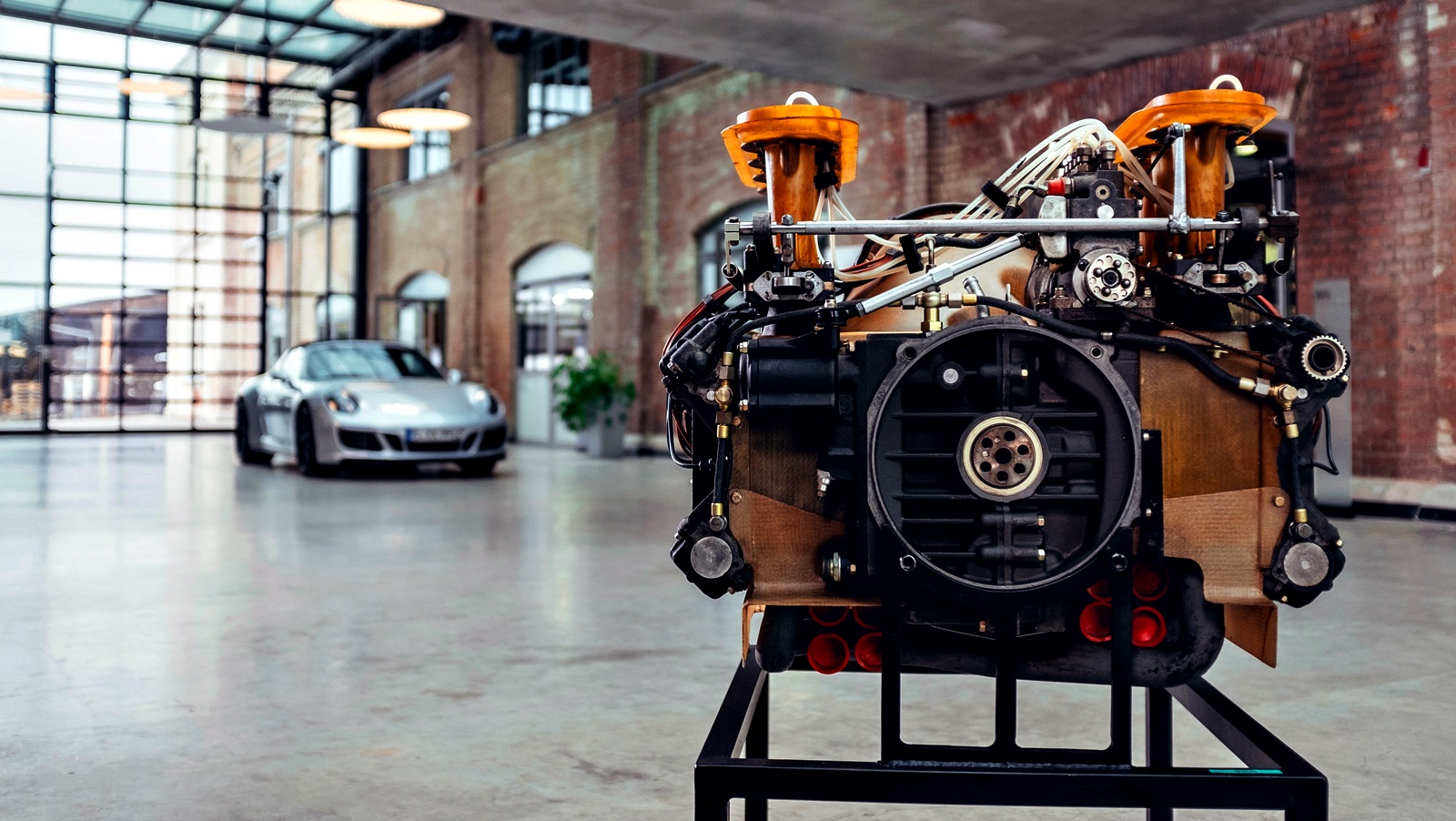
It is no secret that the automotive industry is going through a critical stage. Not only because of the unexpected Covid-19 pandemic that shakes, and will shake in the immediate future, its very foundations, but also because the increasingly restrictive regulations that favour air quality and restrict emissions of toxic and greenhouse gases are weighing ever more heavily on manufacturers, who are studying without delay solutions to adapt their production to the regulations. This is the case of the Porsche engines and the new Euro 7 standard.
And who, on this occasion, has spoken clearly about the challenge this environment will pose for an iconic brand and a model as essential to the history of the automotive world as the 911 is, is vice president of models, Frank-Steffen Walliser.
In his meeting with the Australian press regarding the presentation of the new versions of the Porsche 911 992 Targa, Walliser, one of the people with the greatest weight in the current Porsche organisational chart, made some interesting statements.
The Euro 7 challenge
The fact is that the entry into force from 2026 of the new Euro 7 protocol is already putting engineering teams to work, facing the problem of confronting restrictions never seen before.
According to Walliser, the new protocol “is very difficult to comply with” because they will be tests that evaluate emissions under conditions closer to real driving situations. This will force the industry to reinvent itself, once again.
Although we are going through a time when the reduction in displacement, known as downsizing, also implies a reduction in the number of cylinders used in an engine block, it is a widespread trend. Walliser bets that, before 2026, we will see how manufacturers increase not only their displacement but also their number of cylinders. He bets that builders will go “from four to six and from six to eight cylinders”, increasing displacement by an average of 20 percent.
Another of the solutions the industry will turn to is the massive use of turbocharging.
Although this is already happening across the industry in general, Porsche has been one of the manufacturers to associate its traditional flat-6 engines with turbocharging systems, something that seems destined to spread irremediably, which suggests that examples such as the Porsche 911 GT3 and its extreme version, the GT3 RS, will also end up adopting this configuration bidding farewell to naturally aspirated air intake, although this will happen as late as possible, according to Walliser.
Regarding its engines, he cannot conceive of a Porsche 911 that does not use a horizontally opposed six-cylinder engine, but he does accept the need for turbocharging and the farewell to atmospheric engines, no question about it.
Furthermore, the application of more intensive catalytic reduction systems appears to be another key factor for Porsche engines to meet Euro 7 requirements.
“I cannot imagine an electric Porsche 911”
What is not part of Walliser’s plans is an electric “nine-eleven”, and he says so without hesitation, since by nature this car exists to excite and, in his words, he cannot understand a Porsche 911 that limits or dispenses with provoking emotions while driving, such as those derived from the sound of its petrol-powered engine.
Building an electric “911 would be too much” for him, and also for those customers who do not buy just one 911 in their lifetime but own several different models. And these statements come from a man who has also been in charge of the Motorsport and GT Road department, a true petrolhead.
He believes that Porsche is capable, as it has demonstrated with the Porsche Taycan, of building new sporty and electric vehicles, but sacrificing the history of the Porsche 911 is not part of his plans, which, as vice president of product, is no small thing. Not while other options exist. On the contrary, he confirms what we already know: there will indeed be a model based on the electric Porsche 718, since it would have a more suitable configuration than the 911’s.
What he does allow for is a hybrid Porsche 911, as long as it meets several conditions. One, that it does not require cabling for charging, so it could be either a self-charging hybrid or a hybrid rechargeable via wireless power transfer, without adding excessive weight to the car as a whole. That is why, for now, it is something Porsche is not working on.
Finally, from Walliser’s words comes a commitment to the brand’s legacy and to its customers: “We will try to keep combustion engines in the Porsche 911 for as long as possible, and I believe that will be the case for the next 20 years.” So be it.
Technical specifications of this car


 The seven finalists for the 2027 European Car of the Year (COTY) are exclusively electric
 Peugeot E-208 GTi: a battery-powered toy that revives the spirit of the 1980s sports cars
 New Lexus ES: luxury grows and goes electric
Comentarios cerrados