The new DGT cameras that already fine drivers for holding the phone on their lap: you don't even need to be talking on the phone
 Iván Navarro
7 March 2026
3 min.
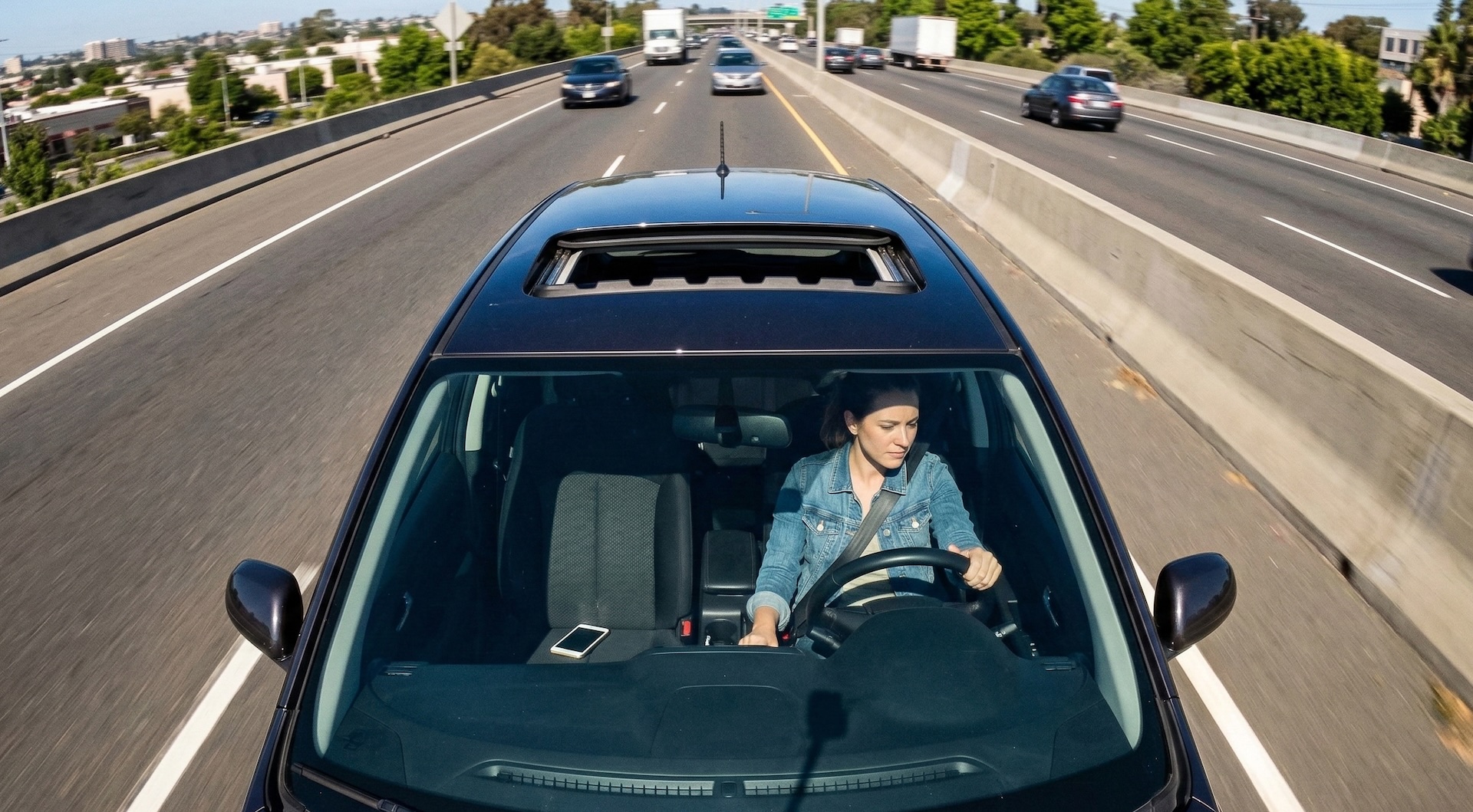
These cameras use AI to differentiate posture and objects; that is why they are detecting phones on the lap.
Did you think you could only be fined for talking on the phone? DGT cameras now detect a phone on your lap and can penalise you even if you’re not talking.
The DGT has deployed cameras with systems that no longer just detect whether you are talking on the phone: they identify the presence of the phone on the driver’s lap and issue proposed citations. This is not a guess: the technology looks for patterns of posture and objects inside the cabin.
How the AI cameras work
The units combine high-resolution video with detection and classification algorithms. They analyse:
- the position of the hands and the device;
- whether the object is a phone (shape, brightness, size);
- whether there is handling or the driver’s attention is diverted.
When the system requires human verification, the operator reviews the frame to confirm the offence before the fine is processed.
Current regulations and penalties
The regulation that prohibits using or holding a phone while driving is now enforced with this new means of evidence. The penalty for using a mobile phone while driving is €200 and carries the loss of 3 points from the driving licence. Surveillance with smart cameras to detect phones on the lap began to be rolled out on Spanish roads and has been operational since 01/01/2026.
Practical tips to avoid fines
- Store the phone in the glovebox or the boot before setting off; if it is on your lap, the cameras may detect it.
- Use approved fixed mounts for navigation; if you need to handle the device, it is better to stop in a safe area.
- Activate driving modes or “Do Not Disturb” on the phone to minimise temptation.
- If you must use the phone, park and switch off the engine; a second off the road is enough to avoid the penalty and the risk.
Impact on road safety
The DGT’s intention is clear: to reduce distraction at the wheel. Studies on distraction show a significant increase in the risk of accidents when handling devices; automated detection aims to deter dangerous behaviour and improve enforcement capacity on problematic stretches of road.
What you need to know
- Active detection: The cameras distinguish a phone on the lap even if you’re not talking.
- Fixed penalty: €200 and -3 points for using/holding the phone.
- Human validation: Before the fine is notified, the frame is usually reviewed by an officer.
- Easy prevention: Keeping it out of reach avoids the problem instantly.
Forward-looking conclusion
The DGT will increasingly combine AI with traditional controls: smart cameras, radars and drones will work as a network, so the best thing you can do is keep your phone out of sight and avoid temptation. In the coming months we will see more equipment deployed on stretches with high accident rates; the risk of receiving a fine for a gesture that once went unnoticed will be real and constant.


 Kia offers an electric range of 10 models, 50 versions and 400 possible combinations
 The seven finalists for the 2027 European Car of the Year (COTY) are exclusively electric
 Peugeot E-208 GTi: a battery-powered toy that revives the spirit of the 1980s sports cars
Deja un comentario