The Xiaomi SU7 is already a reality, and this is what it offers
 Victor Alós Yus @sepelaci
16 November 2023
3 min.
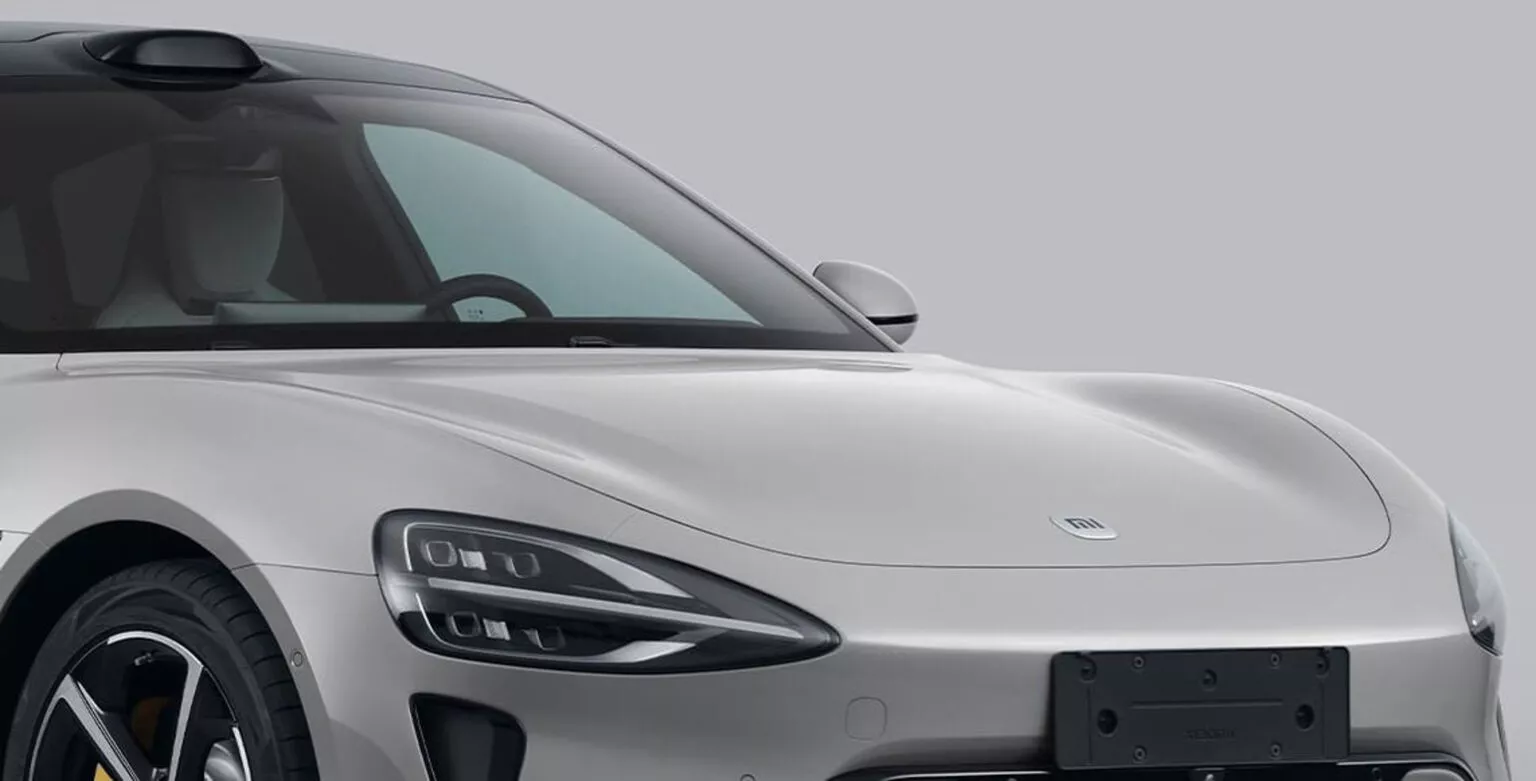
The technology multinational is already preparing to launch its electric car, which has already been presented to China’s Ministry of Industry and Information Technology for 2024.
For some time now, we have been hearing reports that the technology giant Xiaomi is going to launch an electric car. And it seems that the car is already underway, with prototype production already well advanced. The idea is for the first commercial units to be ready for delivery during the first months of 2024.
We have finally been able to see the first images of this model, which, although surprising, steers clear of extravagant designs and leans towards a very traditional and simple look. In terms of size, it has a length of 4,990 millimetres, a width of 1,960 millimetres and a height of 1,450 millimetres. The wheelbase comes to 3,000 millimetres, so there should be plenty of room inside.
The boot has not been shown, but judging by the size of the tailgate, it appears to be rather small and of limited capacity for what might be expected. However, it has some interesting details. The doors feature semi-integrated door handles, which, although they offer little air resistance, protrude slightly. This does not seem to have much impact on aerodynamics, which is quite well controlled.
Galería de fotos -
XIAOMI SU7
On the exterior, the cameras that will form part of the driver-assistance systems equipment can be made out. They are positioned on the front, the mirrors, and at the rear there are two more. One is on the rear window and another above the number plate holder.
The rear also features an LED strip that joins both light clusters. The rounded shapes of the rear end match those of the rest of the vehicle, so the result is very interesting and attractive.
The Xiaomi SU7 will come in three versions, so it will be possible to choose from different battery packs, motors and minor equipment changes. For example, the entry-level version will have a motor delivering 220 kW, that is, 295 CV, mounted on the rear axle. In this case, it will use an LFP battery.
By contrast, the top version, called SU7 MAX, will use a ternary lithium battery with a capacity still unknown. It is expected to have a 101 kWh battery, which is what was announced initially. This would allow a range of 810 kilometres under the Chinese CLTC cycle. However, we know that its two motors will deliver a combined output of 495 kW, equivalent to 664 CV.
The 800-volt architecture on which the model is built allows fast charging and a fairly light weight, as well as good driver-assistance equipment that brings it closer to autonomous driving.
The expected price for this model is around 200,000 yuan, which is roughly 25,900 euros.


 Peugeot E-208 GTi: a battery-powered toy that revives the spirit of the 1980s sports cars
 New Lexus ES: luxury grows and goes electric
 First contact with the Dacia Sandero Hybrid 155: power and efficiency from €19,890
Deja un comentario