These are the five most appealing features of the new Kia Niro
 Mónica Redondo @MonicaRedondoD
23 April 2022
3 min.
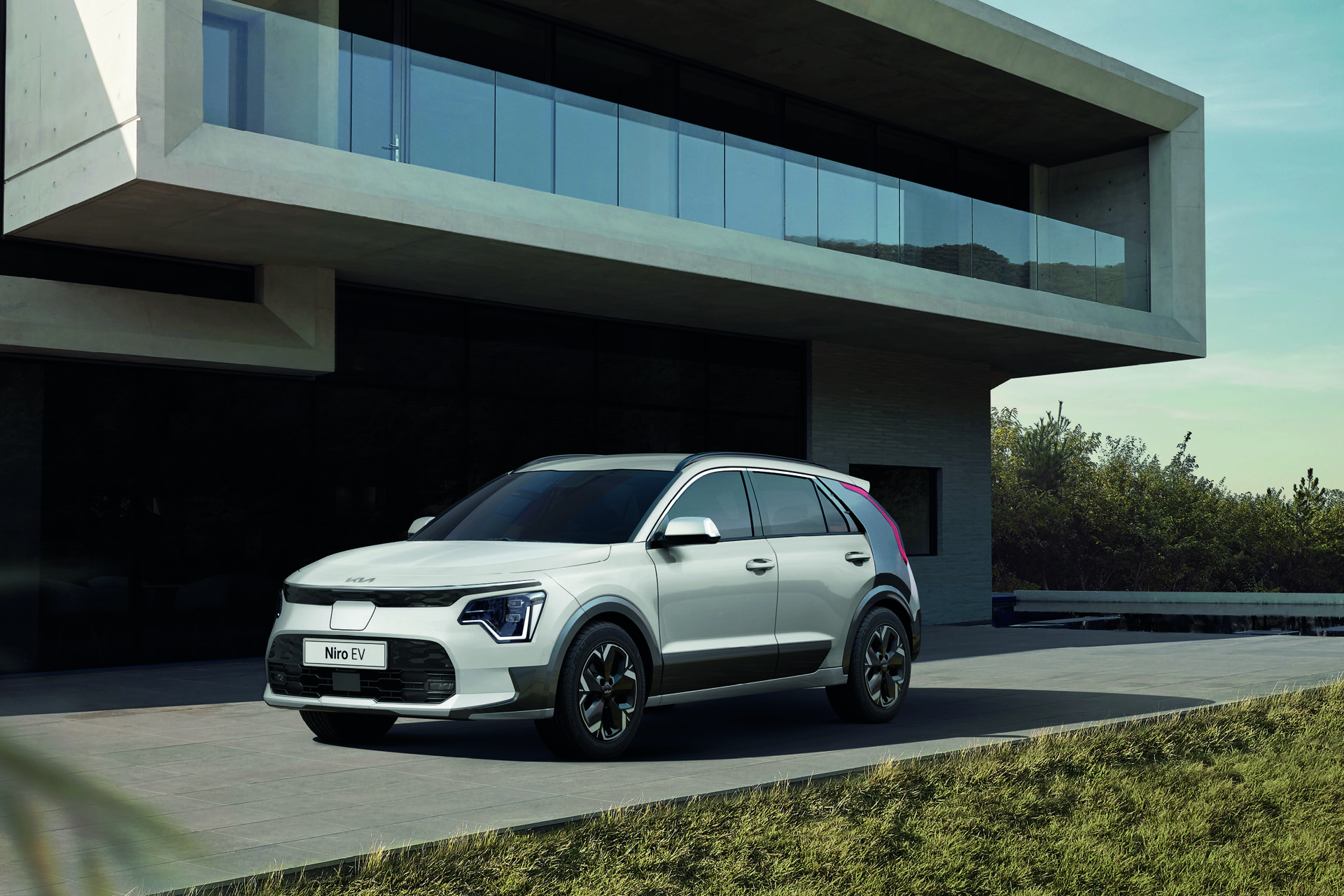
The new generation of the Kia Niro aims to turn the SUV segment upside down. Here we tell you what its weapons are for achieving it.
The new generation of the Kia Niro has arrived to revolutionise the SUV market, so we are going to review its five main features which, moreover, set it apart from its predecessor. The truth is that the brand presented the model a few months ago, but it has only now arrived in our country.
The second generation of the Kia Niro is already available at dealerships and has a starting price of €30,200. At first glance, its redesigned styling, its technology arsenal, its driver assistance systems and a wide range of powertrains stand out.
Let us focus on the area of design, because this is where the biggest changes can be seen. The new Kia Niro has arrived with much sharper, more muscular lines, so now we can say the model is an SUV in every sense. Looking at the front, the new light units stand out, inspired by the new Kia Sportage. The grille is new and there is a longer bonnet.
New Kia Niro, what should you know about it?
Moving to the sides, we can see its wheel arches, which are defined and differentiated in black. The same moulding runs along the lower part of the SUV. On the roof, the longitudinal roof bars stand out. At the rear, you can enjoy the tail lights in a boomerang shape and the bumper protectors.
The interior has not been left behind either. The cabin of the new Niro now features a dual screen that manages the infotainment system and the instrument cluster. The steering wheel has two spokes, the centre console has been redesigned and partially split. The door panels and the dashboard have also been renewed. It is worth mentioning the use of recycled materials in the cabin, the update of the Head-Up Display and the application of soft lines throughout the interior.
The dimensions have also changed: the new SUV measures 4.42 metres in length, 1.82 metres in width and 1.54 metres in height, while its wheelbase is 2.72 metres. From this we can conclude that the model has grown by 65 mm in length, 20 mm in width and 10 mm in height. This has made it possible for the boot capacity to increase by 45 litres, reaching up to 495 litres.
As for the engines, the hybrid version remains, while the plug-in hybrid, PHEV, increases its power to 183 CV, offers a range of 65 kilometres and features an 11.1 kWh battery. For its part, the fully electric version keeps the specifications of the previous generation with 204 CV of power, although its range has increased to 463 kilometres according to the WLTP homologation cycle.
Another of the most important features of the new SUV is the introduction of the DriveWise package of driver assistance and safety systems. In this section, the forward collision-avoidance assist, the intelligent speed limit assist, the lane-keeping and lane-following assist, and the high-occupancy-lane assist stand out, among others.
Technical specifications of this car


 Peugeot E-208 GTi: a battery-powered toy that revives the spirit of the 1980s sports cars
 New Lexus ES: luxury grows and goes electric
 First contact with the Dacia Sandero Hybrid 155: power and efficiency from €19,890
Deja un comentario