This is the Mercedes-Benz prototype that makes any electric car known to date obsolete
 Antonio Roncero @roncero_antonio
20 June 2023
4 min.
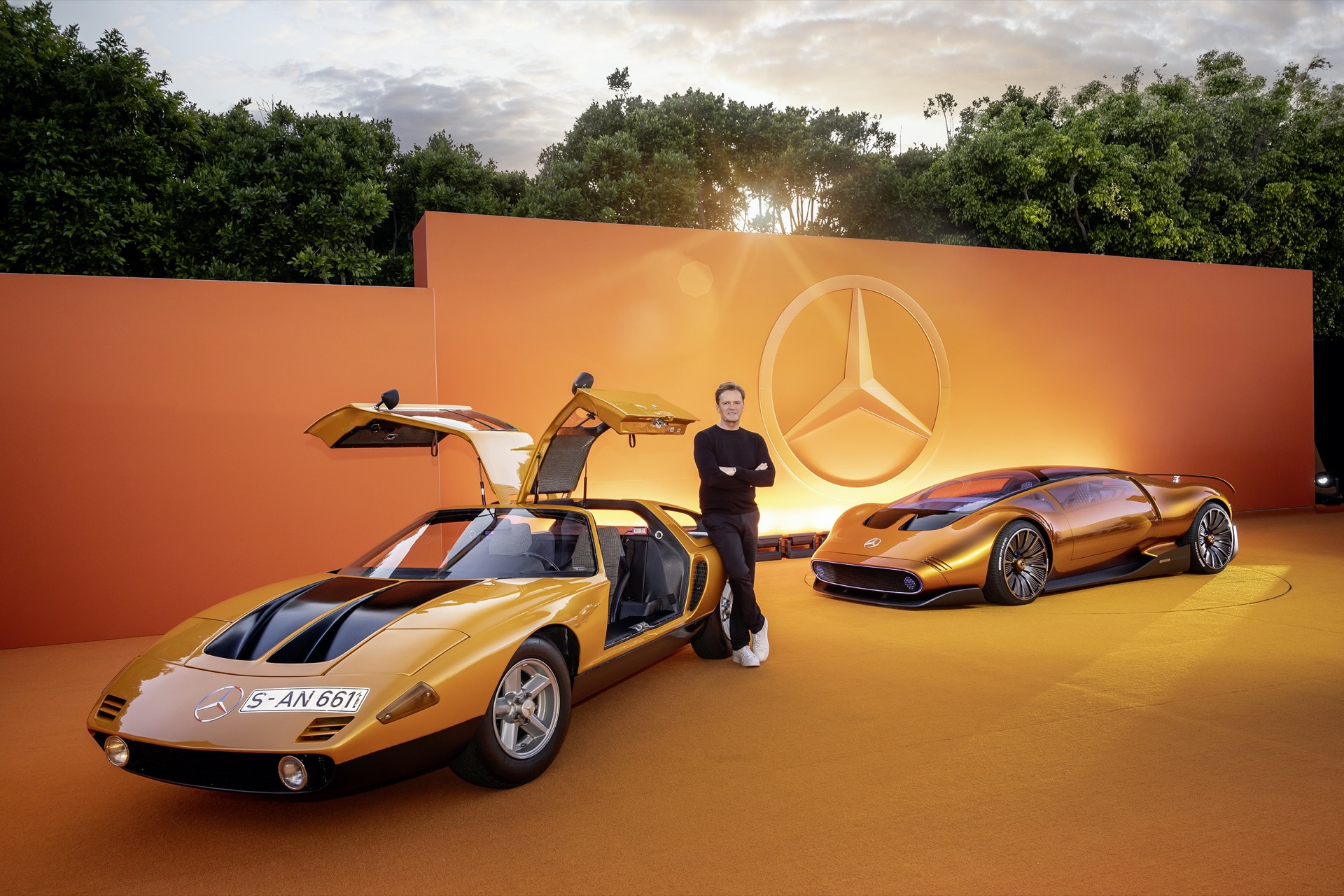
Mercedes-Benz’s reinterpretation of its C111 prototype series from the 1960s and 1970s is masterful from a design standpoint, and its technology may lay new foundations for future electric cars.
It is called the Mercedes-Benz Vision One-Eleven, and if we read between the lines of its technical specifications, we may be looking at much more than a prototype that reinterprets the series of experimental C111 vehicles with which the brand surprised the world in the 1960s and 1970s. The veterans and car design enthusiasts surely remember them or have heard of them: besides their striking, aerodynamic bodies, this series of prototypes tested new technologies for their time, such as the application of Wankel engines or turbodiesel, the challenges of implementing a gull-wing door system, and the use of materials such as fiberglass…
Now, Mercedes-Benz presents its Vision One-Eleven, maintaining exactly the same philosophy. Its innovative propulsion system could well become a standard in very few years for future electric cars. And not only in high-performance ones.
Axial flux electric motors: more power and more efficiency with less size
The Vision One-Eleven is powered by two electric motors, one for each rear wheel. So far nothing special. But if I tell you that these motors are not like those currently used in practically all electric cars on sale in the market, things start to make you think. Mercedes-Benz has turned to the British electric motor specialist YASA, based in Oxford and 100% owned by the star brand for the past two years. Together with this company, Mercedes-Benz is developing this new generation of axial flux motors with a view to their future large-scale production.
Without going into a tedious technical explanation in depth, I will tell you that this type of motor is characterized by being much lighter and more compact than conventional radial flux ones… multiplying their power and with advantages in terms of durability! Imagine the possibilities this offers engineers: motors that, with the same power, occupy less space and weigh up to a third less. Just look at the image to see the differences.
That Mercedes-Benz and YASA have already solved the technical challenge of manufacturing this type of motor is a fact: the brand has already announced that its future generation of axial flux motors will be produced at its Berlin-Marienfelde factory. In principle, these motors will be aimed at high-performance vehicles. But I don’t think we will have to wait long to see their advantages applied to more “down-to-earth” cars as well.
In addition, Mercedes-Benz boasts in its prototype a new performance-oriented battery concept that uses high-performance cylindrical cells with a special chemistry, inspired by the technology used in Formula 1. There is no data on the battery’s capacity or energy density, nor on the car’s. But surely we will be talking again very soon about the combination of axial motors with these new batteries.
Autonomous driving and virtual reality
Otherwise, it must be acknowledged that, from a design standpoint, the reinterpretation carried out by Mercedes-Benz is sensational. There are those nods to the original model with the shape of the headlights, the hinged roof doors, its aerodynamic body only 1.17 metres high… and of course the iconic, recognizable orange colour, in this case even more intense than that of the C111, and with the property of changing depending on how light falls on the bodywork.
The interior nowadays can no longer be described as futuristic, especially after seeing the latest creations of the star brand. But its status as an autonomous car calls for certain features that make it a true “transformer”: seats with upright backrests and a touchscreen oriented towards the driver in “race” mode, and seats integrated into the interior architecture when it is decided that the car should take control and a “lounge” configuration is adopted, in which augmented reality could not be missing to create a unique user experience once passengers put on the Magic Leap 2 glasses designed for the purpose.
Mercedes Benz Vision One Eleven – Image Gallery


 Peugeot E-208 GTi: a battery-powered toy that revives the spirit of the 1980s sports cars
 New Lexus ES: luxury grows and goes electric
 First contact with the Dacia Sandero Hybrid 155: power and efficiency from €19,890
Deja un comentario