Hyundai RAV4 Toyota Tucson Hybrid Cars Comparisons Tests SUV
Toyota RAV4 PHEV vs. Hyundai Tucson PHEV: which family plug-in hybrid SUV offers better real-world efficiency in 2026
 Iván Navarro
26 October 2026
7 min.
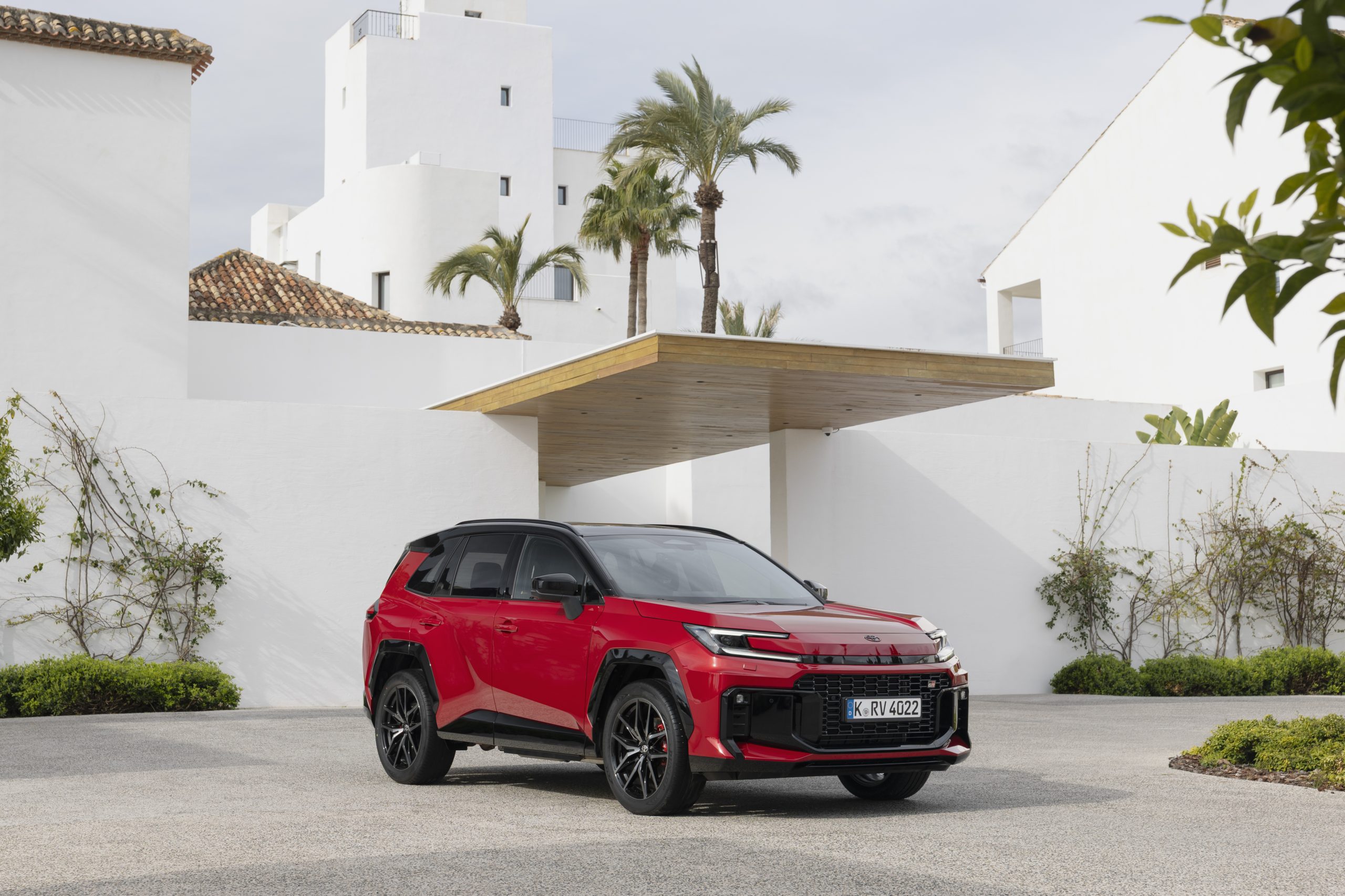
We compare the Toyota RAV4 PHEV and the Hyundai Tucson PHEV, two family plug-in hybrid SUVs with opposing battery philosophies. Electric range, real-world consumption and indicative pricing to help you decide which one is worth it in 2026.
Anyone looking for a family plug-in hybrid SUV in Spain this year will sooner or later come across these two names. And that’s no coincidence: they represent two different ways of understanding plug-in technology in an everyday car. One bets on a large battery and long electric range. The other prioritises a more modest balance, with less lithium weight and a slightly lower entry price. Which one really makes more sense when it comes to moving a family during the week and at the weekend?
Toyota RAV4 PHEV from €46,500: the big-battery bet
Today, the RAV4 PHEV is one of the plug-in hybrid SUVs with the longest real-world electric range on the Spanish market. Its 22.7 kWh battery allows over 100 km in pure electric mode (WLTP cycle), a figure that in practice covers much of an average family’s daily driving without ever touching the combustion engine. The system delivers around 197 kW (268 CV) in the entry-level front-wheel-drive version and a homologated combined consumption close to 1.3–1.6 l/100 km, provided the battery is kept charged with some discipline.
| Model | Power | Torque | 0-100 km/h | Top speed | Electric range | Consumption | Battery | Fuel | Price from |
|---|---|---|---|---|---|---|---|---|---|
| Toyota RAV4 PHEV | ≈197 kW / 268 CV | 227 Nm | ≈7.5 s | ≈180 km/h | >100 km | ≈1.5 l/100 km | 22.7 kWh | PHEV | ≈€46,500 |
The spec sheet speaks for itself: more battery means more room to drive in silence, but also more weight. The RAV4 PHEV weighs around 1,900 kg, something you notice when braking and cornering, although Toyota makes up for it with generous power delivery and a 0-100 time of around 7.5 seconds, not bad at all for a 4.6-metre family SUV.
Hyundai Tucson PHEV from €43,600: efficiency with a smaller battery
The Tucson PHEV takes a different approach. Hyundai has opted for a 13.8 kWh battery, considerably smaller than the RAV4’s, with an electric range of around 70 km. On paper it is less appealing for anyone dreaming of pure electric driving all week. In practice, for short urban journeys it remains sufficient, and the combined 1.6 TGDi engine delivers around 212 kW (288 CV), slightly above the Toyota.
| Model | Power | Top speed | Electric range | Consumption | Battery | CO₂ emissions | Fuel | Price from |
|---|---|---|---|---|---|---|---|---|
| Hyundai Tucson PHEV | 212 kW / 288 CV | ≈190 km/h | ≈70 km | ≈6 l/100 km | 13.8 kWh | ≈60 g/km | PHEV | ≈€43,600 |
The homologated consumption of 6 l/100 km stands out next to the practically symbolic 1.5 l/100 km of the RAV4. It is the direct consequence of a smaller battery: once it runs out, the Tucson calls on the petrol engine sooner, which translates into considerably higher combined consumption figures in homologation tests. This does not make it a bad car by any means, but it does mark a conceptual difference worth being clear about before signing the contract.
Real-world electric range: the factor that matters most day to day
Here there is no contest. The RAV4 PHEV outperforms the Tucson PHEV in electric range by a wide margin: more than 100 km versus ≈70 km. For a family making short trips — school, work, the weekly shop — that difference can mean the difference between using the car in fully electric mode all week or having to fall back on the combustion engine a couple of days. Anyone who charges the car at home every night will notice that gap directly on the fuel bill.
Consumption, efficiency label and mixed motorway use
On long journeys, with the battery depleted, the differences narrow. Both are plug-in hybrids able to work as conventional hybrids once the battery is empty, and on the motorway real consumption comes closer than the homologated figures suggest. That said, the Tucson, carrying less battery weight, may feel a little more agile on those stretches where the RAV4 notices the extra kilos. It is not a dramatic difference, but it does exist.
Indicative price and what each offer includes
The Toyota RAV4 PHEV starts at approximately €46,500 RRP, while the Hyundai Tucson PHEV is priced from around €43,600 RRP. A difference of about €2,900 which, in our view, is largely justified by the RAV4’s additional electric range. It is worth remembering that these figures are manufacturer’s recommended prices, without dealer discounts, one-off campaigns or public purchase aid — anyone wanting to optimise the outlay should check the current Plan Auto+ conditions on the official website before closing the deal.
Neither model offers a 7-seat configuration, something to bear in mind if the family needs an extra bench seat; for that profile it is worth looking at other family SUV alternatives, as we already covered in our guide to seven-seat SUVs.
Ideal user profile for each model
The RAV4 PHEV suits those with a charging point at home or at work who want to squeeze the most out of electric mode, even if that means paying a little more upfront. The Tucson PHEV makes sense for those who value a lower entry price and do not depend so much on daily charging, accepting higher combined consumption once the battery runs out. If real-world electric range is the priority, the angle of this analysis matches what we saw in our ranking of plug-in hybrid SUVs with the longest electric range.
Summary comparison table and Highmotor score
| Model | Electric range | Battery | Power | Consumption | Price from | Score |
|---|---|---|---|---|---|---|
| Toyota RAV4 PHEV | >100 km | 22.7 kWh | 268 CV | ≈1.5 l/100 km | ≈€46,500 | 8.7/10 |
| Hyundai Tucson PHEV | ≈70 km | 13.8 kWh | 288 CV | ≈6 l/100 km | ≈€43,600 | 7.9/10 |
The score weighs electric range, homologated consumption and the price-to-performance ratio. The RAV4 PHEV comes out slightly ahead thanks to its larger battery, but the Tucson PHEV does not fall far behind if what you are after is a somewhat lower initial outlay.
Verdict: which family PHEV SUV is worth more in 2026
If the question is which family plug-in hybrid SUV offers the better real-world efficiency in Spain this year, there is no single answer, but it is fairly clear depending on use. For those who plug in every day and want to maximise kilometres in pure electric mode, the RAV4 PHEV is the most coherent choice, even though it costs more. For those who prioritise a lower entry price and do not depend so much on daily charging, the Tucson PHEV remains a solid proposition, though with noticeably higher combined consumption when it has to rely on petrol.
Frequently asked questions
Which has more electric range, the Toyota RAV4 PHEV or the Hyundai Tucson PHEV?
The Toyota RAV4 PHEV offers an electric range of over 100 km thanks to its 22.7 kWh battery, compared with the ≈70 km of the Hyundai Tucson PHEV, which fits a 13.8 kWh battery.
Which model has a lower entry price?
The Hyundai Tucson PHEV starts at approximately €43,600 RRP, while the Toyota RAV4 PHEV starts at around €46,500 RRP. Both figures are recommended prices without discounts or public aid.
Does either of them offer a 7-seat version?
No. Both the Toyota RAV4 PHEV and the Hyundai Tucson PHEV are sold in a 5-seat configuration on the Spanish market.
Which is the better choice if you charge the car at home every day?
The Toyota RAV4 PHEV makes better use of daily charging thanks to its greater electric range, allowing more kilometres without burning petrol and reducing homologated combined consumption to figures close to 1.5 l/100 km.
Technical specifications of the cars in this article


 Kia offers an electric range of 10 models, 50 versions and 400 possible combinations
 The seven finalists for the 2027 European Car of the Year (COTY) are exclusively electric
 Peugeot E-208 GTi: a battery-powered toy that revives the spirit of the 1980s sports cars
Deja un comentario