Volkswagen bids farewell to the VR6 engine: the end of an icon with 34 years of history
Óscar Sanz
20 December 2024
3 min.
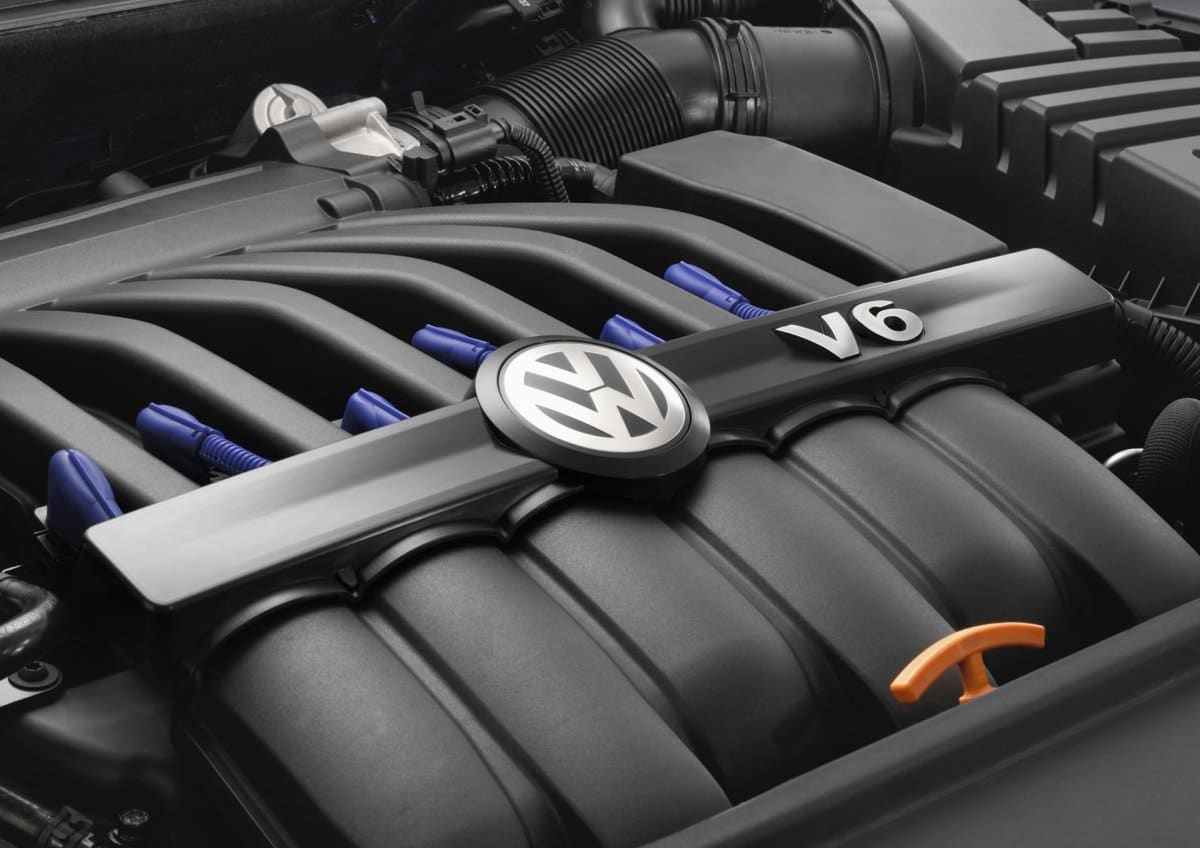
Volkswagen says goodbye to the VR6 engine, the iconic powerplant that for more than three decades powered models such as the Golf R32 and the Passat
The VR6 engine, one of the most emblematic units of Volkswagen, bids farewell after 34 years in production. This iconic powerplant, known for its innovative design and its link to the brand’s sporty and exclusive models, will cease production at the Chemnitz plant, Germany. The decision marks the close of an era in automotive history, while Volkswagen moves toward a future centred on electrification.
What made the VR6 engine special?
Introduced in 1991, the VR6 engine became a symbol of advanced engineering. Its compact six-cylinder narrow-“V” design (with an angle of just 15 degrees) combined the advantages of inline and V engines. This made it possible to fit it in front-wheel-drive vehicles, something unusual for its time.
The VR6 stood out not only for its technical innovation but also for its performance. It delivered smooth, linear power together with a distinctive sound that became a hallmark of models such as the Volkswagen Golf R32, the Passatand the Corrado.
34 years of history and evolution
The VR6 had a significant impact across the Volkswagen range, powering everything from sporty compacts to luxury SUVs. It was the ideal choice for drivers seeking performance without sacrificing space or practicality.
In its final years, the VR6 reached its peak with a 3.6-litre configuration producing up to 300 CV, used in models such as the Volkswagen Atlas and the Teramont in international markets. However, the shift towards electric vehicles and tightening emissions regulations have led Volkswagen to take this decision.
The context of the farewell: electrification and sustainability
Volkswagen is undergoing a full transformation towards electrification. Its strategy, centred on the MEB platform for electric vehicles, aims to meet sustainability targets and reduce its carbon footprint.
The end of VR6 production at the Chemnitz plant reflects this change. The facility is being adapted to focus on electric motors and associated components, in line with Volkswagen’s commitment to offer a fully electrified range by 2030.
The VR6’s legacy in the automotive world
The VR6 was more than just an engine; it was a symbol of Volkswagen’s technical innovation and left an indelible mark on the industry. It defined an era in which internal combustion engines combined performance, efficiency and character.
Models such as the Golf R32, the first of the R series, and the Volkswagen Corrado VR6 became icons thanks to this engine. Even beyond the brand, the VR6 found its place in vehicles from Audi, Seat and Porsche, cementing its reputation as a versatile, high-performance unit.
 Óscar Sanz
20 December 2024
3 min.

 Kia offers an electric range of 10 models, 50 versions and 400 possible combinations
 The seven finalists for the 2027 European Car of the Year (COTY) are exclusively electric
 Peugeot E-208 GTi: a battery-powered toy that revives the spirit of the 1980s sports cars