R2 R3 R3X Rivian Electric Cars
Where is the correct place on an electric vehicle to position the charging port?
 Javier Cantagalli
11 March 2024
3 min.
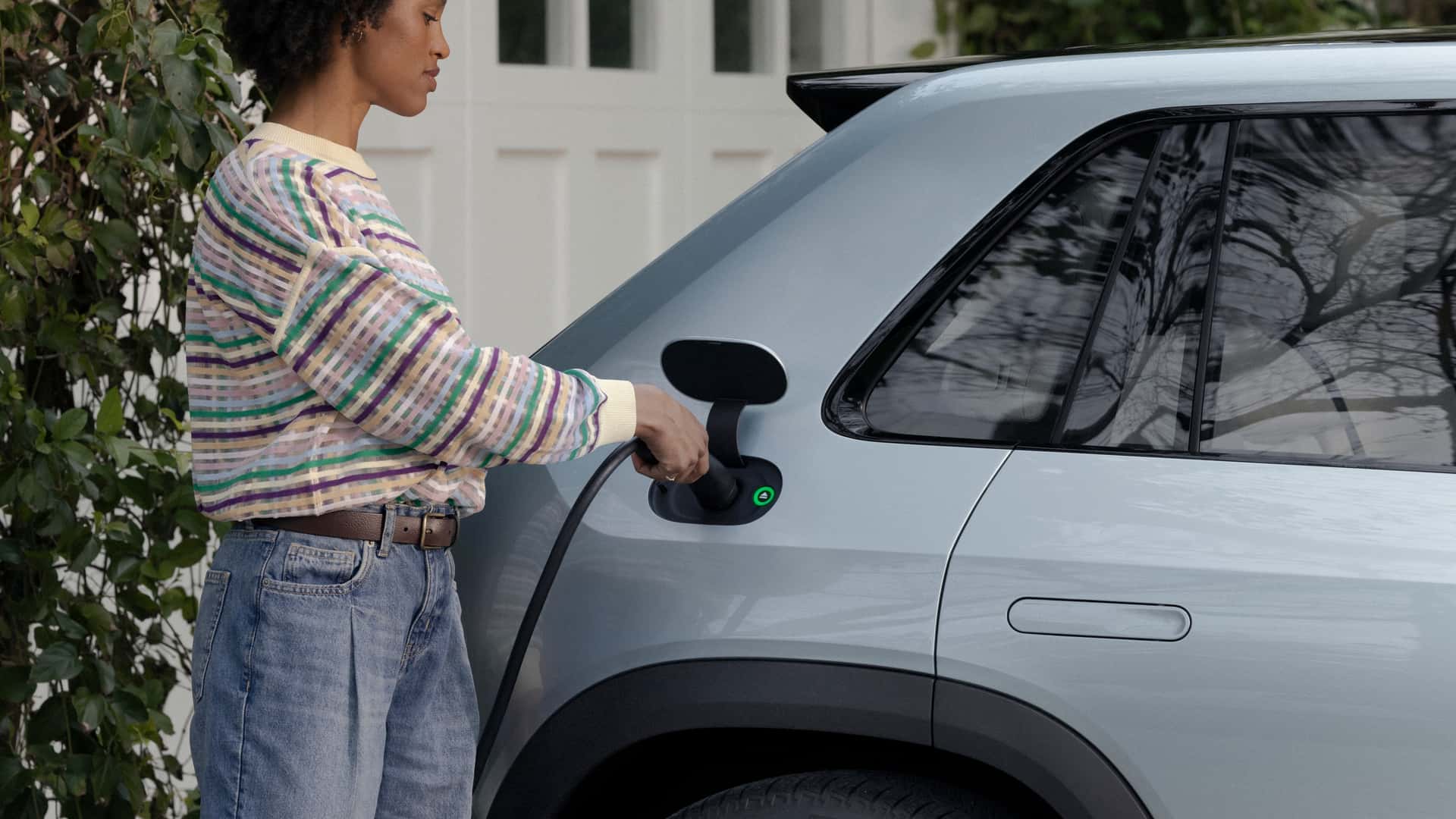
The engineers at Rivian asked themselves this same question during the development phase of their new electric SUVs -the R2, R3 and R3X-. Now, the company has just revealed the reasons behind its final decision
You have probably asked yourself this question at some point, and the truth is that the answer is not simple. In fact, not even the manufacturers themselves agree, and each of them chooses a different location for their vehicles; yet there is no doubt that a joint decision within the sector on this matter would give electric vehicle users significant advantages.
Looking at the location chosen for the charging port by some of the main manufacturers of this type of vehicle, we find, for example, the case of Tesla, which considers the ideal place to be at the rear of the vehicle on the driver’s side. A good number of European brands such as Volkswagen, and also Korean ones -KIA/Hyundai- in their most recent models, nevertheless believe that also at the rear but on the passenger side is a better location. Meanwhile, there are cases like that of Nissan with the Leaf, which matches neither the others, opting to integrate it at the front.
Rivian explains its reasons
During the development phase of the new R2 SUV, and the compact R3 and R3X SUVs, Rivian had to face precisely this dilemma. Recent statements by Jeff Hammoud, one of the engineers at the American firm who has been part of these projects, have revealed the reasons why the company ultimately decided that placing it at the rear on the passenger side was the best possible decision.
According to Hammoud, many arguments were put on the table, with conflicting opinions among the brand’s engineers. One of the factors that carried the most weight in the final decision was the existence of a large number of charging points on the pavements of many European cities. Placing the charging port on the passenger side thus makes it possible to avoid having to run the cable over the vehicle when parking on the pavement while keeping to the direction of traffic. A problem that owners of a Tesla, for example, have to deal with.
On the other hand, Hammoud has pointed out that many of his customers who already own an Rivian R1T or R1S already have a charging point installed in their garage. These two models from the American manufacturer integrate the charging port in the corner of the driver’s side at the front of the vehicle, so they will also be able to charge an R2, R3 or R3X without any problem, simply by parking in reverse instead of head-on.
In the end it is all a matter of weighing the advantages on one side of the scale and the disadvantages on the other
Finally, this technician from Rivian referred to one more important reason, which is none other than cost reduction. The decision has allowed them to reduce the length of the high-voltage cables required. As a consequence, this not only means lower costs due to the smaller amount of cable used, but also a reduction in weight and, therefore, an improvement in efficiency.
For these three reasons, Hammoud considers that the decision to place the charging port at the rear of the passenger side is the right one. Although this also entails having to deal with some drawbacks, such as the fact that charging across the wide Supercharger network of Tesla will not always be straightforward, sometimes forcing drivers to occupy the parking space reserved for the adjacent charging point.


 The seven finalists for the 2027 European Car of the Year (COTY) are exclusively electric
 Peugeot E-208 GTi: a battery-powered toy that revives the spirit of the 1980s sports cars
 New Lexus ES: luxury grows and goes electric
Deja un comentario