Citroen Clase V Dacia EQV Ford Jogger Mercedes Multivan Peugeot Renault Rifter SpaceTourer Tourneo Trafic Volkswagen Furgonetas Minivans Rankings
2026 ranking: the 5 people-carrier MPVs and vans that best fit three child seats side by side in the same row
 Dani Montesinos
28 November 2026
6 min.
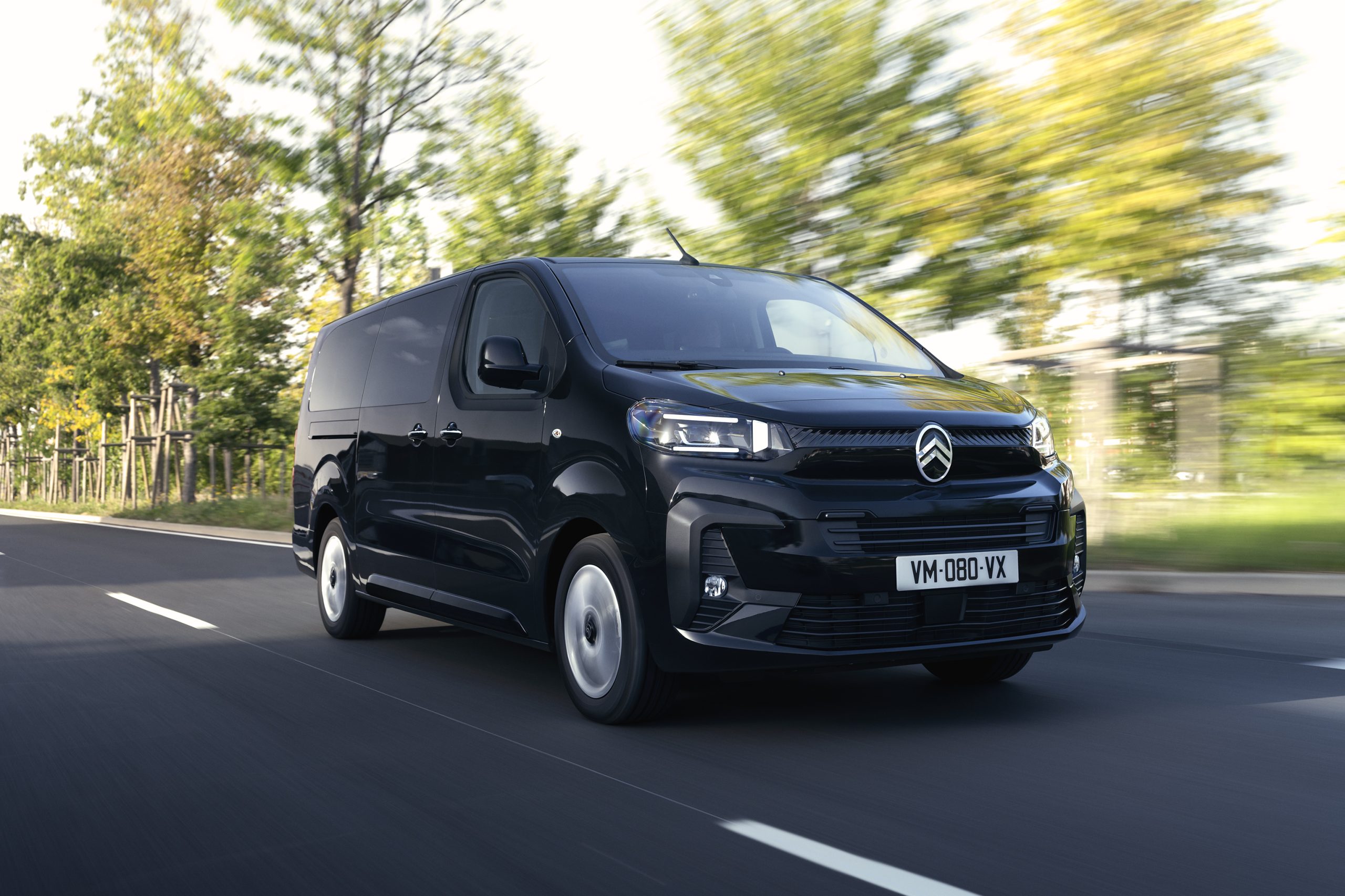
We analyse the people-carrier MPVs and vans on sale with the most interior width and ISOFIX points for fitting three child seats in the same row
Three child seats in the same row sounds simple until you try it. A traditional family SUV, with 140-150 centimetres of usable width in the second row, falls short as soon as two group 1 seats and an extra ISOFIX base for the baby come into play. That is where MPVs and vans for three child seats come in: vehicles designed from the chassis up to gain centimetres exactly where they are needed most.
It is not a premium whim. It is pure geometry: a type-approved child seat takes up between 43 and 48 centimetres of width depending on the group, and you have to add the armrests. Three in a row requires at least 145-150 cm of real width between door trim panels, not the marketing catalogue figure.
What a family with three child seats in the same row needs
Before looking at models, it is worth setting the bar. Not every “7-seater” works for this use, even if it is advertised as such.
Interior width and ISOFIX: the data that really matters
Three variables decide whether a car works or turns into a daily game of Tetris:
- Second-row interior width: below 145 cm, fitting three rigid seats (group 1 type with an ISOFIX base) usually means removing armrests or tilting seats, something no child seat manufacturer recommends.
- Number and position of ISOFIX anchor points: many cars offer ISOFIX only in the outer seats, leaving the centre with a three-point belt. For three child seats with full safety, ISOFIX is needed in all three positions or, at least, in two plus a centre seat approved with a top tether.
- Individual seats versus a bench: independent sliding seats, typical of premium passenger vans, allow each seat to be separated slightly and give access to the central buckle without forcing the wrist against the neighbour’s armrest.
With these three filters, the field narrows considerably. Many 7-seat SUVs and compact MPVs are automatically ruled out, however good they look in the showroom.
2026 ranking: the 5 MPVs and vans that best fit three child seats
This ranking of family passenger vans prioritises models genuinely on sale in Spain, with width and seating configuration data verifiable in the official technical specification sheet.
1. Volkswagen T7 Multivan – from €66,620
The T7 Multivan splits its second row into individual seats on rails, which makes it easy to separate the three seats and adjust each one to the depth the child needs. The eHybrid variant adds urban electric driving without giving up space.
| Engine | Power CV | Electric range | Label | Fuel |
|---|---|---|---|---|
| 1.5 eHybrid | 245 CV | 91 km WLTP | CERO | PHEV |
2. Mercedes-Benz V-Class – from €70,991
If the budget allows, the V-Class remains the reference for interior width in the premium segment. Its individual rear seats, with longitudinal travel and swivel, allow three seats to be fitted without any one encroaching on the space of its neighbour, something we already discussed when comparing the V-Class with the electric EQV.
| Engine | Power CV | Label | Fuel |
|---|---|---|---|
| V 220 d | 163 CV | C | Diesel |
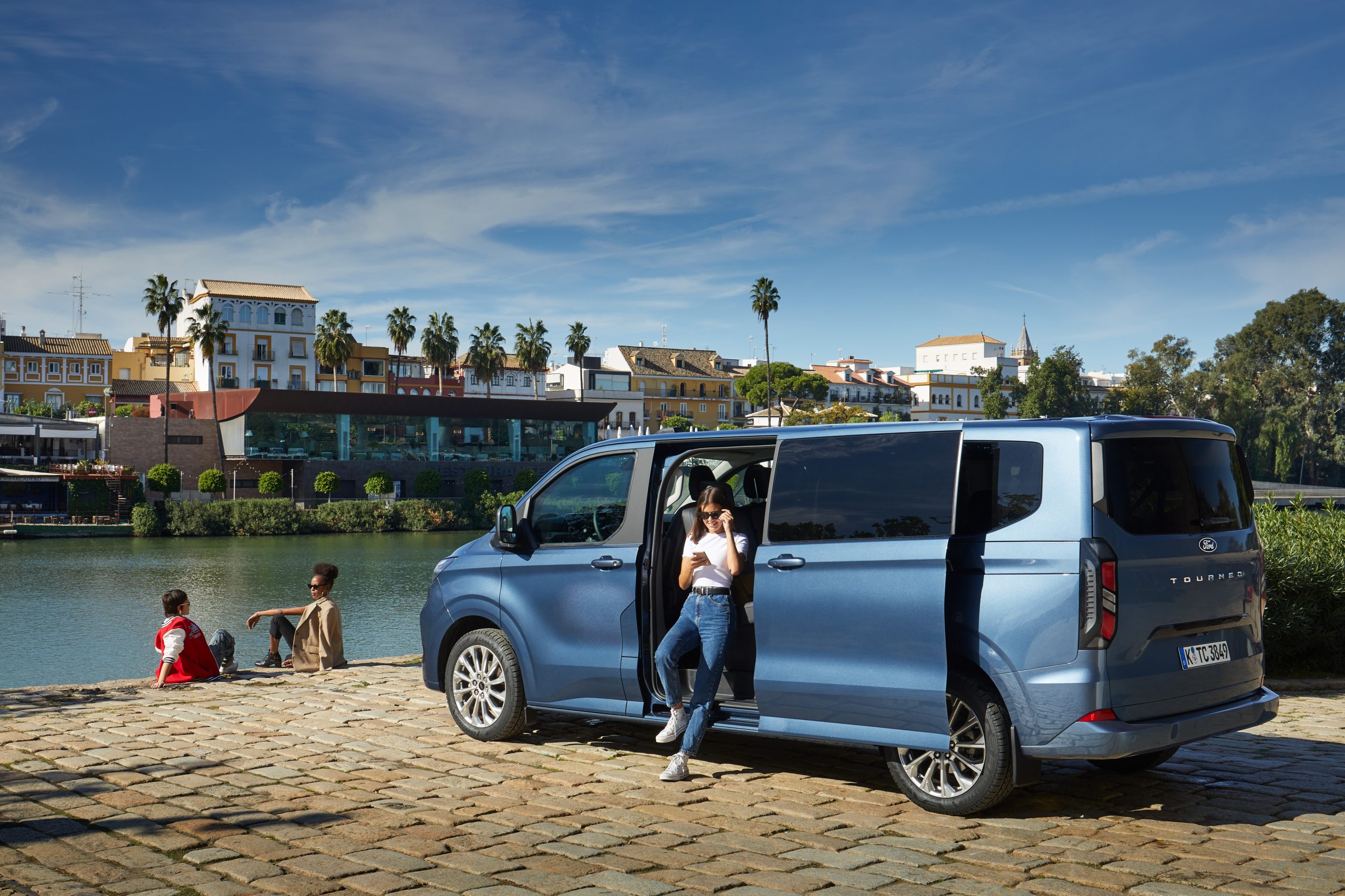
3. Ford Tourneo Custom – from €35,280
Less glamorous than the German, but with a cabin width that surprises for its price. The middle row accepts three seats with ISOFIX on the outer positions and a reinforced belt in the centre, enough for most group 1 and 2 combinations.
| Engine | Power CV | Label | Fuel |
|---|---|---|---|
| EcoBlue | 136 CV | C | Diesel |
4. Citroën ë-SpaceTourer – from €34,233
The electric option from the Stellantis group comes with interior width inherited from its status as a passenger van, not an adapted car. That shows at the elbows.
| Engine | Power kW | Power CV | Range | Label | Fuel |
|---|---|---|---|---|---|
| ë-SpaceTourer | 100 kW | 136 CV | 220 km WLTP | CERO | Electric |
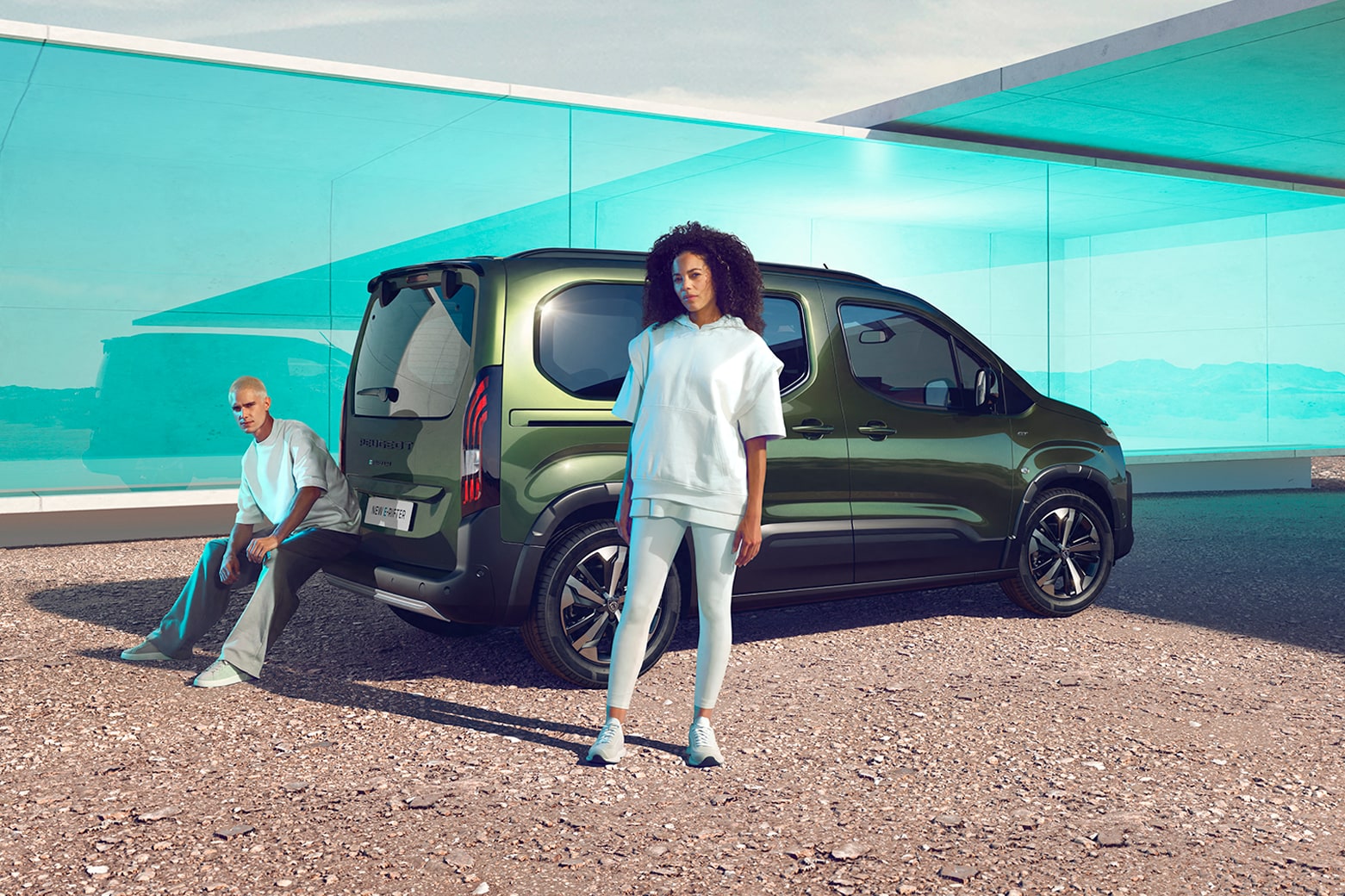
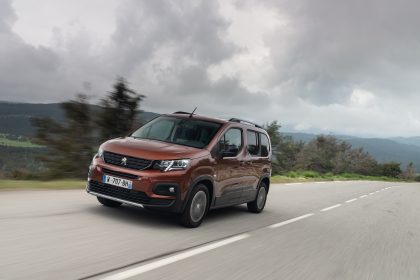
5. Peugeot e-Rifter – from €30,230
The most affordable in the ranking and, even so, it delivers. Its modular rear bench with three individual seats and double ISOFIX anchors makes it the most sensible entry point for families with three small children.
| Engine | Power kW | Power CV | Range | Label | Fuel |
|---|---|---|---|---|---|
| e-Rifter | 100 kW | 136 CV | 339 km WLTP | CERO | Electric |
Other options we also had in mind
The Renault Trafic Combi, with the Blue dCi engine and C label, offers a width similar to the Tourneo Custom, but its rear seats are less flexible for separating seats. And the Dacia Jogger Hybrid 140, with 140 CV and ECO label, is tempting on price, although its second row is a little tight for three rigid seats at the same time: it works better with seat-plus-booster combinations. If you are looking at seven-seat alternatives with a bigger budget, it is also worth reviewing the most versatile 8- and 9-seat passenger vans on the Spanish market, where several of these same platforms offer even more room.
Summary table: comparison of the 5 finalists
| Model | From | Fuel | Individual 2nd-row seats | Score |
|---|---|---|---|---|
| Volkswagen T7 Multivan | €66,620 | PHEV | Yes | 9.2 |
| Mercedes-Benz V-Class | €70,991 | Diesel | Yes | 9.0 |
| Ford Tourneo Custom | €35,280 | Diesel | Partial | 8.3 |
| Citroën ë-SpaceTourer | €34,233 | Electric | Partial | 8.1 |
| Peugeot e-Rifter | €30,230 | Electric | Yes (modular bench) | 7.8 |
How we put together this ranking
We cross-checked official technical specification sheets for interior width, number of type-approved ISOFIX anchor points and actual seat configuration, discarding models that only promise “7 seats” without detailing the geometry of the second row. We also considered the starting price, because the perfect car is of little use if it falls outside the family budget. If your purchase may qualify for public aid, remember that the current framework in Spain is the Plan Auto+, with conditions worth checking on the official website before signing.
Frequently asked questions
What interior width do I need for three child seats in the same row?
As a practical reference, at least 145-150 centimetres between door panels, not counting the space taken up by the central armrests.
Do 7-seat SUVs work for three child seats side by side?
Generally not, because the second row usually measures around 135-140 cm. Family passenger vans and MPVs such as the Multivan or V-Class are designed with more margin.
Is it mandatory to have ISOFIX in all three seats of the row?
It is not legally required, but it is highly recommended. A centre seat without ISOFIX requires an installation with a three-point belt correctly approved for the seat’s group.
Do electric vans such as the ë-SpaceTourer or e-Rifter lose interior space because of the battery?
Hardly at all, because the battery is integrated under the floor without encroaching on the width of the second row, unlike what happens in some electrified cars built on shared platforms with combustion versions.
Technical specifications of the cars in this article
 Kia offers an electric range of 10 models, 50 versions and 400 possible combinations
 The seven finalists for the 2027 European Car of the Year (COTY) are exclusively electric
 Peugeot E-208 GTi: a battery-powered toy that revives the spirit of the 1980s sports cars
Deja un comentario