Austral Bigster Dacia Hyundai KIA Nissan RAV4 Renault Sportage Toyota Tucson X-Trail Hybrid Cars Comparisons Family Rankings SUV
2026 Ranking: the 6 best value-for-money hybrid family SUVs under €45,000
 Iván Navarro
17 August 2026
7 min.
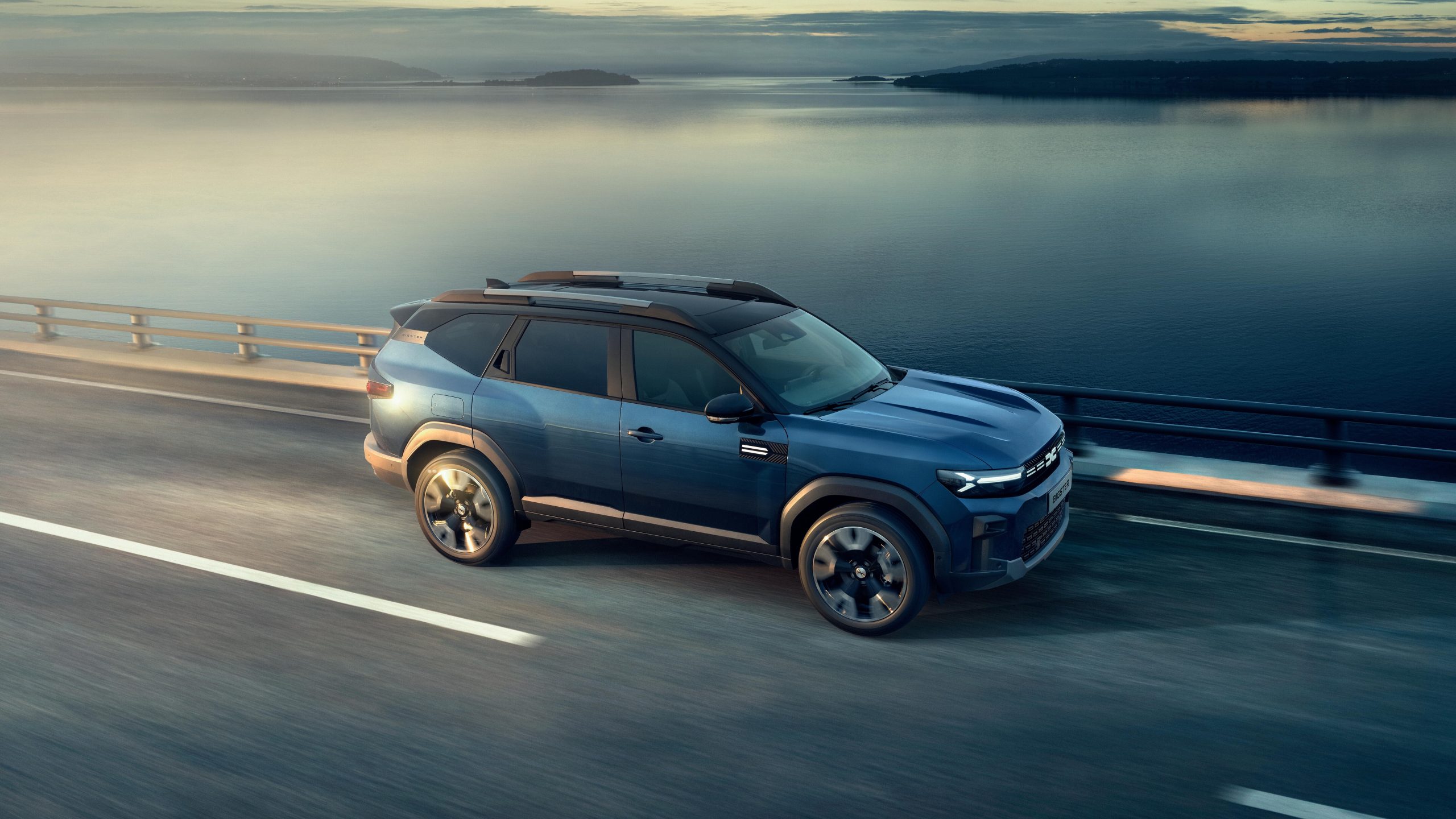
We analyse the six hybrid family SUVs under €45,000 that best balance price, consumption and equipment in the Spanish market in 2026. A technical ranking with scores and compared spec sheets.
The hybrid family SUV has become the default vehicle for the Spanish middle class. Zero charging anxiety, an ECO label in most cases, consumption close to 5 litres and enough boot space for a weekend in the mountains or moving the kids to university. But below €45,000 the field narrows: you have to choose carefully.
We filtered the market using objective criteria —final price including usual dealer discounts, WLTP consumption, standard equipment, usable space and warranty— and left out anything that cannot be registered today at a Spanish dealership. The result is a ranking of six names. Not one more.
What do we mean by “good value for money” in a hybrid family SUV?
It is not just the showroom price. An SUV that costs €32,000 but consumes 6.5 l/100 km and comes with bare cloth upholstery does not compete on equal terms with a €40,000 one that homologates 4.8 and comes with a 360º camera as standard. The real calculation is total cost of ownership over five years, and four variables come into play: purchase price after discount, combined WLTP consumption, ADAS and multimedia equipment without paying extras, and the manufacturer’s warranty. The fifth —space— matters because we are talking about families, not singles.
How we scored each model
Each car receives a score from 1 to 10 across five axes: price, consumption, equipment, space and warranty. The weighted average gives the final score shown in the summary table. Simple, transparent and auditable.
1. Dacia Bigster Hybrid 155 — from €29,900
The outsider that breaks the ranking from below. The Bigster arrives in 2026 as the most aggressive bet from Dacia: a 4.57-metre compact SUV with the full hybrid powertrain inherited from the Renault-Nissan (1.8 naturally aspirated engine plus two electric motors and a dog-clutch gearbox) for under €30,000 in its entry trim. The Journey version, already fitted with a 10-inch navigation screen, dual-zone climate control and a rear camera, rises slightly in price.
The catch? The hard plastics on the dashboard are noticeable to the touch, and the 546-litre boot (excellent on paper) loses usable height because of the battery. Even so, for a family on a tight budget that wants an ECO label and real consumption below 5.5 l/100 km, there is no direct competitor.
| Power kW | Power hp | Top speed | Range | Consumption | Label | Fuel |
|---|---|---|---|---|---|---|
| 116 kW | 155 CV | 180 km/h | ~950 km | 4.7 l/100 km | ECO | Hybrid |
2. Hyundai Tucson Hybrid — from €32,900
In our view the Tucson remains the segment benchmark when you are looking for balance. Parametric design that ages well, an interior that feels a step above the Bigster —though it does not quite reach Volvo, let’s be honest— and a 1.6 T-GDI HEV powertrain producing 239 CV that pulls strongly. The homologated 5.3 l/100 km are credible in real use if you do not punish the right pedal.
The five-year warranty with no mileage limit is an argument that carries a lot of weight at the dealership table. The Maxx trim already brings Level 2 semi-autonomous driving, wireless charging and 19-inch wheels. We cover the rivalry with its Japanese competitor in more detail in the direct duel between Tucson and RAV4.
| Power kW | Power hp | Top speed | Range | Consumption | Label | Fuel |
|---|---|---|---|---|---|---|
| 176 kW | 239 CV | 193 km/h | ~1,000 km | 5.3 l/100 km | ECO | Hybrid |
3. Kia Sportage Hybrid — from €33,500
First cousin to the Tucson, yet with its own character. The Sportage plays the most disruptive design card —that boomerang-shaped light signature divides opinion, but leaves no one indifferent— and the interior card with a curved dual 12.3-inch screen that remains among the best in the category below €35,000. Mechanics identical to the Hyundai: 1.6 T-GDI HEV with 239 CV. Consumption figures practically identical.
The Sportage’s advantage is its seven-year warranty (up to 150,000 km), three years more than its Korean sibling. For the buyer who plans to keep the car for a decade, the sums speak for themselves.
| Power kW | Power hp | Top speed | Range | Consumption | Label | Fuel |
|---|---|---|---|---|---|---|
| 176 kW | 239 CV | 196 km/h | ~1,000 km | 5.4 l/100 km | ECO | Hybrid |
4. Renault Austral E-Tech Full Hybrid — from €34,500
The Austral is the best-driving hybrid in the ranking. Full stop. The Renault multimode gearbox without a clutch is more refined than the Toyota e-CVT on twisty roads, and its homologated 4.7 l/100 km consumption is among the lowest in the segment. Its vertical-screen interior, in the style of Tesla, and its perceived quality go head to head with the German mid-range brands.
That said, the 430–555-litre boot falls short of what you would expect from a modern compact SUV. If family use is intensive, it is debatable whether it is worth it compared with a Tucson.
| Power kW | Power hp | Top speed | Range | Consumption | Label | Fuel |
|---|---|---|---|---|---|---|
| 147 kW | 200 CV | 175 km/h | ~1,100 km | 4.7 l/100 km | ECO | Hybrid |
5. Nissan X-Trail e-Power — from €39,900
The X-Trail plays in a different technical league: it is the only one in the ranking with a pure series system (the 1.5 VC-Turbo petrol engine acts solely as a generator, and the electric motor drives the wheels). The result? Driving response similar to that of an electric car, with no gearbox to interrupt power delivery. It is the hidden gem of the segment for anyone who wants the EV feel without giving up refuelling in five minutes.
It is also the only one in the ranking offered with seven seats —the third row is tight, yes, but functional for short trips with children—. The downside is the price: in the N-Connecta trim with e-4orce (all-wheel drive) it gets dangerously close to the €45,000 ceiling. And its real-world motorway consumption rises more than would be ideal for Nissan.
| Power kW | Power hp | Top speed | Range | Consumption | Label | Fuel |
|---|---|---|---|---|---|---|
| 150 kW | 204 CV | 170 km/h | ~900 km | 6.1 l/100 km | ECO | Hybrid |
6. Toyota RAV4 Hybrid — from €43,500
The classic. The RAV4 has been selling well in Spain since long before the word “hybrid” became a marketing term. Its 185 CV powertrain is proven to the point of tedium: Japanese-manual reliability, real consumption below 5.5 l/100 even with the car loaded, and an after-sales network that does not let you down. The Toyota Relax warranty can be extended up to 15 years if the car is serviced at an official dealership.
However, the interior is already starting to show its age next to the Sportage or the Austral, and the infotainment remains its weak point. It is bought by those who prioritise mechanical peace of mind above all else. And there are many of them.
| Power kW | Power hp | Top speed | Range | Consumption | Label | Fuel |
|---|---|---|---|---|---|---|
| 136 kW | 185 CV | 180 km/h | ~1,050 km | 5.6 l/100 km | ECO | Hybrid |
Summary table and final score
| Model | Price from | Consumption | Equipment | Space | Warranty | Score /10 |
|---|---|---|---|---|---|---|
| Dacia Bigster Hybrid 155 | €25,900 | 4.7 l | 9 | 3 years | 8.7 | |
| Hyundai Tucson Hybrid | €32,900 | 5.3 l | 9 | 8 | 5 years | 8.6 |
| Kia Sportage Hybrid | €33,500 | 5.4 l | 9 | 8 | 7 years | 8.5 |
| Renault Austral E-Tech | €34,500 | 4.7 l | 8 | 3 years | 8.1 | |
| Nissan X-Trail e-Power | €39,900 | 6.1 l | 8 | 9 | 3 years | 7.8 |
| Toyota RAV4 Hybrid | €40,900 | 5.6 l | 8 | 10-15 years* | 7.9 |
*With servicing at an official network under Toyota Relax.
Purchase incentives and real cost
None of these conventional hybrid SUVs qualifies for the direct grants of the Plan Auto+, which is reserved for plug-in and zero-emission electrified vehicles. The saving comes from dealer discounts and each brand’s financing campaigns, which in this segment usually range between €2,000 and €4,000 off the official RRP. It is worth checking each dealership’s offer of the month before signing.
Frequently asked questions
What is the cheapest hybrid family SUV you can buy in Spain in 2026?
The Dacia Bigster Hybrid 155, from €25,900, is the most affordable full hybrid compact SUV on the Spanish market. It offers an ECO label, homologated consumption of 4.7 l/100 km and a 667-litre boot.
Is there any hybrid family SUV with seven seats under €45,000?
Yes. The Nissan X-Trail e-Power offers an optional seven-seat configuration and stays below €45,000 in its mid-range trims. It is the only genuine full hybrid option with a third row in this price bracket.
Which hybrid SUV uses the least fuel in real use?
The Renault Austral E-Tech and the Dacia Bigster Hybrid are the most efficient, with real-world consumption that stays below 5.5 l/100 km in mixed use. The Toyota RAV4 matches them in town but rises somewhat on the motorway.
Is it worth paying more for a Toyota RAV4 than a Hyundai Tucson?
It depends on use. If you plan to keep the car for more than ten years and have servicing done at an official dealership, the Toyota Relax warranty of up to 15 years tips the balance. If equipment and interior matter more, the Tucson offers the better product for less money.
Technical specifications of the cars in this article


 Peugeot E-208 GTi: a battery-powered toy that revives the spirit of the 1980s sports cars
 New Lexus ES: luxury grows and goes electric
 First contact with the Dacia Sandero Hybrid 155: power and efficiency from €19,890
Deja un comentario