A specialist warns: the Tesla Cybertruck may not be able to be sold in Europe
 Miguel Lorente
16 December 2019
2 min.
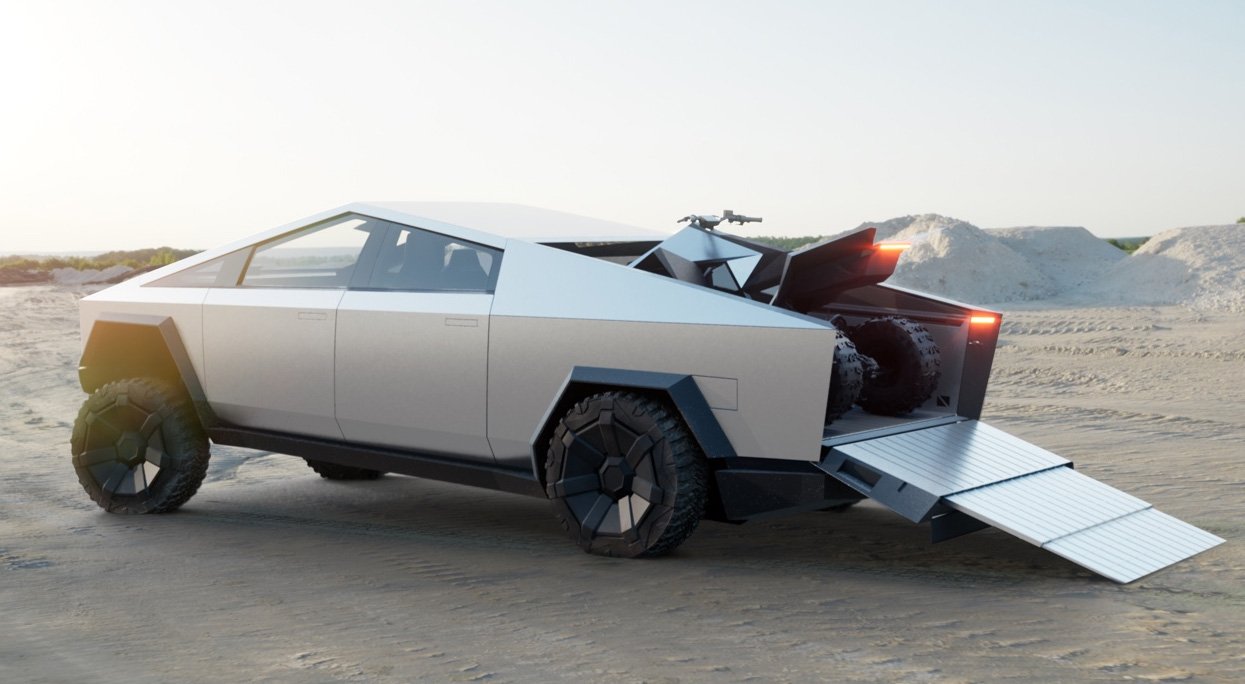
The Tesla Cybertruck, the surprising electric pickup truck, may not meet the safety requirements demanded in the old continent regarding safety
For any vehicle to be sold in Europe it must have passed and been approved against specific standards, among others, regarding safety.
The assessments carried out by the competent bodies show whether a car is fit to be sold at a dealership and, then, to be allowed to drive on public roads.
Some cars are reserved exclusively for use on, for example, race tracks because they do not meet the requirements and, for that reason, their use and enjoyment are limited to events outside ordinary traffic.
But far from being left as a car for track days or trackdays, the Tesla Cybertruck could face a legal wall if the manufacturer plans to sell its electric pickup in Europe.
Tesla Cybertruck, legal in the US but what about Europe?
Far from the controversy over the look of this vehicle, the voices questioning its legality or its compliance with the framework that allows type approval and, therefore, marketing in Europe, belong to authorized people.
In this case, it was through the German outlet Automobilwoche that the opinion of safety specialist Stefan Teller, who works for SGS-TÜV Saar, an entity that offers legal and technical advisory services on vehicle manufacturing matters regarding the requirements and demands for their approvals, was consulted and reported.
The expert has stated that he has doubts about whether the design of the electric pickup Tesla Cybertruck complies with the current European Union regulations on the framework of people’s safety.
That is because, according to Teller, the layout of the body plans of this pickup truck built by Tesla produces a series of vertices and edges that would compromise the safety of pedestrians and cyclists in the event of a collision.
Furthermore, given the use of a steel, which the manufacturer has described as ultra-strong, in the body, in the event of a collision, this structural characteristic could affect the passengers.
Let us remember that it is a vehicle with capacity for up to 6 people. The question then arises as to what would happen if, in a collision involving the Tesla Cybertruck, instead of the vehicle being the one that absorbed the released energy, it were the occupants who ended up bearing the force and consequences of the energy released throughout the car.
Pending a possible approval or attempt to obtain one so that it can be sold in Europe, Teller asserts that, to obtain the green light, the Tesla Cybertruck would need to present a significant package of modifications that would not only affect its appearance.


 Peugeot E-208 GTi: a battery-powered toy that revives the spirit of the 1980s sports cars
 New Lexus ES: luxury grows and goes electric
 First contact with the Dacia Sandero Hybrid 155: power and efficiency from €19,890
Comentarios cerrados