Bosch turns the voice assistant into another passenger at CES Las Vegas
 Guillermo Lopez
11 January 2018
6 min.
Bosch has taken a further step in driving safety and comfort by “turning the car’s voice assistant into one more passenger on board”
“I’m Casey, your new passenger. Are you ready to get started?” This is the original line with which the on-board assistant will greet the driver when they first begin their relationship. A relationship somewhat similar to the one currently taking place with the various voice assistants on the market (Alexa, Siri, Google, Cortana, Bixby,…), but which, with the new voice assistant developed by Bosch, will unfold in a very different way from what we have been used to until now.
And the truth is that Bosch has managed, so to speak, to “pull” the voice assistant out “from behind the dashboard” and turn it into another passenger on board, thereby freeing drivers from potential distractions so they can concentrate on driving, their essential task.
“When drivers get into a modern car, they can sometimes feel like a pilot: buttons, screens, confusing menu navigation with a thousand submenus. Bosch is putting an end to the button chaos in the cabin. Instead, we turn the voice assistant into a passenger,” says Dr. Dirk Hoheisel, member of the Board of Management of Robert Bosch GmbH.
An intelligent assistant, not just predefined commands
To date, the various functions of existing voice commands offered little help in this regard, since they were often structured as a simple menu of possible options for interacting with the system, outside of which it was not possible to establish contact with it. For this reason, the driver was forced to commit the structure to memory and to read on the screen or recite from memory the exact commands required for each action, which was equally annoying and dangerous for the driver in terms of keeping their attention on the road.
Bosch’s new voice assistant no longer responds only to specific commands. According to a study by the Allianz Center for Technology conducted with car drivers in Germany, drivers are frequently distracted when, for example, operating the navigation system, adjusting the air conditioning or answering a phone call. All of these distractions are currently among the main causes of traffic accidents.
Bosch’s new voice control system puts an end to this problem. “Say what you want in the way you want to say it. Bosch is putting a voice assistant in the car that now understands the driver just as any other passenger on board would,” says Hoheisel.
The system interacts directly with the driver, responding to every word addressed to it, even when offline. Bosch’s new voice assistant no longer responds only to specific commands rigidly worded, but responds with complete naturalness to everyday sentence structures, and can handle not only different languages but also the different accents and dialects of each one it, quite literally, “speaks”. And it does this in up to 30 different languages.
After more than a decade of work, Bosch has managed to make its voice assistant recognize not only purely English language and pronunciation, but also allow the use of the British, American, New Zealand or Australian dialects without any problem.
Casey, the artificial intelligence created by Bosch
But Casey goes further in its interaction with drivers, since, as a good system that brings artificial intelligence on board the car, it also thinks and learns for future interactions. Thus, the system is capable, for example, of distinguishing between people with the same name to call when the driver simply wants to call someone named Pablo. In that case, Casey automatically checks the contacts in the address book and, depending on the situation of the vehicle and the driver, the time of day and other factors, before responding to the request, since early in the morning Pablo may be the name of an office colleague or a visit to be made in the morning, while late in the day it may be the name of a friend with whom one is going to play a game of padel. In such cases, Casey responds to the driver: “I found five contacts named Paul. Do you want to call Paul Stevenson?”
Casey is able to dial a contact, take you to your destination and speak up to 30 different languages as if you were speaking to any other person. Likewise, the operation of the navigation system is much faster and simpler, avoiding the need to keep entering new destination addresses or to change the system settings when we are driving in a country that is not our own, whose destinations are pronounced in a different language. Thus, if, for example, an English driver says: “Take me to Champ de Mars, Cinq Avenue Anatole Paris”, the system directly understands the destination and quickly calculates the ideal route to the Eiffel Tower.
Another of the major advances of the system Bosch proposes lies in its complete connectivity. Casey does not require any external data connection to work properly at all times, since the car’s own infotainment system takes care of the calculations without needing to send data to the cloud, which makes interventions faster and safer. This facilitates its operation in areas of low connectivity, such as tunnels, underground car parks, areas with reduced mobile coverage and even when we are driving in countries other than the driver’s own, when the phone is offline.
Casey understands and speaks 30 different languages with their various dialects and pronunciations, and can express itself with a total of 44 female voices and 9 male voices. The system is activated simply by starting the “conversation” with a “Hello Casey” addressed directly to the assistant, without the need for activation through the use of controls or buttons. In addition, the system allows the driver to “name” it with a different name at any time.
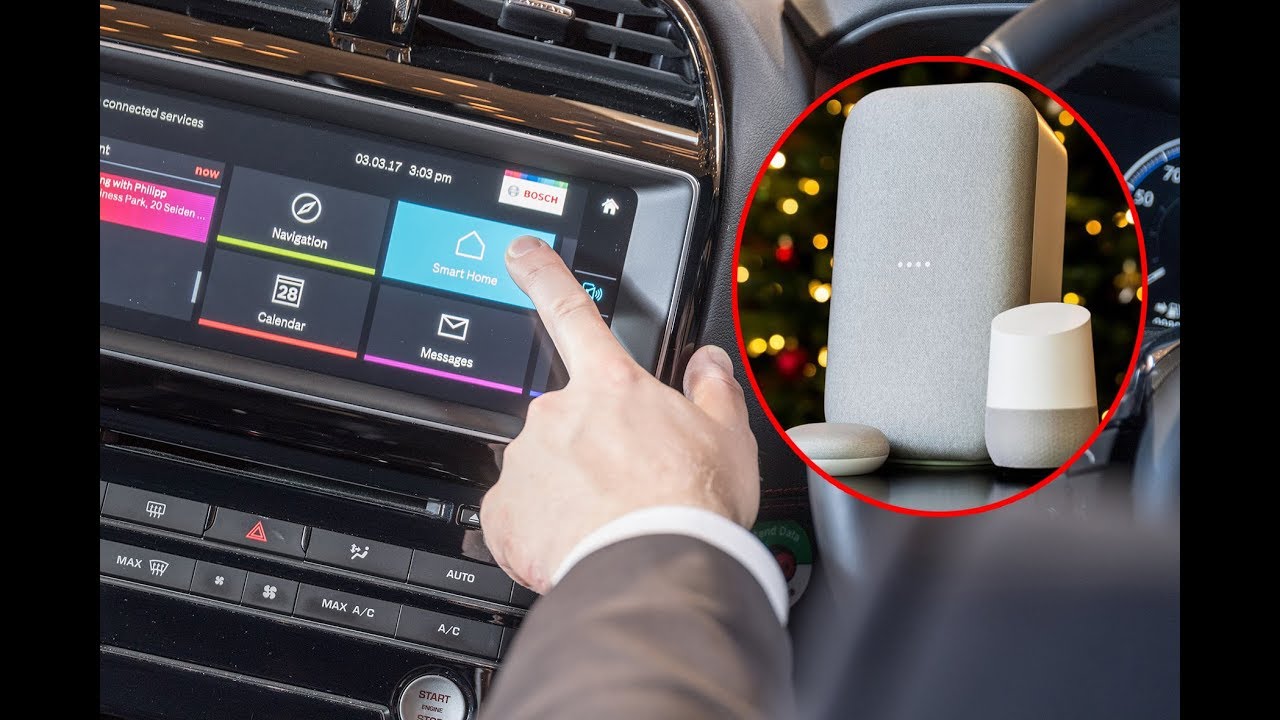
This is one of the new advanced systems that Bosch has presented at CES in Las Vegas between the coming days 9 to 12 of this same month of January, along with other applications such as automated parking valet (without the need for driver intervention), other mobility applications, and various home automation solutions controllable from the car itself, thanks to the new permanently connected on-board dashboard applicable to connected vehicles and to autonomous driving, which Bosch has also shown at CES.
https://youtu.be/b2gaQlwsXvs


 Peugeot E-208 GTi: a battery-powered toy that revives the spirit of the 1980s sports cars
 New Lexus ES: luxury grows and goes electric
 First contact with the Dacia Sandero Hybrid 155: power and efficiency from €19,890
Deja un comentario