The city will talk to cars: Ford showcases urban connectivity solutions at CES to reclaim the streets
 Guillermo Lopez
11 January 2018
4 min.
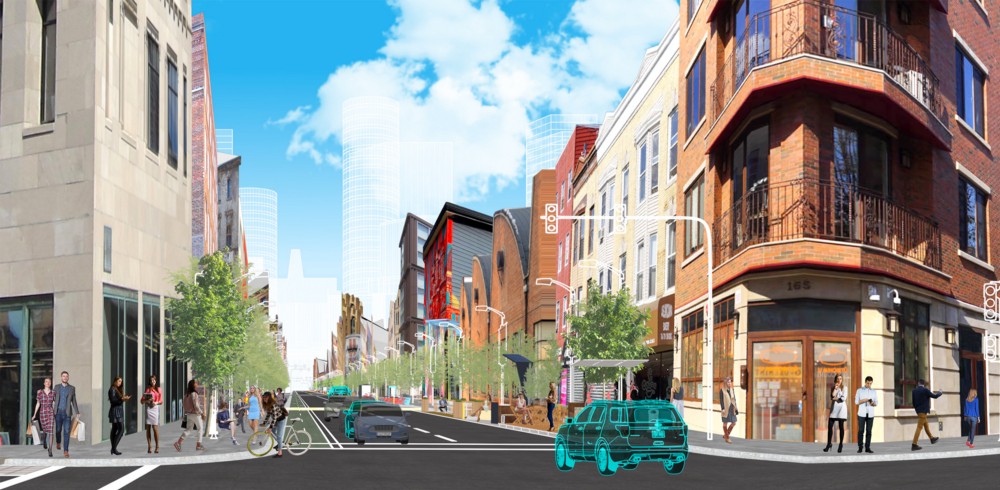
Ford presents the solutions it is developing to synchronise the cacophony of current services and functions and orchestrate a safe and efficient environment
Connecting on a large scale the many and very different pieces of information existing in complex urban transport systems is the aspiration of the service platform that Ford is developing to facilitate the flow of information and carry out basic processes, such as payment methods, identity verification or supporting the entire ecosystem. Ford has presented at the CES Transportation Mobility Cloud (TMC) the open cloud-based platform for mobility services that it has created together with its partners in the Autónomic project.
In the TMC, the transport modes of cities can work together in a coordinated way. For example, instead of leaving the car parked in double file, a delivery van could book and pay for its parking space, and the platform, the city, would tell an approaching vehicle when that same space will be free again. This would allow residents and businesses to have the information and access they need to schedule their timetables more intelligently, with the resulting savings that this entails.
For the system to work optimally, its different components must be able to communicate with each other and, so to speak, “speak the same language”, and this is where the technology included in a vehicle can play a very important role.
C-V2X connectivity, that complex language that should speak a single language
In collaboration with partners such as Qualcomm, Ford is working on developing vehicle-to-everything connectivity (Connectivity Vehicle to X or C-V2X), thanks to which the various technologies and applications existing in a city (traffic lights, signs, cyclists, pedestrian devices and, of course, the vehicles themselves) can communicate with each other and share information. C-V2X will allow the cities of the future to quickly and securely share communications and mobility data with their cars, avoiding traffic jams and optimising the use of space allocated to parking, both at surface level and underground, thus facilitating traffic flows.
The C-V2X project will connect vehicles and urban furniture with each other to improve road traffic C-V2X would make it possible for the vehicles ahead of us in traffic to automatically warn ours of possible hazards on the road, thus avoiding sudden steering movements to dodge them. It could also, for example, have the traffic lights on our route inform us of possible traffic jams on our urban route and suggest the shortest and fastest way to complete it.
Both the open mobility services platform and participation in a robust communications system will become a reality when autonomous vehicles are present in large numbers on city streets and gradually change the way people and goods move through them. Ford is not interested in developing autonomous vehicles that operate as isolated nodes in a mass transport environment, since this would not generate the full potential that the technology can offer.
Developing an optimised system of transport modes through technology will bring a significant improvement in the flows of people and goods and will give city streets important opportunities to host potentially more valuable uses. Technology will enable public transport to operate so efficiently that citizens will trust it more, which will undoubtedly reduce the number of vehicles on the streets, consequently facilitating greater access to mobility and an improvement in pollution levels in the city, with the benefit this brings to citizens’ health.
Ford believes that streets are public space at the service of people, not cars Moreover, when all elements of traffic are connected to it, the open platform will make it possible to better understand and comprehend how our streets “work” and are used, which will, for example, make it easier to determine the safest places for transport services to stop and pick up and drop off passengers (even more so when the vehicles these services use are fleets of fully autonomous vehicles), or to have better route-planning services at all times, faster and more effective.
Ford shares the vision that streets are dominant components of public space that should serve the people who live, work and connect in them, not cars; for this reason the platform’s focus is on the people who receive the service rather than, as has happened until now, on the vehicles present in them. The redesign of mobility to reclaim the streets is under way.


 Kia offers an electric range of 10 models, 50 versions and 400 possible combinations
 The seven finalists for the 2027 European Car of the Year (COTY) are exclusively electric
 Peugeot E-208 GTi: a battery-powered toy that revives the spirit of the 1980s sports cars
Deja un comentario