BYD Seal U Hybrid Cars ECO Review Uncategorized SUV
BYD Seal U DM-i 2027, first test drive: are the improvements enough to remain the best-selling plug-in hybrid?
 Antonio Roncero @roncero_antonio
27 November 2026
11 min.
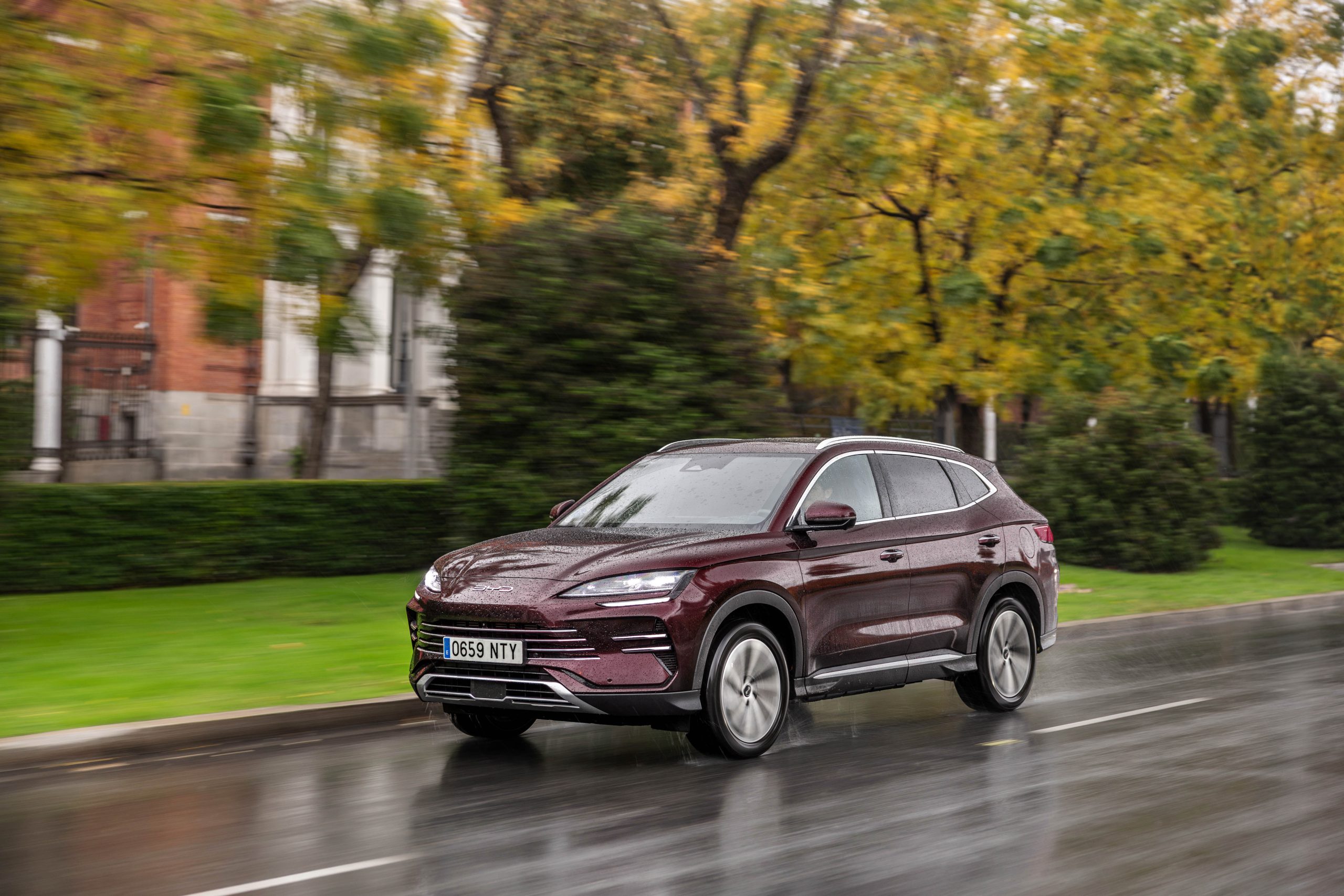
The BYD Seal U DM-i gains power, charges faster and gets changes to steering and suspension that improve its behaviour. It also gains boot space. The facelift is convincing, but its rivals are also pushing hard.
The BYD Seal U DM-i was the best-selling plug-in hybrid in Spain in 2025 and remains at the top so far in 2026. It is also the best-selling model of BYD in our market, where it accounts for almost 30 % of the brand’s registrations. With those figures BYD could simply have faced 2027 with a model that is still very “young” and still enjoys strong acceptance. But the brand has preferred to revise some of the areas where there was room for improvement: dynamic behaviour, boot capacity, the response of the powertrain when travelling on motorways in the less powerful versions, and the time needed to recharge at a fast charging point.
These are not minor details. We are used to models taking 4 or 5 years from launch before being updated, and usually that comes with a “facelift”. But Chinese brands have changed the rules of the game. The new Seal U DM-i, for example, does not change aesthetically, yet it brings important news… and it has not even been on sale for two years.
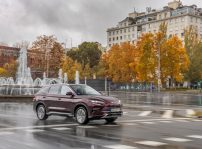
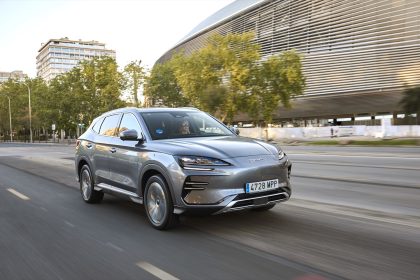
We won’t dwell much on the design because, as I say, the only changes are the arrival of two new colours in the range, Burgundy Red and Graphite Blue. The grille incorporates active shutters to manage airflow, and the 19-inch wheels across the whole range are black on the top-spec Design finish. There are no design changes inside either, beyond a new blue and grey finish and the stitching in the black-finish versions, which now becomes red instead of green. The bulk of the update is under the bodywork.
Turbo engine across the range and up to 130 km in electric mode
The most important point is that the Boost and Comfort versions replace the previous naturally aspirated petrol engine with an evolution of the 1.5 turbo that until now was reserved for the Design version, which also now features it. Combined with the 204 hp front electric motor, system power rises from 218 to 238 hp in these front-wheel-drive Boost and Comfort versions, which maintain the battery differentiation: the Boost, with an 18.3 kWh battery, is homologated for 80 km in electric mode. The Comfort, with a 26.6 kWh battery, reaches 130 km and remains the only model in the range that exceeds 1,000 km of homologated combined range.
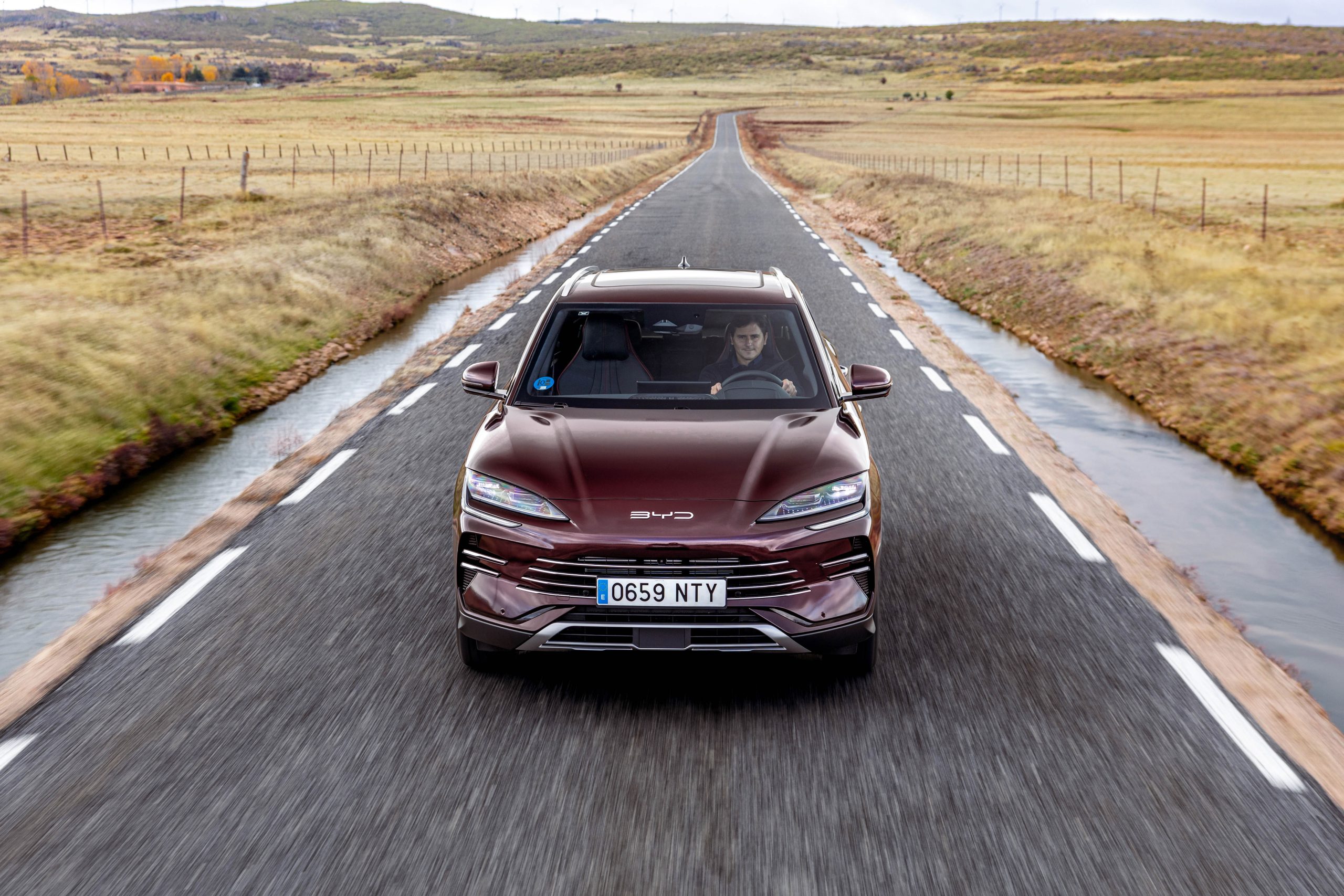
The one that gains most in this respect is the Design, which keeps all-wheel drive thanks to the second electric motor on the rear axle, reaches a system power of 374 hp and drops to 5.1 seconds for 0 to 100 km/h. But in addition, it now uses the same 26.6 kWh battery as the Comfort (previously it had the smaller Boost battery), and its electric range rises from 70 to 114 km. In other words: before, choosing the most powerful Seal U DM-i also meant ending up with the one with the lowest electric range. Now it comfortably outperforms the Boost and even approaches the Comfort.
| Version | Power and drive | LFP battery | WLTP electric range | WLTP total range | 0 to 100 km/h |
| Boost | 238 hp, 4×2 | 18.3 kWh | 80 km | 980 km | 8.1 s |
| Comfort | 238 hp, 4×2 | 26.6 kWh | 130 km | 1,030 km | 8.4 s |
| Design | 374 hp, 4×4 | 26.6 kWh | 114 km | 914 km | 5.1 s |
Less stop time on journeys: from 18 to 55 kW fast charging
All three versions now accept 55 kW DC, compared with the previous 18 kW. According to BYD, the Boost goes from 30 to 80 % in 15 minutes, and the Comfort and Design in 20. For those who charge every night at home, the novelty will have little impact on routine. On the road it does change things: a short stop already allows recovering a noticeable part of the electric range, although it doesn’t seem the best option with a plug-in hybrid, where you won’t have range problems and consumption stays low even with the battery depleted. Moreover, the price of DC charging usually “cancels out” the EV advantage in cost per kilometre when travelling.
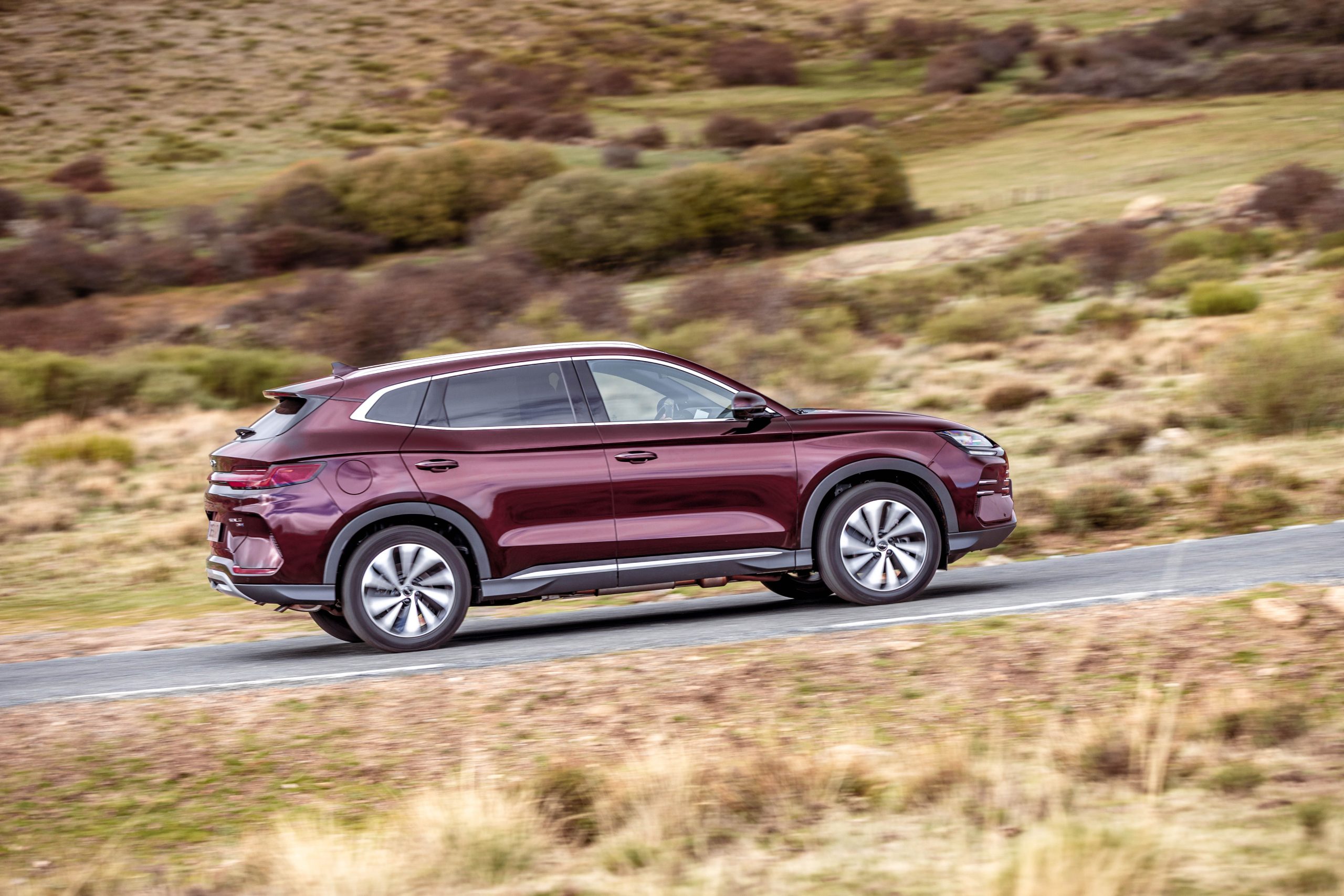
AC charging remains at 11 kW with a three-phase socket. At that power, the official specification indicates two hours from 15 to 100 % on the Boost and three hours on the large-battery versions. In the end, the reality is that most PHEV owners who charge at home do so from a domestic socket, charging overnight at between 2 and 4 kW. In any case, there is the DC improvement, although the Seal U DM-i still falls behind new contenders in the category such as Geely’s Monjaro EM-i.
Up to 530 litres of boot space and Google Maps as standard
Another area where the Seal U could improve was boot capacity. It is not always easy, but BYD has managed to increase the capacity by redesigning the side trim and slightly lowering the floor to gain width and depth. The volume now reaches 530 litres in the Boost and Comfort and 510 litres in the Design, while keeping the rear seat space intact. The gain is about 105 litres, which is not bad at all. In a car of this size, where the rear seats were already one of its selling points, it is welcome that the boot is more in keeping with the cabin. Nor does it take the lead in this area, where cars such as the Skoda Kodiaq PHEV or the Monjaro EM-i exceed 600 litres.
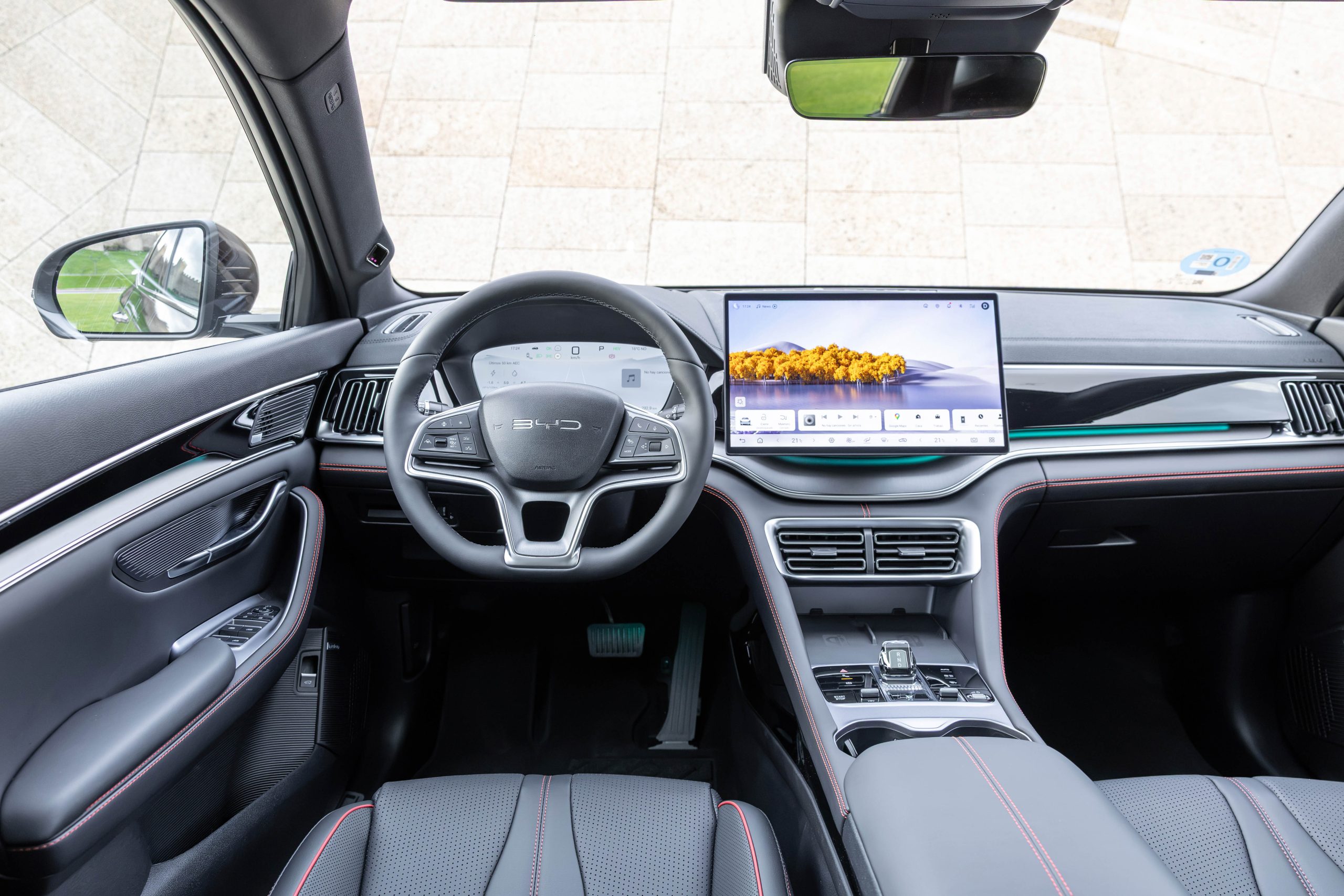
The central screen remains 12.8 inches on the Boost and 15.6 on the other two finishes, but now all of them come as standard with integrated Google, including Maps, voice assistant and access to Google Play. The front seats gain four-way lumbar adjustment, and the Comfort and Design add heated outer rear seats. These two finishes also include front ventilation, head-up display and Infinity sound system. The Boost already comes with a heated steering wheel and front seats, dual wireless phone chargers and V2L function to power external devices.
Behind the wheel of the new BYD Seal U DM-i 2027
The changes don’t end here, as BYD has also identified room for improvement in dynamic behaviour and acted accordingly. Ebro had a similar experience with its S700 and S800 and also solved it with good results. Although exceptions are starting to appear, it is common for Chinese brands arriving in Europe to have models that fall short in suspension and steering that feel very far from what European customers demand, and the solution is simple: work on the steering and brake tuning.
BYD has opted for a new double-pinion electric power steering, and it is one of the changes that is most noticeable. The wheel offers slightly more resistance and the car turns in more easily with greater precision. The move from three to four rear suspension arms and the new damping also contribute to the improved dynamic behaviour. The bodywork leans less and, when several bends follow one another, there is greater precision and agility. It is an improvement that is also appreciated on the motorway, where it conveys more composure. The steering could still communicate a little more on a twisty road, but the suspension controls movements better without the car losing its good ride comfort. That balance is the greatest advance of this update.
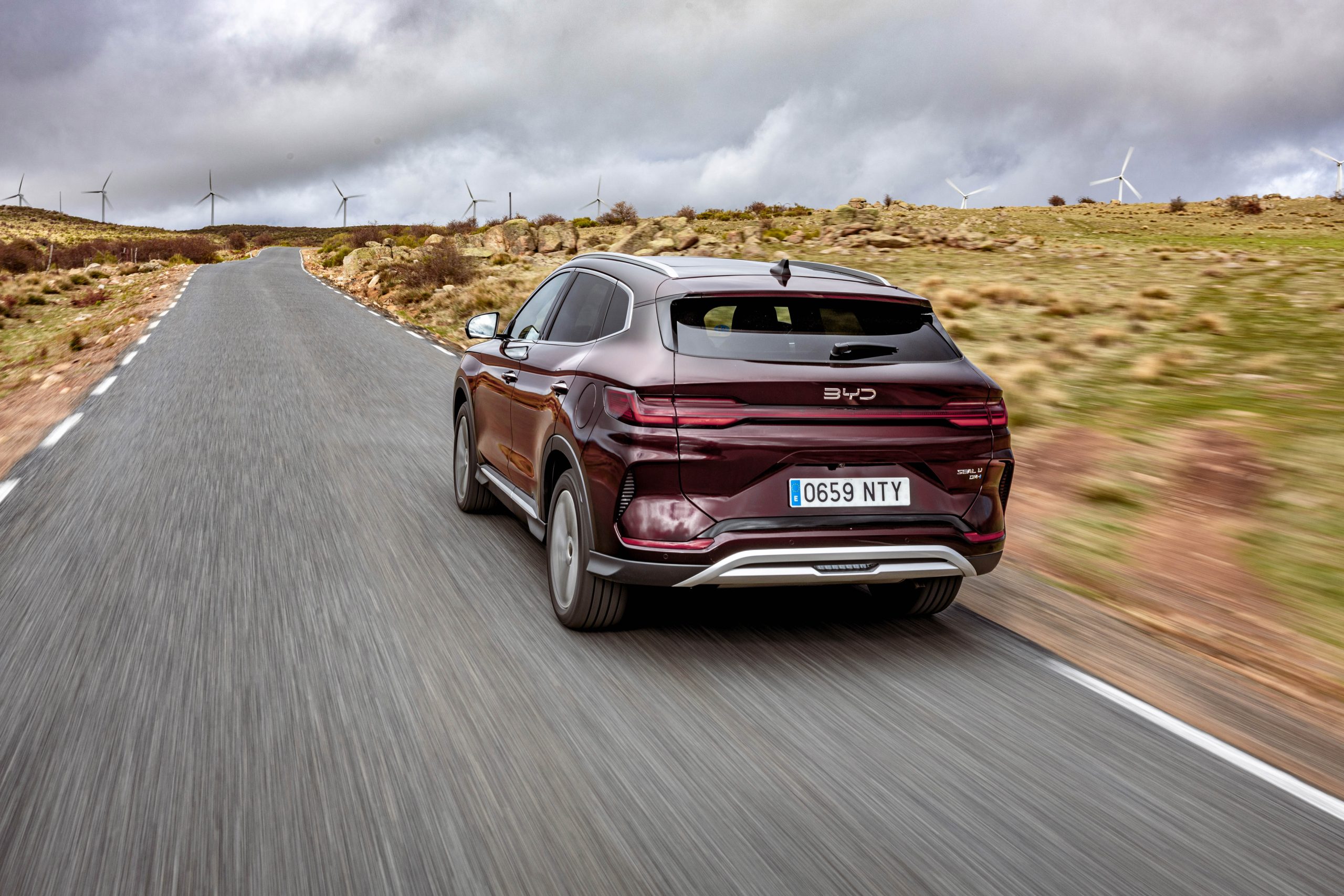
As for the switch to the turbo engine in the powertrain, the 238 hp of the 4×2 versions gives plenty of margin; it’s not as if more performance was missed before. More than the acceleration figure or the in-gear recovery, the gain lies in the greater smoothness with which the petrol engine comes in, and in how, when travelling, its operation sits much more in the background and its intervention is less noticeable than before, improving not only responsiveness but also noise and comfort. A longer test will be needed to check the real-world range and what consumption it records on the motorway once the battery’s electric range is exhausted.
Prices of the BYD Seal U DM-i 2027 and which version is the best buy
With the Plan Auto+ exhausted and with the outcome of these aids still pending at the time of writing, these are the list prices and the prices with campaigns and financing discounts for the Seal U DM-i range.
| Version | Official list price | With campaigns and financing |
|
| Boost | 39,300 € | 33,040 € | |
| Comfort | 43,500 € | 36,740 € | |
| Design | 48,500 € | 39,240 € |
The Boost is probably the most sensible purchase if you can charge often and your daily journeys fit comfortably within its electric range. It has the same power and boot capacity as the Comfort, and it also charges at 55 kW. The Comfort costs 3,700 euros more with the announced campaigns. In return, it adds 50 km of homologated electric range with the larger-capacity battery and improves the equipment, adding the larger central screen, HUD, front seat ventilation and rear seat heating, ambient lighting, Infinity sound system and dynamic welcome light.
The Design is the one that changes position most when the discounts are applied, as the 5,000 euros that separate it from the Comfort at list price drop to 2,500 euros with the announced campaigns. For that difference it adds all-wheel drive with new Arena and Mud driving modes and 136 hp more. The Comfort keeps the advantage in range and boot space, so the choice depends on how much value is placed on 4×4 capability and superior performance.
Alternatives that make life difficult for the BYD Seal U DM-i
It remains to be seen whether these improvements are enough for the Seal U DM-i to keep dominating the segment as it has done so far.
The Geely Starray EM-i, which has already outsold it in some months, is the rival I would consider as an alternative to the Seal U Boost and Comfort. It is somewhat more compact (Geely places it in the C-SUV segment, while for BYD the Seal U is a D-SUV), but it offers no less space or boot capacity, also comes in two battery sizes and has a lower entry price. Its large-battery version goes head-to-head with the Comfort if the priority is covering as many daily kilometres as possible in electric mode.
Above it, the newly arrived Geely Monjaro EM-i Ultra competes directly with the Seal U DM-i Design. It also has all-wheel drive and claims 334 hp and 116 electric km, and it impressed us very favourably in terms of quality and dynamic behaviour in the first test drive. Geely announces a launch price of 40,240 euros with discounts, 1,000 euros more than the top-spec Seal U DM-i. Compared with the BYD, the Geely includes adaptive damping suspension as standard.
Most alternatives to the BYD Seal U DM-i among family SUVs with plug-in hybrid technology also come from Chinese brands. If you want something cheaper, there is the MG HS. With seven seats there is the Ebro S800. With a more off-road character there is the GWM Haval H7. And with extended-range technology and an unbeatable price there is the Leapmotor C10 REEV. Another very interesting alternative with current campaigns is the Mitsubishi Outlander PHEV. And among European rivals, the CUPRA Terramar offers a sportier character. Not forgetting other options such as the Toyota RAV4, the Kia Sportage or the Hyundai Tucson.
Given all this and the improvements introduced, will the update be enough for the Seal U DM-i to remain the best-selling plug-in hybrid? Judging by how much the car has improved, being more pleasant to drive and with more boot space, I would say yes. But things have changed a great deal in the barely two years the Seal U has been on the market, and it is going to find it hard to defend the lead. For buyers, this competition is the best news.
BYD Seal U DM-i 2027 – Image gallery
Technical specifications of this car
 Kia offers an electric range of 10 models, 50 versions and 400 possible combinations
 The seven finalists for the 2027 European Car of the Year (COTY) are exclusively electric
 Peugeot E-208 GTi: a battery-powered toy that revives the spirit of the 1980s sports cars
Deja un comentario