Can you imagine refuelling without having to get out of the car to pay at the till? This will soon become a reality.
 David Lopez @espacionblanco
29 May 2017
3 min.
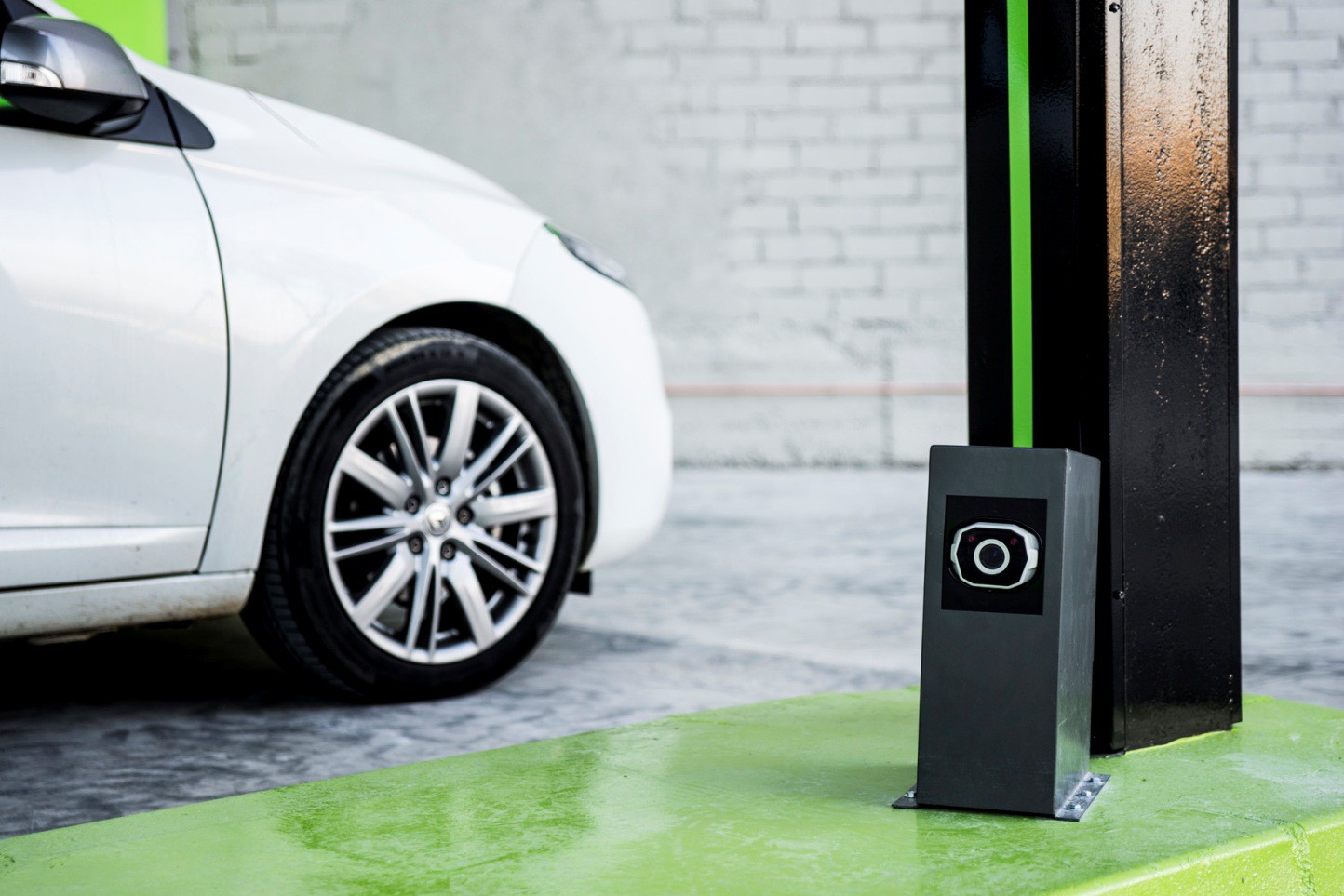
The Spanish company 2i Informática could soon change the way we refuel at petrol stations, without having to go to the till to pay.
As the world’s car fleet gradually shifts to electric or hydrogen power, refuelling at petrol stations as we know it today will also become a thing of the past. But while this happens, many people still find the trip to the till to pay once the tank is full a bit of a chore, so it’s not unusual to still see people handing over their money to the attendant through the car window.
But this everyday task of having to get out of the car to pay at the till could soon be a thing of the past, thanks to the good work of a Spanish company. 2i Informática is a Catalan company that is mainly dedicated to the automation and control of petrol stations, and has teamed up with another company called Lafon España, the Spanish subsidiary of the French company Lafon SAS, which specialises in petroleum equipment.
2i Informática has developed a system it has named 2iVision, which consists of an infrared camera capable of reading our vehicle’s registration plate even in the most adverse conditions. The system’s software uses OCR, an acronym for Optical Character Recognition, which has been tested in a multitude of environments and conditions to achieve maximum reliability.
Once we have refuelled, the system will ask us for a personal code to provide greater security, and it will also save an image that can be checked later in case of discrepancies. Another advantage of the 2iVision system is that we will be able to keep accumulating our loyalty points for refuelling, as well as accessing any discounts we may have and that are offered to us.
For the time being, the 2iVision system has not yet reached conventional petrol stations, but it has been used and tested for a few years at in-house installations, such as fleets of lorries or vehicle rental companies. The results have been quite satisfactory, as refuelling and its control have now become much more agile.
As you can see, using this system at petrol stations can bring many advantages, but we must also recognise that there will be some drawbacks. In my opinion, the most important one is perhaps the loss of jobs, since the role of a petrol station worker will be practically reduced to putting the hose in and taking it out. However, we should also bear in mind that this will not happen only in this sector, as the automation of work will eventually reach all sectors and corners of the world. What do you think?
Source | Lafon Technologies


 Kia offers an electric range of 10 models, 50 versions and 400 possible combinations
 The seven finalists for the 2027 European Car of the Year (COTY) are exclusively electric
 Peugeot E-208 GTi: a battery-powered toy that revives the spirit of the 1980s sports cars
Deja un comentario