Charge your electric vehicle without trouble in sub-zero temperatures
 Javier Cantagalli
22 January 2024
3 min.
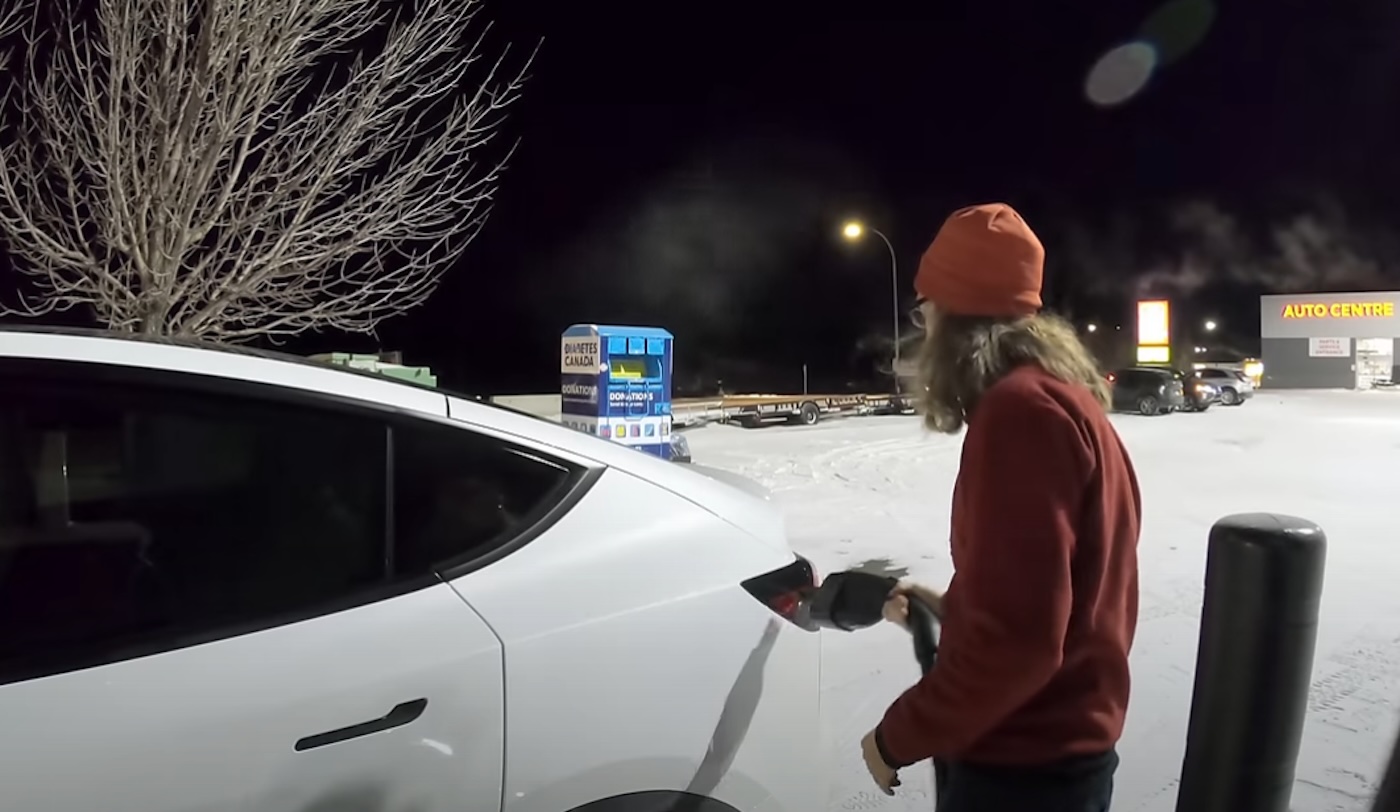
Some novice drivers’ lack of knowledge about how electric vehicles work is causing charging stations to become overloaded during the intense winter cold
Over the past few days you have probably heard, seen or read reports in the media or on social networks about the problems some electric vehicle drivers are having in the United States and in other parts of the world where winter is making itself felt. Reports that may have made you doubt the viability of vehicles with this type of propulsion in these kinds of situations. It should not be forgotten, however, that this may well have been the writer’s intention.
The reality is that electric vehicles work perfectly, although with some limitations, in adverse weather conditions that many of us have never even experienced. Nor should we forget that in such situations combustion-engine vehicles are not exempt from problems either. This is normal when they are pushed to their limits.
Proof of this is the video just published by Tesla Camping Canada on YouTube, which you will find a little further down, in which a Tesla Model Y Long Range AWD demonstrates that it is perfectly possible to carry out a charge at temperatures of around 35 degrees Celsius below zero, the temperatures that were actually recorded in the Alberta region of Canada.
This is what you should always do to avoid problems
As can be seen, the secret to achieving this is always to precondition the battery before charging it. This is something that many novice electric vehicle drivers are unaware of, and as a result they end up suffering the consequences. This also explains some of the news stories that have emerged in recent days. The problem is not electric vehicles; rather, many of these drivers have not read the owner’s manual to learn how to deal with situations like those experienced these days.
Most electric vehicles, like the one shown in the video, have the ability to precondition the battery, and doing so is as simple as adding a charging point to the route in the navigation system. In this way, the vehicle will know when a DC charge is intended and can warm the battery just before arrival to optimise its performance. If, on the other hand, the charging point is not entered into the navigation system, the battery will be so cold when the process starts that it will be unable to withstand fast charging, and that is where the complaints come from.
In the case at hand, although the temperature was around 35 degrees below zero as we have said, the Tesla Model Y was able to withstand a charging power of more than 100 kW. The video also repeats the process at two other nearby chargers with the same result.
https://www.youtube.com/watch?v=83mDbdnEjlo
The conclusion, therefore, is that yes, driving in winter under extreme conditions does involve some limitations. Range will be somewhat reduced, both because of the effect of the temperature on the batteries and because of the energy consumed to precondition them before starting a charge. But that does not mean you cannot travel or that you will be left stranded. You simply need to plan a little further ahead: if under normal conditions your electric vehicle lets you drive around 500 km in one go, in situations like this it may be around 300 km. But that is all, provided we remember how important it is to precondition the battery before charging.
Technical specifications of this car


 The seven finalists for the 2027 European Car of the Year (COTY) are exclusively electric
 Peugeot E-208 GTi: a battery-powered toy that revives the spirit of the 1980s sports cars
 New Lexus ES: luxury grows and goes electric
Deja un comentario