Cupra delays its entry into the US market beyond 2030
 Javier Cantagalli
1 August 2025
2 min.
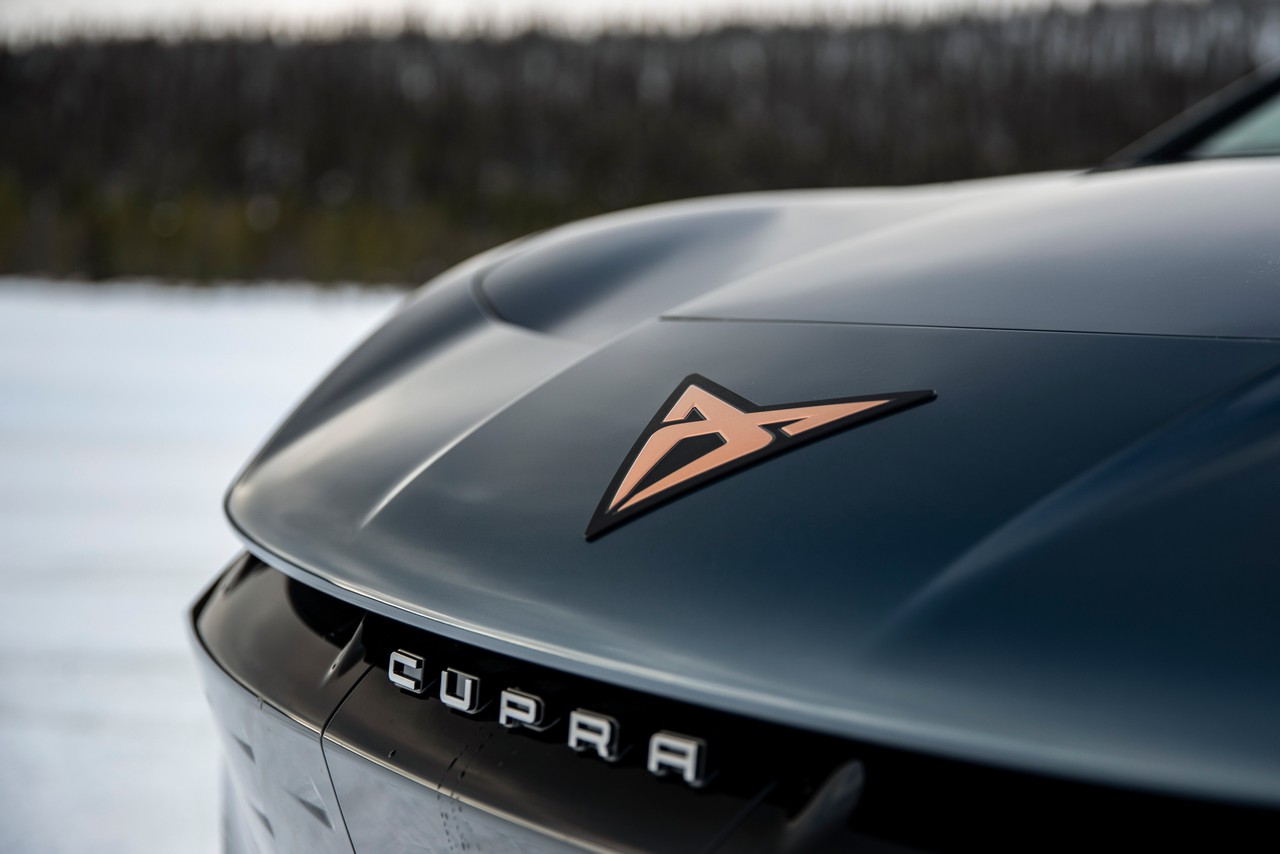
The Spanish brand will now focus its efforts on consolidating its presence in other key markets and will explore new regions with high potential to expand its global reach.
The Spanish brand Cupra has been forced to readjust its commercial expansion strategy due to regulatory uncertainty and changes in the dynamics of the electric vehicle sector. For this reason, the company has decided to postpone its entry into the US market, initially planned for 2030.
This strategic adjustment has also led the company to suspend the negotiations already begun with the Penske Automotive dealership group, with which it had planned to establish a distribution network in the United States, according to the second-quarter financial report of the Spanish firm.
It is important to clarify that this decision is not related to the recent departure of Wayne Griffiths, former CEO of SEAT and Cupra, who had driven the US expansion plans. Rather, it responds to demand projections and the current challenges in the electric mobility sector.
Current conditions are not suitable
The elimination of federal tax credits for electric vehicles by the current US government, together with the possible cancellation of incentives for charging infrastructure, has completely changed the scenario. Although a temporary increase in demand for electric vehicles is expected before the tax credit expires in September, long-term prospects are, as of today, uncertain.
“We are not abandoning our plans, we are only delaying them. We will continue to monitor the evolution of the US market to define the most appropriate timing and strategy, always aligned with the long-term vision of Cupra.”
In the first half of 2025, Cupra recorded solid growth, delivering 167,600 vehicles, a 33.4 percent increase over the previous year. Meanwhile, SEAT deliveries fell 21.4 percent, with 135,000 vehicles handed over to its customers. Together, both brands therefore delivered just over 300,000 vehicles, a slight increase compared with the same period last year.
In any case, and according to representatives of the Spanish firm itself, the first half of the year has been a major challenge for the company. Higher production costs and increasingly intense competition have affected results. And to make matters worse, European Union tariffs on the Cupra Tavascan, which is produced in China, have had a negative impact on profits. Likewise, SEAT’s main plant in Martorell has also reduced its output due to the ongoing restructuring to produce future electric models, such as the Cupra Raval or the VW ID.2.


 Peugeot E-208 GTi: a battery-powered toy that revives the spirit of the 1980s sports cars
 New Lexus ES: luxury grows and goes electric
 First contact with the Dacia Sandero Hybrid 155: power and efficiency from €19,890
Deja un comentario