Análisis Electric Cars Compact Rankings
Electric compacts 2026: range ranking
 Iván Navarro
11 May 2026
6 min.
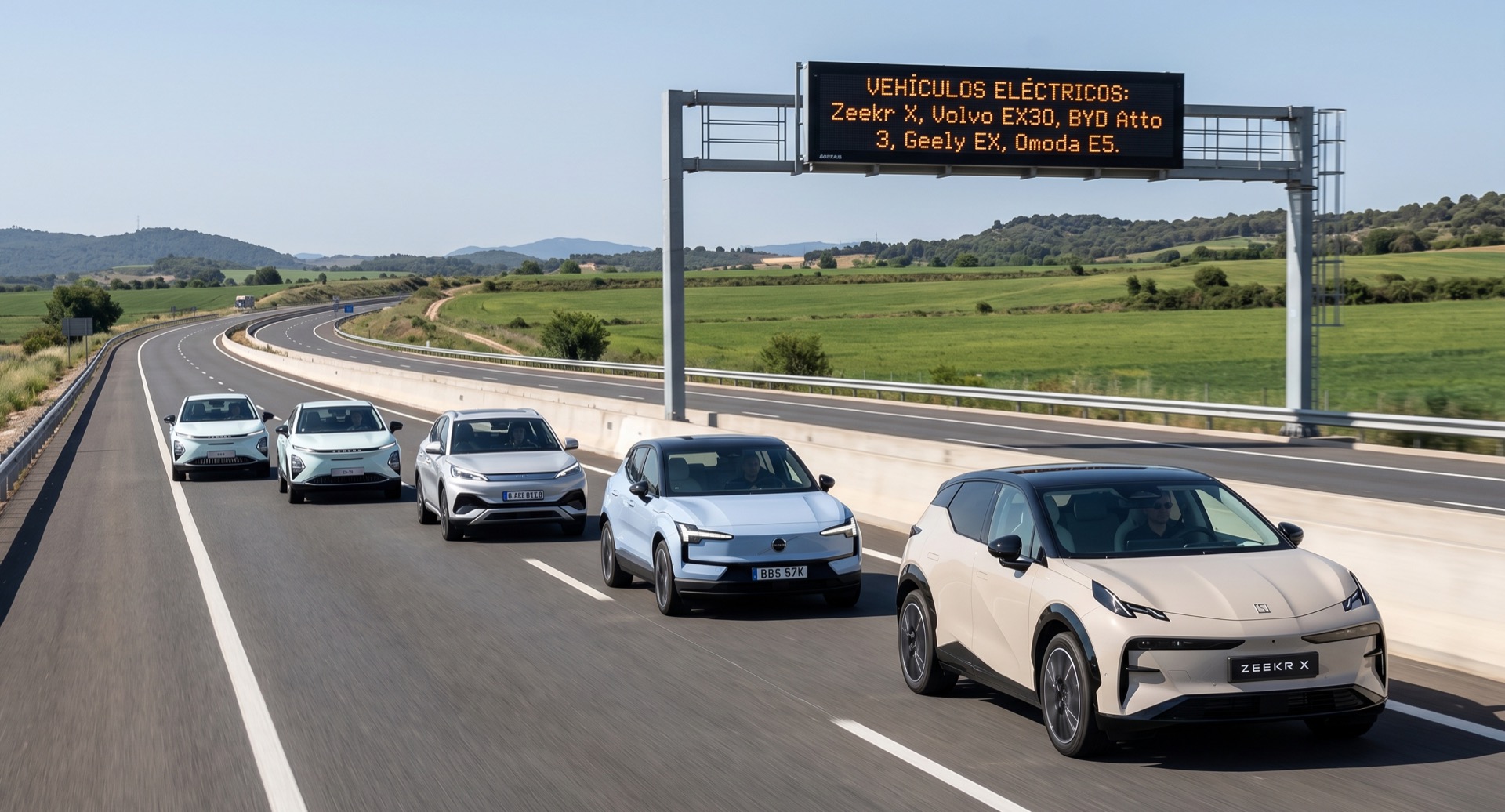
The electric mobility revolution is being consolidated through a new generation of compact SUVs that balance power and range. Below we present a selection of the most outstanding ones.
In 2026, the electric C-segment is experiencing its most competitive year. What just three years ago was territory reserved for a handful of European brands and Tesla has now become a battlefield where Asian manufacturers such as BYD, Geely, Omoda or Zeekr are contesting leadership with historic benchmarks such as Volvo. And they are doing so with one metric as their banner: range. In this analysis we review which electric compacts offer the best homologated WLTP figures, how these translate into real-world consumption, and which proposal best suits each user profile.
Why range still drives the purchase decision in 2026
Although the fast-charging network in Europe already exceeds 950,000 operational points, and the average charging speed has risen from 50 kW to more than 150 kW in mid-range models, range remains the primary purchase filter. Three factors explain this: the uneven infrastructure across countries, the real loss of performance in winter —between 18% and 25% according to verified measurements— and buyer psychology, which still values the safety margin above charging speed.
In the C-segment, where the average price sits between 32,000 and 48,000 euros, every additional 50 km of homologated range can tip the commercial balance. This is why manufacturers have concentrated their R&D on high-density LFP chemistries, active thermal management and optimised aerodynamics (Cd below 0.24 in the most efficient models).
Methodology: how we built the ranking
We worked with three variables: the homologated WLTP range of the model in its highest usable-capacity version, the combined average consumption in kWh/100 km according to the homologation sheet, and the estimated range in real mixed use (a combination of 60% extra-urban / 40% urban at 18 °C). Only models with valid European homologation for the 2026 commercial year and five-door compact or C-size crossover bodywork are included.
Range ranking: the most capable electric compacts of 2026
| Position | Model | WLTP range | Usable battery | Consumption (kWh/100km) |
|---|---|---|---|---|
| Zeekr X Long Range | 560 km | 75 kWh | 14.2 | |
| Volvo EX30 Twin Performance Extended | 540 km | 69 kWh | 13.8 | |
| BYD Atto 3 Comfort 2026 | 510 km | 71.4 kWh | 15.1 | |
| Geely EX5 Long Range | 495 km | 65 kWh | 14.4 | |
| Omoda E5 Pro | 460 km | 64 kWh | 15.3 |
Zeekr X: the technological benchmark
The Zeekr X leads the ranking with 560 km WLTP thanks to an 800 V architecture that also allows it to charge from 10 to 80% in 22 minutes. Its homologated consumption of 14.2 kWh/100 km is notable, considering an operating weight close to 1.9 tonnes. Zeekr has opted for a SEA (Sustainable Experience Architecture) platform shared with other models in the group, which lowers costs without penalising performance. The downside: a starting price of around 44,500 euros places it at the upper end of the segment.
Volvo EX30: Swedish engineering, competitive range
The Volvo EX30 Twin Performance Extended reaches 540 km WLTP with an efficiency of 13.8 kWh/100 km, the lowest in the top 5. Volvo maintains its hallmark in safety —seven airbags, standard level 2+ driver assistance and an ultra-high-strength steel structure in the cabin— without giving up dynamic behaviour that its Asian rivals are still refining. Its price, close to 41,900 euros, positions it as the rational premium option in the ranking.
BYD Atto 3: the Blade battery makes the difference
The BYD Atto 3 in its 2026 update reaches 510 km WLTP thanks to the new generation of the Blade battery with higher-energy-density LFP chemistry. BYD’s competitive advantage lies not only in range but in durability: guaranteed charge cycles above 3,000 without significant loss of capacity. With an entry price close to 38,000 euros, it establishes itself as the most balanced option for those who prioritise long-term reliability.
The efficiency factor: kWh/100 km, the forgotten metric
Comparing ranges without looking at consumption is a common mistake. A car with an 80 kWh battery and 500 km WLTP is objectively less efficient than another with 65 kWh and 480 km. In this respect, Volvo comes out ahead: 13.8 kWh/100 km in the EX30 means a 400 km trip consumes roughly 55 kWh, compared with the 60-61 kWh an BYD Atto 3 would need for the same journey. The difference, translated into domestic charging cost at off-peak tariffs, amounts to about 280 euros per year for a user driving 20,000 km.
Geely EX5 and Omoda E5: the battle for segment access
Geely EX5: technology without a price premium
The Geely EX5 arrives in Europe in 2026 as the group’s rational offering. With 495 km WLTP, a GEA platform with an optimised 400 V architecture and a price starting around 33,500 euros, it offers one of the best euro-per-kilometre ratios on the market: approximately 67.7 €/km of homologated range. Geely combines European engineering —inherited from its involvement with Volvo and Polestar— with Asian production costs.
Omoda E5: the entry door
The Omoda E5 Pro positions itself as the most accessible option in the top 5, with a price close to 31,900 euros and 460 km WLTP. Its consumption of 15.3 kWh/100 km is not the best in the ranking, but its proposition —full equipment, an eight-year or 200,000 km battery warranty and an expanding service network— makes it a solid alternative for those making the leap to electric without wanting to enter premium ranges.
Real range versus WLTP: what to expect in mixed use
WLTP figures are rarely reproduced on the road. Our mixed-use estimate at 18 °C yields the following data:
- Zeekr X: 470-485 km real
- Volvo EX30: 460-475 km real
- BYD Atto 3: 420-440 km real
- Geely EX5: 415-430 km real
- Omoda E5: 380-400 km real
On the motorway at a sustained 120 km/h and with temperatures below 5 °C, losses can reach 30%. The Volvo EX30 and the Zeekr X are the ones that best withstand these conditions thanks to their active thermal management with standard heat pump.
Recommendations by user profile
For the frequent long-distance driver: Zeekr X or Volvo EX30. The combination of range above 540 km and fast-charging architecture makes them the most versatile.
For mixed urban/interurban use with a priority on reliability: BYD Atto 3. The Blade battery offers a service life that no competitor can match on paper.
For those seeking advanced technology without entering the premium range: Geely EX5. Modern platform, competitive range and a reasonable price.
For the first family electric car: Omoda E5. Equipment, warranty and price in a package without surprises.
Conclusion: 2026 consolidates the maturity of the electric C-segment
The electric compact has ceased to be a concession to the environment and has become the rational choice. Five models exceed 460 km WLTP under homologated conditions, and all of them do so for less than 45,000 euros. Range is no longer an exclusive argument of premium saloons and is now within reach of any driver renewing their vehicle in 2026. The question is no longer whether an electric car covers the needs of the average user, but which brand best fits their profile. And in that decision, data like that in this ranking make all the difference.


 Peugeot E-208 GTi: a battery-powered toy that revives the spirit of the 1980s sports cars
 New Lexus ES: luxury grows and goes electric
 First contact with the Dacia Sandero Hybrid 155: power and efficiency from €19,890
Deja un comentario