Fords and water crossings: keeping your car from drowning in a puddle
 Antonio Roncero @roncero_antonio
28 July 2021
4 min.
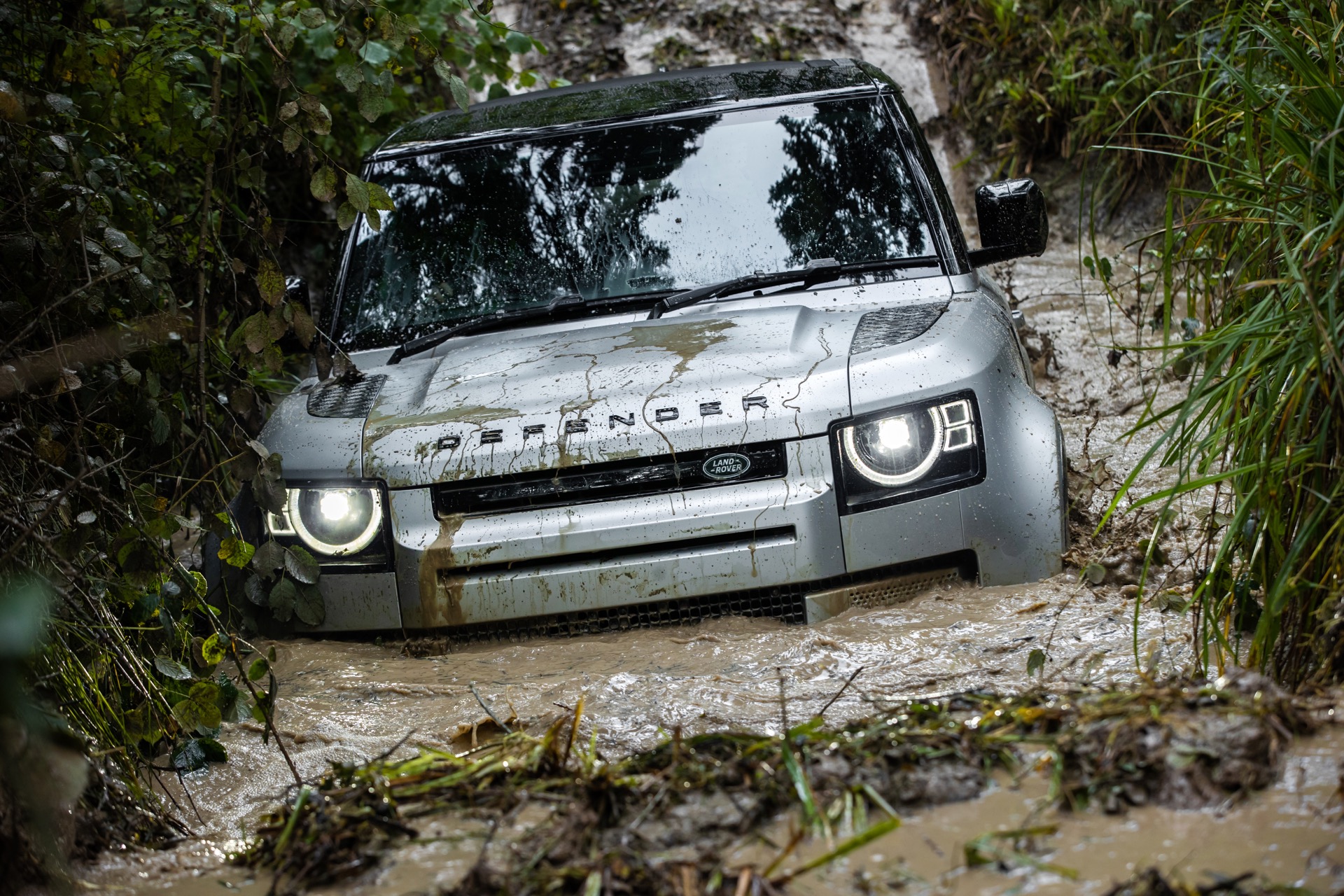
Crossing a water crossing with a car requires taking a series of precautions if we don’t want to get into serious trouble. Here’s how to do it correctly.
Whether you’re just starting out in 4×4 driving, or you have an SUV and come across a water crossing on one of your off-road excursions, it’s important to be very clear on how to tackle a crossing.
On the one hand, so you don’t have to turn back at what may be a simple “puddle”. But on the other hand, and even more importantly, so you don’t overestimate your driving and/or your car and get yourself into serious trouble or cause irreparable damage.
Crossings: check before you cross
The first rule would be: don’t trust appearances. Before tackling a water crossing, no matter what it looks like from inside the car, the best thing is to stop the vehicle, get out and carry out a prior inspection. A simple visual inspection will help you assess whether it is an easy or difficult crossing, depending on the depth, the current…
Be very careful with clear water. Analyse the bed, even if you have to use a stick or similar. As a general rule, if there is a current, the bed is usually firm, whereas if the water is stagnant, the bottom is more likely to lack firmness and we could get stuck. Check the condition of the banks: whether it is sand, loose stone, mud or silt, etc. This inspection will also help you, in the case of a crossing of some length, to see whether the current could affect your trajectory.
Never exceed the wading depth
Naturally, each car has a maximum wading depth it can cope with. This is normally determined by the height of the engine air intake, and is a figure listed in the technical specifications of cars specially designed for 4×4 driving.
This wading depth must never be exceeded, so that water doesn’t get into the engine. If you don’t know it, it is very risky to attempt a difficult crossing. As a rough reference, you can bear in mind that there is no problem wading as long as the water doesn’t exceed the wheel hubs. If it reaches the bumper, you must drive very slowly and keep an eye on the air intakes and cooling vents. At a water crossing where the depth reaches the height of the headlights, it is best to avoid crossing.
How to tackle the crossing
Once you have carried out the checks, here are some tips for crossing a water crossing correctly and without problems:
- Use a low gear to have greater traction; if your car has a transfer case, engage it.
- For a wide water crossing of some depth, approach it at a slight angle to the current, never perpendicular
- Enter very slowly until the car has both axles in the water. From here, drive at a constant speed, taking care not to create a wave in front of the bonnet that could increase the height of the water, and do not stop.
- Finally, after crossing a water crossing, remember that the brakes will lose effectiveness until they are completely dry, so caution must be maintained for the first few kilometres.
What happens when crossing water with hybrid and electric SUVs?
Relax, you won’t get an electric shock. Hybrid and electric cars use sealed installations to house the battery and the electric propulsion system. What’s more, brands such as Land Rover, known for the off-road qualities of their vehicles, apply no restriction to the plug-in hybrid versions of their cars compared with the equivalent combustion-engined variants, and even quote the same wading depth for them.
In any case, it is advisable that you check the owner’s manual of your car if you own a hybrid or electric SUV, to see the manufacturer’s recommendations regarding off-road driving and crossing water.
For example, the recommendation usually given for plug-in hybrids is not to cross water driving in electric-only mode, and to always keep hybrid mode engaged so that the combustion engine is always running, which prevents water from entering through the exhaust system.


 Peugeot E-208 GTi: a battery-powered toy that revives the spirit of the 1980s sports cars
 New Lexus ES: luxury grows and goes electric
 First contact with the Dacia Sandero Hybrid 155: power and efficiency from €19,890
Deja un comentario