From halogen to digital OLED: a look at the lighting technology of Audi
 Victor Alós Yus @sepelaci
6 December 2020
3 min.
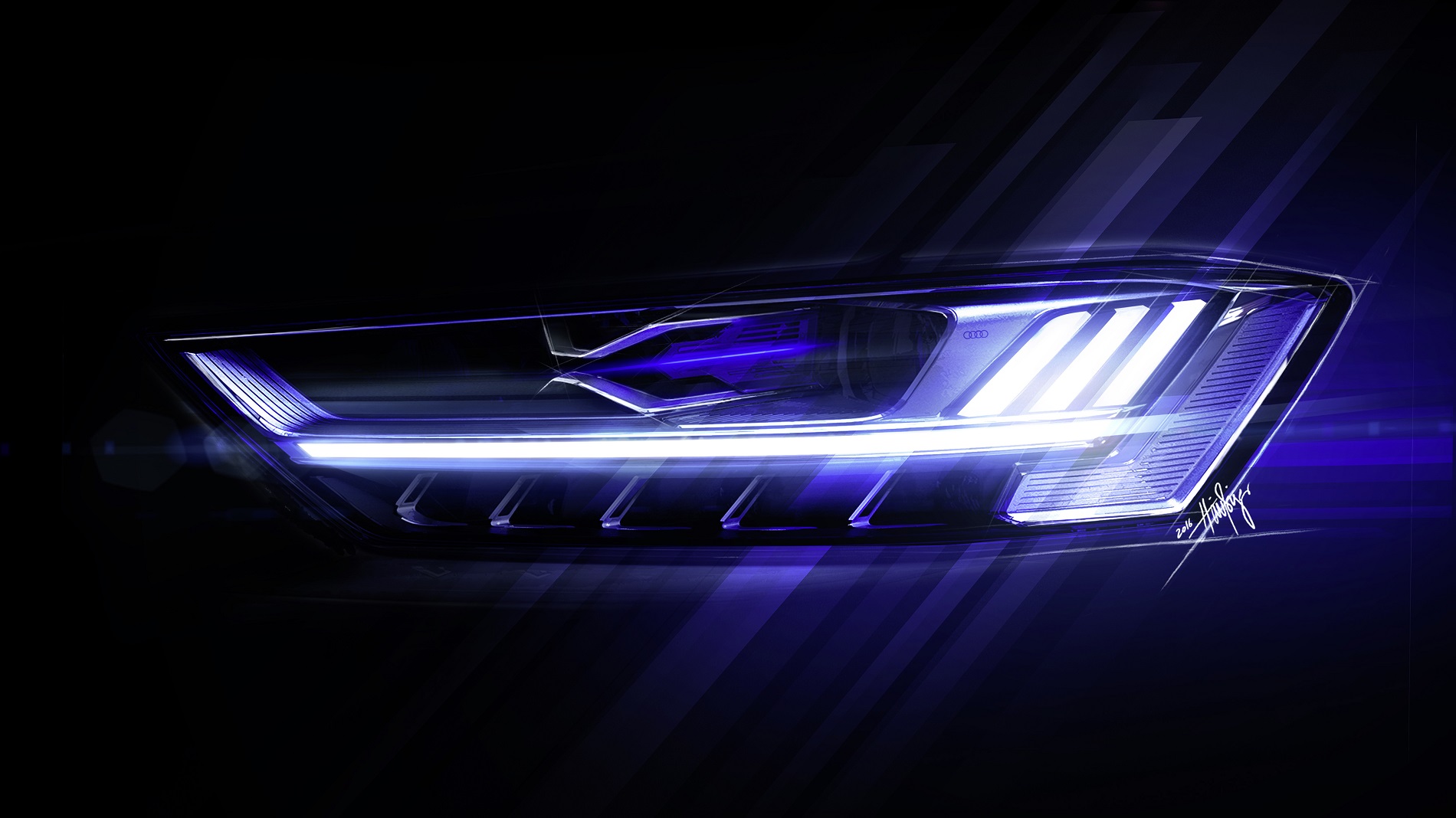
Headlight and taillight technology has improved over the years, and Audi always uses the latest version in its cars.
Vehicle lighting systems have undergone considerable evolution in just a few decades. About 15 years ago most cars widely used OLED technology is becoming increasingly popular. We have gone through other technologies, such as xenon headlights, but it keeps advancing and we find new developments every day. Audi has been a witness to and an active part of this evolution, and that is what we are going to explore in this article: the evolution of Audi’s lighting technology.
From halogen to OLED
The use of halogen lamps in the headlights of cars has remained more or less unchanged over the years. But from the late 1990s onwards, headlights began to be used to give cars their own distinctive light signature. Audi has not been immune to this advance, and its models have progressed alongside this technology over the years.
In 2003 Audi already began using adaptive headlights with automatic and dynamic beam control, mounted on an Audi R8. From 2010 onwards the functionality of this technology was increased by placing cameras behind the windscreen, which detect oncoming vehicles and help adjust the intensity of the light beam.
The arrival of LED light diodes in AUDI models came in 2004, when the Audi A8 was equipped with them. LED diodes convert electricity into light with very high efficiency and deliver a very high result. The Audi R8 was fitted with complete LED headlights in 2008. This technology earned AUDI recognition from the European Union in the form of an eco-innovation certificate.
Today, all Audi models include this technology as standard, except the Audi A1 in its most basic configuration. But technology keeps advancing, and since 2013 the MATRIX LED lighting system has been included. This works by switching off groups of diodes or reducing the light intensity of those diodes when it detects oncoming vehicles.
In 2014 laser-based light beam lighting arrived, a technology that could be found on the Audi R8 LMX. This technology doubled the reach of the headlight beam. In 2017 the HD Matrix LED system was complemented with OLED rear lights. In the case of the headlights fitted to the Audi e-tron, this system consists of the DMD system, which controls 1.3 million mirrors that move to achieve the best performance of the light beam.
State-of-the-art rear lights
At the rear, work has also been done to offer a practical evolution of the lights. In 2012 dynamic indicators were introduced, using LED technology. Thanks to further advances, today users of the Audi Q5 can choose among three types of light signature. This is combined with a system that activates all LED light segments when another vehicle approaches within two metres, making the car more visible and efficient on the road.
The evolution of the lighting technology of Audi models is constantly developing, and the future holds further improvements in this field, which is so important for the safety of both the vehicle and other cars on the road.


 Peugeot E-208 GTi: a battery-powered toy that revives the spirit of the 1980s sports cars
 New Lexus ES: luxury grows and goes electric
 First contact with the Dacia Sandero Hybrid 155: power and efficiency from €19,890
Deja un comentario