Across Suzuki Hybrid Cars ECO SUV
Fuel consumption test: how much does a plug-in hybrid really use?
 Antonio Roncero @roncero_antonio
4 October 2021
7 min.
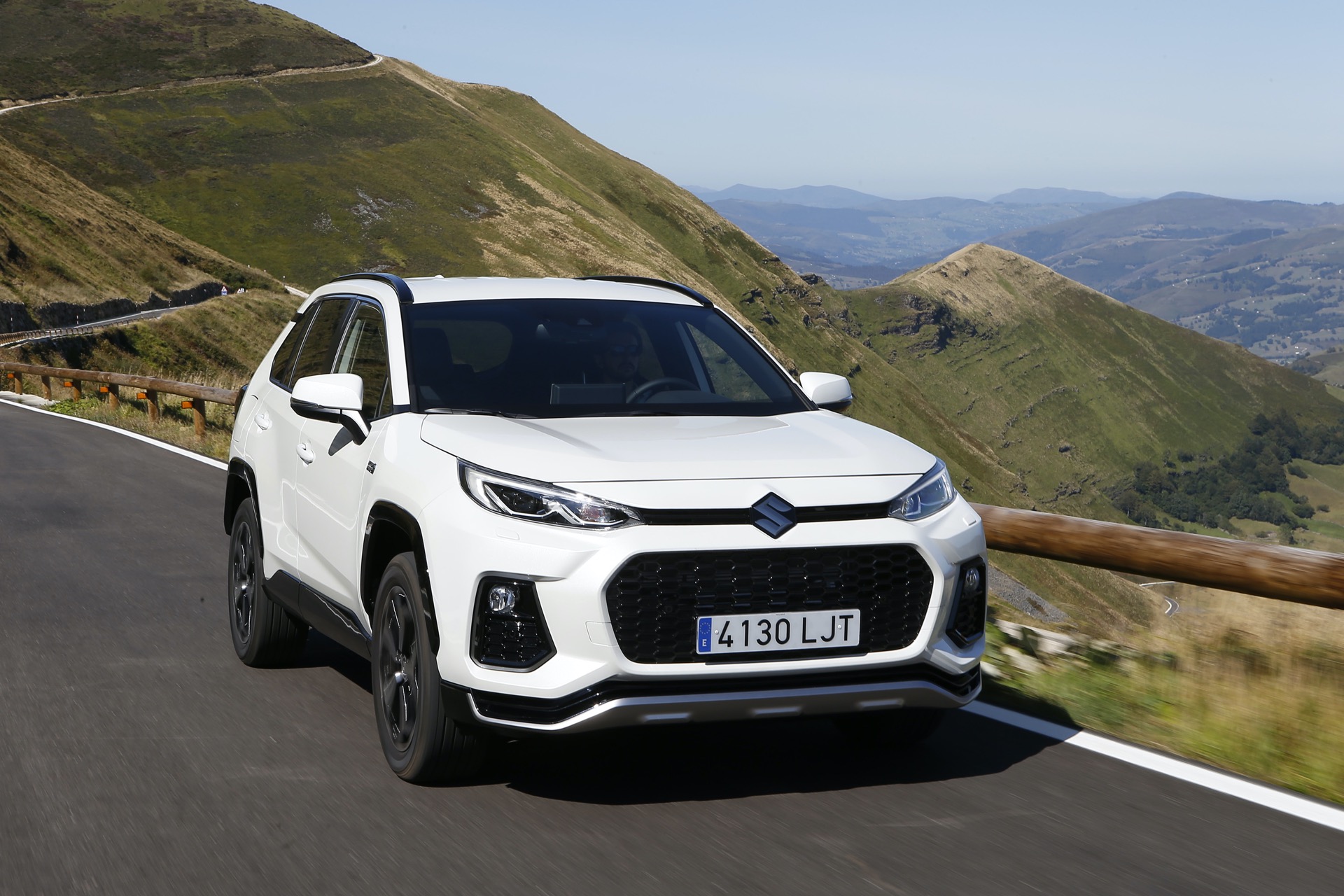
More and more drivers are opting for a plug-in hybrid (PHEV, as it is known in English), for many reasons. One of them is that it is one of the ways to get a car with a ZERO emissions label, and the many advantages that come with it, without having to make the jump to fully electric propulsion. Another is that, thanks to the latter, in many cases their price is close to equivalent combustion-engine versions, since no registration tax is paid.
But the main reason to choose a plug-in hybrid is the ability to use it every day for short trips as if it were an electric car (as long as you have a socket available to recharge the battery) and as a conventional hybrid (without depending on a socket) for long trips.
Plug-in hybrid consumption: truth or myth?
The problem when deciding on a plug-in hybrid may lie in the consumption figures. If you “trust” the figure homologated by the manufacturer, which for these cars is usually between 1.5 and 3 litres depending on size and power, you may get a surprise when you pull into the petrol station once you have to drive it “for real”.
But the manufacturers are not deceiving us. They simply homologate consumption based on a standardised cycle in the EU, which is worth knowing so as not to be disappointed. It must be taken into account that this is a cycle carried out on a test bench, which since the switch from the previous NEDC cycle to the new WLTP has made homologated consumption figures much closer to real ones… except in plug-in hybrids.
Without going into much detail on how it is carried out, the problem, or rather the confusion for the end user, is that the protocol for that homologation cycle benefits plug-in hybrids greatly. PHEVs start with the advantage of carrying out the first tests with a charged battery and in electric mode, before starting to operate in hybrid mode. Hence those very low homologated consumption figures, even in very powerful cars… and the difference with real consumption, which can multiply by up to 10!
By now it seems clear that the EU was not very successful in defining the WLTP protocol to homologate the consumption of plug-in hybrids. The ideal for the user would be to know the average consumption operating in hybrid mode with the battery already depleted, once the kilometres allowed by each car in electric mode have been covered.
How much does a plug-in hybrid really consume?
What you should take away if you are thinking of buying a plug-in hybrid is the following. If you charge the battery every day, using electric mode, which is usually activated by default, the first kilometres will only cost the electricity needed to recharge the batteries.
However, once the “official” electric range is used up -the best currently reach around 100 km, but the most common is around 50-60 km- the car will switch to conventional hybrid mode. That is, like “self-charging” hybrids: recovering energy during braking and acceleration… and therefore consuming like an equivalent non-plug-in hybrid or even somewhat more, due to having batteries with greater weight.
The less than 2 l/100 km that are homologated in many cases, and which you can get close to while the battery has charge if you use hybrid mode instead of electric propulsion, then easily become 7-8 l/100 km.
In this sense it should be noted that the electric range that manufacturers announce for their PHEV models is also hard to achieve in real use. My advice is to always calculate around 15 or 20% less… and bear in mind that the figure will deviate further from the announced one the more the car is used outside urban routes or at low speed, which is where the electric mode gets the most out of it.
For the reasons I have just explained, you can do two things with a plug-in hybrid: use electric mode until the battery is depleted if you drive a daily mileage below the real electric range, or switch to hybrid mode to have very low consumption over many more kilometres. How many? It will depend on the car and the type of driving you do, but you can estimate between two and three times as many kilometres as in electric mode.
A practical case: the Suzuki Across PHEV
It is best to see it with a practical case. For this we have chosen the Suzuki Across, the plug-in hybrid SUV technically equivalent to the Toyota RAV4 PHEV, with which we spent several days of testing. One of the most efficient plug-in hybrid SUVs in its class. Here you can read the road test of the Suzuki Across, and here the test of the Toyota RAV4 PHEV.
To put things in context: we are dealing with a car 4.6 metres long with a hybrid system that has a combined maximum output of 306 CV and features all-wheel drive, thanks to a 185 CV petrol engine and two electric motors, one on the front axle with 182 CV and another on the rear axle with 54 CV. With an 18.1 kWh battery, it claims an electric-mode range of 75 km, being able to run on electricity at speeds of up to 135 km/h, with excellent responsiveness.
Does anyone really believe that a car of this size and power can achieve a real average consumption even close to the homologated one, which drops to 1 l/100 km? Let us look at the real consumption figures.
During several days of testing, leaving home with the battery fully charged we easily managed 61 km in electric mode and arrived with 9 km of range left in the battery. That is around 70 real km in EV mode before depleting the battery, which is not bad, considering that more than half of those kilometres were on motorway before entering the city. The cost of those first 70 “electric” km, with an average consumption according to the on-board computer of around 21 kWh/100 km, and considering a price of 0.15 euros/kWh, comes to about 2 euros; around 3.15 euros per 100 km, to make it easier.
With the battery depleted to the point that the car no longer allows electric mode, it is not at all difficult to settle at between 7.5 and 8 l/100 km if you drive normally… and even approach 7 l/100 km when driving in an ECO style. This is what we demonstrated several times by making the same route leaving home without recharging. A magnificent figure, equivalent to that of a non-plug-in hybrid of the same size, such as the very RAV4 Hybrid. But, as you will see, far from the homologated average consumption.
Another measurement was to start the usual route with the battery charged but immediately switch to hybrid mode, without letting the car use the energy in electric mode. In this case the support of the electric motors to the combustion engine is much greater than when the system works as a self-charging hybrid once the battery is depleted. This allows around 160 km of driving with an average fuel consumption of about 3 l/100 km, to which, do not forget, you would have to add those roughly 2 euros it costs to recharge the battery… depending on the electricity tariff you have.
Technical specifications of this car


 Peugeot E-208 GTi: a battery-powered toy that revives the spirit of the 1980s sports cars
 New Lexus ES: luxury grows and goes electric
 First contact with the Dacia Sandero Hybrid 155: power and efficiency from €19,890
Deja un comentario