BYD HS Hyundai MG RAV4 SEAL Seal U Toyota Tucson Hybrid Cars Buying Guides SUV
How to Choose a Chinese PHEV SUV in 2026: Useful Electric Range, CERO Label and Real Cost Compared with an HEV
 Iván Navarro
29 August 2026
6 min.
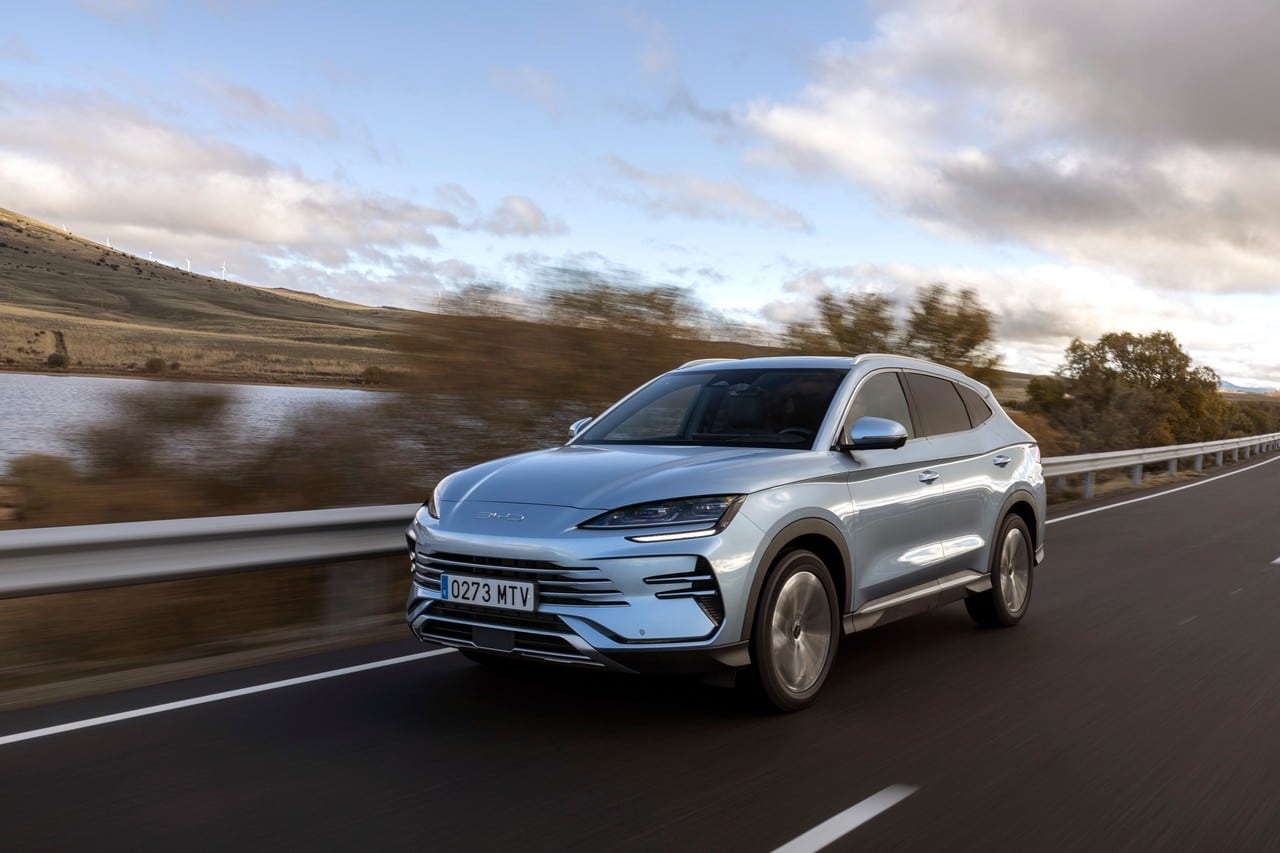
A practical guide to deciding between a Chinese PHEV SUV and a Japanese or Korean HEV in 2026, with verifiable criteria on real-world electric range, the DGT CERO label and total cost over four years.
The Chinese PHEV SUV in 2026 has become a major headache for the Japanese and Korean brands that had dominated the hybrid market in Spain for a decade. Batteries of 18 to 26 kWh, WLTP electric ranges above 80 km, a guaranteed CERO label and prices that, with Plan Auto+, fall into the same bracket as a well-equipped HEV. The question is no longer whether they are worth a look. It is which one, and under what conditions a PHEV really pays off compared with a conventional hybrid.
Let’s try to answer it with three criteria that can be verified before signing: useful electric range, real CERO label and total cost over four years.
What defines a good Chinese PHEV SUV today
A competitive PHEV in 2026 is not the 2020 model. It has grown in battery capacity —from the initial 12 kWh to today’s 20-26 kWh—, accepts DC fast charging (though limited, between 40 and 70 kW) and brings the official WLTP combined consumption below 1.5 l/100 km on paper. That official figure is obviously optimistic. In practice, realistic mixed use ranges between 4 and 6 l/100 km once the battery is depleted, plus the kWh you have charged at home.
Useful electric range: why 80 km WLTP is the threshold
A PHEV’s real electric range depends on three things: net battery capacity, the vehicle’s aerodynamics and —above all— how you drive. A WLTP figure of 80 km translates, in winter and on motorway, into roughly 55-65 real km. With mild temperatures and city driving, you can get close to 80 without trouble. That threshold is not arbitrary: it covers the average daily commute of the Spanish driver (around 40 km) with a margin so you don’t get home with the combustion engine switched on. Below 60 km WLTP, the PHEV becomes an HEV with a plug and extra weight. And that doesn’t pay off.
DGT CERO label: the non-negotiable requirement
To display the blue CERO label, a PHEV needs at least 40 km of homologated WLTP electric range. All the models in this guide clear that comfortably, but it is worth checking before signing: it grants access to ZBE low-emission zones, reduced-rate parking and discounted tolls in several regions. An HEV stays in ECO, and that apparently minor difference weighs heavily if you live or work in Madrid, Barcelona or Valencia.
SUV PHEV vs HEV: the real cost over four years
This is where the analysis becomes uncomfortable for both sides. A Chinese PHEV such as the BYD Seal U DM-i or the MG HS PHEV starts at around 37,000-41,000 € before Plan Auto+. An equivalent Toyota RAV4 or Hyundai Tucson HEV exceeds 40,000 €. On paper, the Chinese PHEV wins on purchase price. In use, it depends on whether you charge: if you drive 15,000 km a year with 70% in electric mode and night-time electricity at 0.10 €/kWh, the saving against the HEV over four years is around 3,000-4,000 €. If you never plug in, the PHEV consumes more than the HEV (the dead weight of the battery) and the calculation reverses.
Plainly put: a PHEV only makes sense if you have a plug at home or at work. Without that, an HEV is the more honest choice.
MG HS PHEV — from 36,990 €
The MG HS PHEV is the reference on price-to-product. A 21.4 kWh battery, 100 km WLTP electric —one of the best in the segment— and a 1.5T combined powertrain delivering 272 CV. The interior feels a step below a Tucson, admittedly, but for 5,000 € less the equation adds up.
| Potencia kW | Potencia CV | Velocidad máx. | Autonomía eléctrica | Consumo | Etiqueta | Combustible |
|---|---|---|---|---|---|---|
| 200 | 272 | 190 km/h | 100 km WLTP | 0,5 l/100 km WLTP | CERO | PHEV |
BYD Seal U DM-i — from 35,790 €
The BYD Seal U DM-i plays in a different league when it comes to refinement. The DM-i technology prioritises electric use and its combined range exceeds 1,000 km. Its Blade LFP battery of 18.3 or 26.6 kWh (depending on version) is the safest on the market and offers 80 or 125 km WLTP. It rides like an expensive car. The steering asks for a little more weight, to my taste.
| Potencia kW | Potencia CV | Velocidad máx. | Autonomía eléctrica | Consumo | Etiqueta | Combustible |
|---|---|---|---|---|---|---|
| 160 | 218 | 170 km/h | 125 km WLTP | 0,4-0,9 l/100 km | CERO | PHEV |
Jaecoo 7 PHEV — from 38,900 €
The Jaecoo 7 PHEV bets on design with character and an 18.3 kWh battery that delivers 90 km WLTP electric. It rides with a poise that surprises, and the perceived quality inside is the best Chery has brought to Spain. Even so, the DHT gearbox stutters on abrupt transitions — nothing serious, but noticeable.
| Potencia kW | Potencia CV | Velocidad máx. | Autonomía eléctrica | Consumo | Etiqueta | Combustible |
|---|---|---|---|---|---|---|
| 255 | 340 | 180 km/h | 90 km WLTP | 0,7-0,8 l/100 km WLTP | CERO | PHEV |
Ebro s700 PHEV — from 36,000 €
The Ebro s700 PHEV is the Spanish bet on a Chery platform, assembled at the former Nissan plant in Zona Franca. An 18.3 kWh battery, 90 km WLTP and a more rational approach than the Jaecoo. Very aggressive pricing. It remains to be seen how residual values hold up over the medium term.
| Potencia kW | Potencia CV | Velocidad máx. | Autonomía eléctrica | Consumo | Etiqueta | Combustible |
|---|---|---|---|---|---|---|
| 205 | 279 | 180 km/h | 90 km WLTP | 0,8 l/100 km WLTP | CERO | PHEV |
The HEV alternatives you need to consider
If you are not going to plug in, don’t buy a PHEV. A Toyota RAV4 HEV or a Hyundai Tucson HEV consume 5.5-6 l/100 km in real use with no dependence on infrastructure, and at 15,000 km a year the difference against an uncharged PHEV is scandalously in favour of the Japanese or Korean car. ECO label, yes, but proven durability and very solid residual value.
Summary table and score
| Modelo | Precio desde | Autonomía eléctrica | Batería | Etiqueta | Puntuación /10 |
|---|---|---|---|---|---|
| MG HS PHEV | 36.990 € | 100 km WLTP | 21,4 kWh | CERO | 8,7 |
| BYD Seal U DM-i | 35.780 € | 125 km WLTP | 26,6 kWh o 18,3 kWh | CERO | 8,9 |
| Jaecoo 7 PHEV | 38.900 € | 90 km WLTP | 18,3 kWh | CERO | 8,3 |
| Ebro s700 PHEV | 31.900 € | 90 km WLTP | 18,3 kWh | CERO | 7,8 |
Frequently asked questions
What real PHEV electric range can I expect compared with the WLTP figure?
Between 25% and 35% less on the motorway in the cold, and very close to WLTP in the city at mild temperatures. A PHEV rated at 90 km WLTP gives 60-65 real km in realistic mixed use.
Does a Chinese PHEV SUV keep the CERO label if its range drops over the years?
The label is assigned at registration based on the homologated WLTP figure and is not reviewed for battery degradation. The CERO label is retained for as long as the vehicle is registered.
Does a PHEV pay off if I don’t have a plug at home?
No. Without regular charging, the PHEV consumes more than an HEV because of the extra battery weight. A Toyota RAV4 or Hyundai Tucson HEV is the more logical choice in that scenario.
What incentives are available to buy a PHEV SUV in 2026?
The current framework is Plan Auto+, with variable amounts depending on scrappage and income. Check the official website before signing, as amounts and deadlines are updated periodically.
Technical specifications of the cars in this article
 Peugeot E-208 GTi: a battery-powered toy that revives the spirit of the 1980s sports cars
 New Lexus ES: luxury grows and goes electric
 First contact with the Dacia Sandero Hybrid 155: power and efficiency from €19,890
Deja un comentario