Clio e-208 Honda Jazz Peugeot Polo Renault Toyota Volkswagen Yaris Compact Buying Guides Tests SUV
How to Choose a City Car in 2026: Why Compact Size Still Beats the SUV on Real-World Fuel Consumption
 Iván Navarro
11 November 2026
7 min.
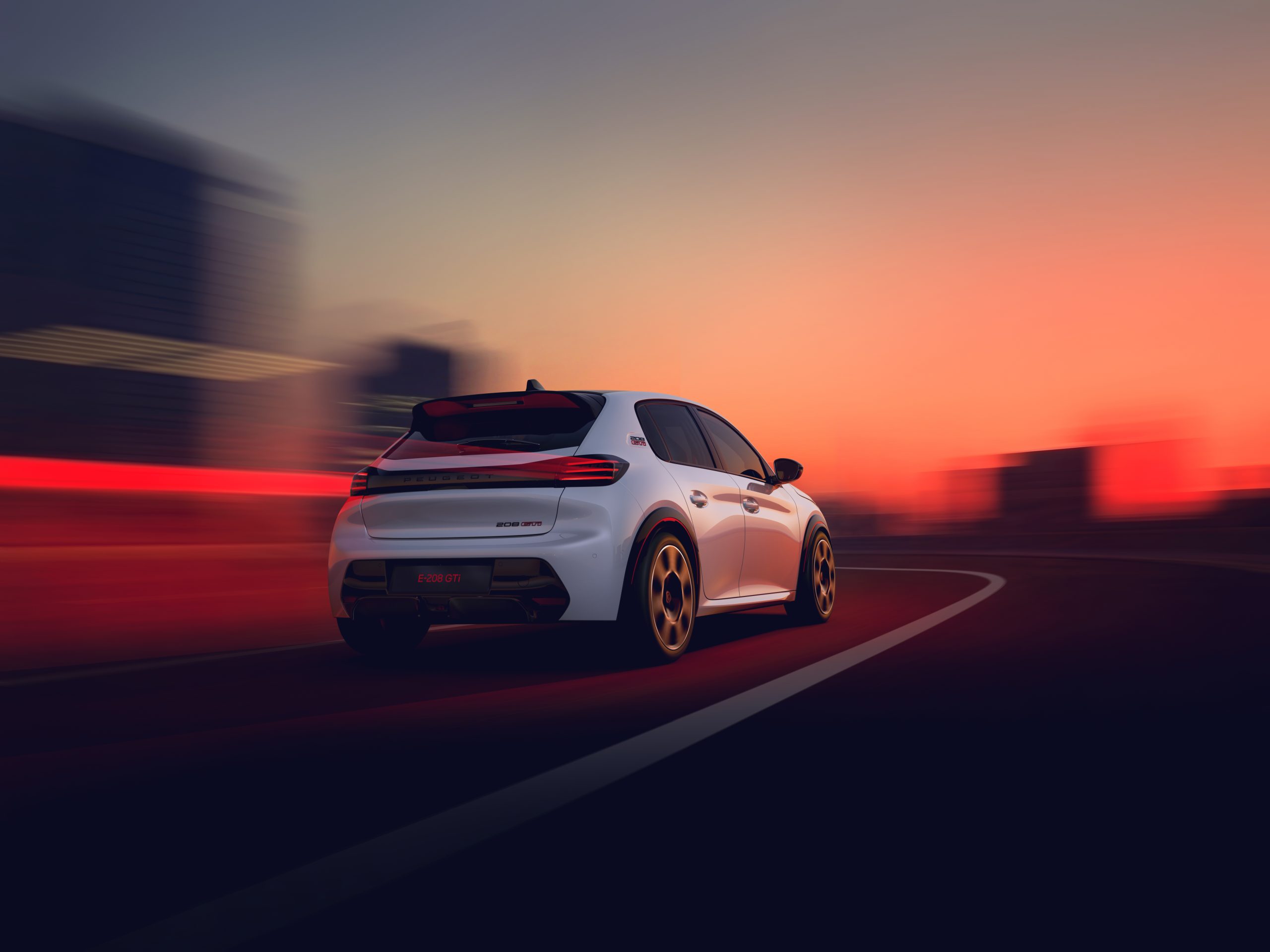
Every time a customer walks into a dealership looking for “something small for the city” and leaves with a 1,350-kilo B-segment SUV, physics quietly loses a battle. Nobody explains it during the sale, but the extra weight, the height and the aerodynamic drag of that car are paid for every week at the pump. In 2026, with Low Emission Zones already well established in most Spanish capitals and fuel prices showing no respite, choosing well in the B-segment is once again a decision with real consequences for your wallet.
Why the B-segment still beats the urban SUV on real-world consumption
The urban SUV’s promise is simple: more driving height, more visual presence, a sense of safety. What is almost never mentioned is that the same body, taller and heavier, forces the engine to work harder to move it. A B-segment city car homologated at around 980-1,100 kilos versus an equivalent B-segment SUV at 1,250-1,350 kilos is not a catalogue detail: it is between 150 and 250 kilos that the engine drags at every traffic-light start, which is exactly where city life is lived.
The result shows up in real consumption, not just in the WLTP cycle. On urban journeys with constant stops, a well-tuned city car can come in 10-15% below its SUV counterpart, according to the tests we have gathered comparing models on the same platform with different bodywork. It is not a dramatic difference on a single trip. Added up over a year of daily use, it most certainly is.
Weight and aerodynamics: the physics the SUV cannot avoid
The height of an urban SUV —typically 15 to 20 cm more than a classic city car— increases the aerodynamic drag coefficient (Cx) precisely in the speed range where most of the time is spent: between 30 and 50 km/h in town, and 90-120 km/h on weekend getaways. A worse Cx does not penalise as much in pure city driving, where weight dominates, but it does as soon as the driver hits the open road. That is where many B-segment SUV owners get a surprise: the car that “ran wonderfully around the neighbourhood” sends consumption soaring on the motorway.
This does not mean the urban SUV is a bad purchase. For those who value an elevated driving position or need extra boot space, it makes sense. What makes no sense is buying it thinking it is the most efficient option for getting around the city, because the numbers say otherwise.
DGT label and ZBE access: what really matters in 2026
Here it is worth being precise: the DGT label (B, C, ECO or CERO) depends on the type of powertrain and the homologated emissions, not on the size of the body. A B-segment hybrid SUV can carry the same ECO label as an equivalent hybrid city car. What changes is the real consumption needed to reach those emissions, and there the city car starts with a structural advantage thanks to its lower mass.
For access to Low Emission Zones, what matters is the label, not the segment. But if the goal is to maximise the ECO label at the lowest possible cost —and without going fully electric— the shortest route is usually a light hybrid city car, not an SUV with the same technology.
Real WLTP consumption vs real-world use: the small print
WLTP remains the official reference, but any owner with mileage behind them knows that the catalogue figure and the one on the odometer do not always match. In town, with dense traffic and low winter temperatures, the real consumption of a hybrid city car tends to sit between 10 and 20% above the WLTP figure. In an equivalent SUV, that deviation can reach 25-30%, precisely because the hybrid system has to compensate for more mass with the electric motor, which runs out sooner on longer routes.
The best city cars for 2026
Toyota Yaris — from €21,500
The Yaris remains the segment benchmark for real-world consumption thanks to its fifth-generation hybrid system, with battery management designed specifically for urban stop-and-go cycles.
| Power | Consumption | Label | Fuel |
|---|---|---|---|
| 85 kW / 116 CV | 3.9-4.3 l/100 km | ECO | Hybrid |
Renault Clio — from €23,270
The Clio’s E-Tech full hybrid version distributes power well between the petrol engine and the two electric motors, which translates into an almost electric drive within town for much of the journey.
| Power | Consumption | Label | Fuel |
|---|---|---|---|
| 118 kW / 160 CV | 3.9-4.2 l/100 km | ECO | Hybrid |
Peugeot e-208 — from €29,270
For those with guaranteed charging at home or at work, the e-208 offers the quietest and cleanest version in the segment, with enough range for daily urban use without touching a charger during the week.
| Power | Range | Label | Fuel |
|---|---|---|---|
| 115 kW / 156 CV | up to 433 km | CERO | Electric |
Honda Jazz — from €23,600
The Jazz’s e:HEV system prioritises electric mode in town almost permanently, something we already analysed in detail in our head-to-head between the Honda Jazz and the hybrid Toyota Yaris.
| Power | Consumption | Label | Fuel |
|---|---|---|---|
| 90 kW / 122 CV | 4.6-4.8 l/100 km | ECO | Hybrid |
Volkswagen Polo — from €21,190
The entry-level Polo, with the 1.0 TSI, is not a hybrid and its C label keeps it out of some of the stricter ZBE restrictions, but it remains a benchmark for dynamic behaviour and perceived quality within the segment.
| Power | Consumption | Label | Fuel |
|---|---|---|---|
| 70 kW / 95 CV | 5.1 l/100 km | C | Petrol |
Summary table: city car vs SUV real-world consumption
| Model | Price from | Label | Fuel | Urban efficiency score (1-10) |
|---|---|---|---|---|
| Toyota Yaris | €21,500 | ECO | Hybrid | 9 |
| Renault Clio E-Tech | €23,270 | ECO | Hybrid | 8.5 |
| Peugeot e-208 | €29,270 | CERO | Electric | 9 |
| Honda Jazz e:HEV | €23,600 | ECO | Hybrid | 8.5 |
| Volkswagen Polo | €21,190 | C | Petrol | 6.5 |
City hybrid vs electric car: which pays off in 2026?
It depends, above all, on where the car is parked overnight. If regular charging is possible, an electric car such as the e-208 eliminates fuel altogether, and the CERO label opens doors that the ECO label does not yet have in some cities. Without guaranteed charging, the light hybrid remains the seamless option: it does not depend on infrastructure, keeps running costs low and does not require changing driving habits. We already covered this dilemma in more detail in our guide to hybrid cars for short trips, where the urban cycle clearly rewards the full hybrid system over the pure petrol engine.
Frequently asked questions
What is better for the city, a city car or an urban SUV?
For real-world consumption, the city car almost always wins thanks to its lower weight and better aerodynamics in the urban speed range. The SUV compensates with boot space and driving height, not with efficiency.
What is the best city car for 2026?
Among the models on sale in Spain, the Toyota Yaris hybrid and the Peugeot e-208 stand out for real-world consumption and label, although the final choice depends on whether the buyer has regular access to charging.
Does the size of the car affect the DGT label and access to ZBE?
Not directly: the label depends on the powertrain, not the body. But a city car needs less mechanical effort to keep emissions low than each label demands.
Is a hybrid city car better than an electric one for urban use?
If guaranteed charging is available, the electric car brings running costs down to almost zero in electricity. Without it, the light hybrid remains the most practical option with no dependence on infrastructure.
Technical specifications of the cars in this article

 Kia offers an electric range of 10 models, 50 versions and 400 possible combinations
 The seven finalists for the 2027 European Car of the Year (COTY) are exclusively electric
 Peugeot E-208 GTi: a battery-powered toy that revives the spirit of the 1980s sports cars
Deja un comentario