Avenger e-2008 EX30 Hyundai Jeep KIA Kona Niro Peugeot Volvo Electric Cars Comparisons Buying Guides SUV
How to Choose a Compact Electric SUV for the City in 2026: Manoeuvrability, Useful Range and Fast Charging
 Iván Navarro
27 October 2026
7 min.
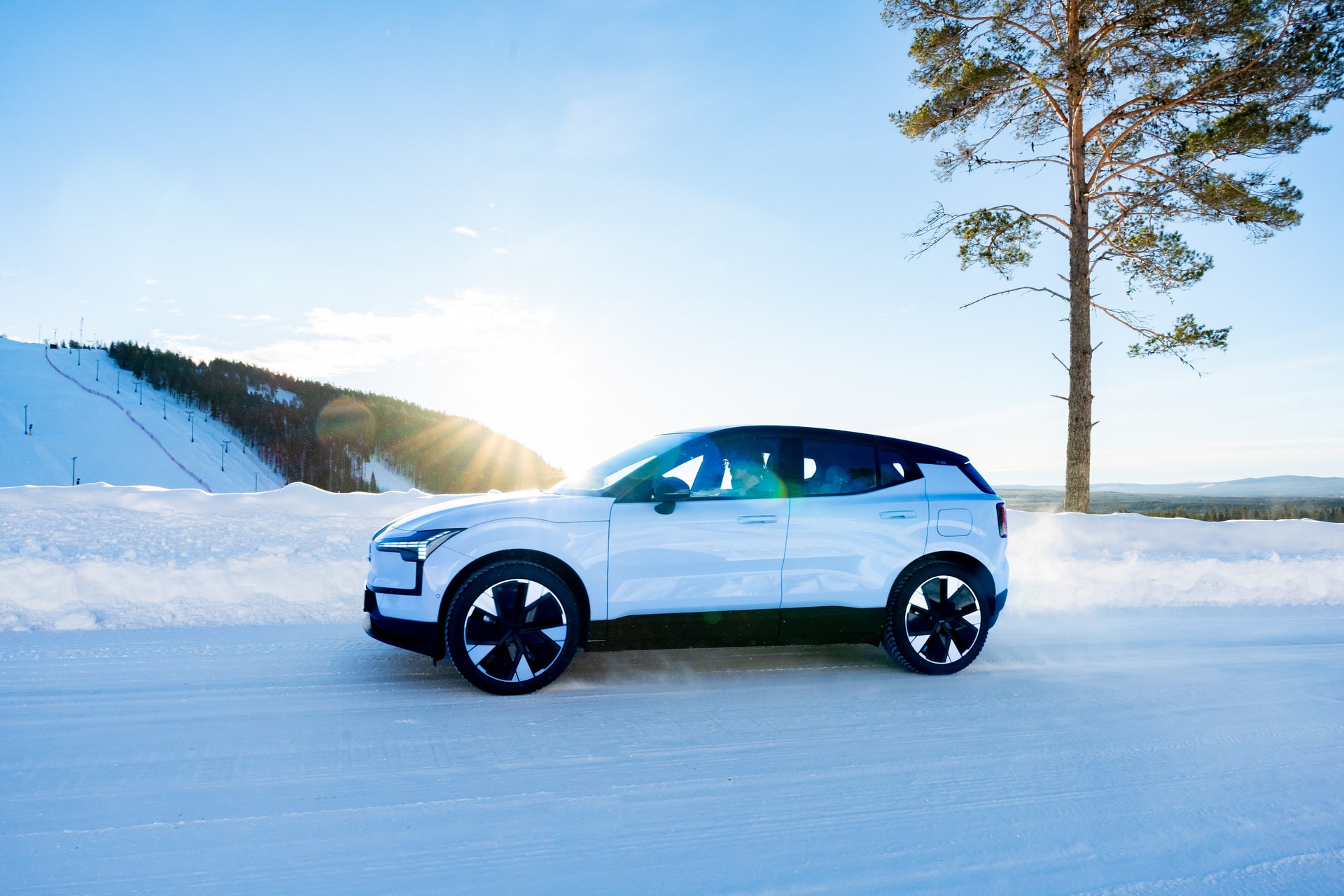
Buying a compact electric SUV for the city in 2026 is no longer an act of faith. There is enough choice, prices are starting to make sense, and a charging network that, while not perfect, covers the daily needs of any urban driver in Spain. The problem now is different: choosing well among half a dozen options that, on paper, look much more alike than they feel behind the wheel.
This guide is based on three criteria that, in our view, really determine the experience of using a car in the city: size and turning circle, the range you will actually have available during the week, and how quickly you recover battery when time is short.
What a compact electric SUV for the city really needs in 2026
Manoeuvrability: why the turning circle matters more than the design
A compact electric SUV for the city is measured, first of all, by how easily it fits into a 4.80-metre parking space on battery. Models in this segment measure around 4.15-4.30 metres in length, with turning circles ranging from 10.4 to 10.9 metres. That may not sound like much, but in practice it makes the difference between parking at the first attempt or making three tries on a narrow city-centre street. Weight also plays its part, and never more literally: batteries add between 200 and 400 kg over a combustion equivalent, something that is noticeable in slow manoeuvres and in the feel of the steering at low speeds.
Useful range: the WLTP figure is not the real figure
Here it is worth being honest: homologated WLTP range usually drops by between 15% and 25% in real urban use with air conditioning, hills and traffic. A car promising 460 km homologated may deliver 350-370 real km in winter. For a city user doing between 20 and 40 km a day, that is still more than enough for the whole week on a single charge. The figure really worth checking is consumption in kWh/100 km: below 15 kWh/100 km is considered efficient in this segment; above 17, it starts to show on the bill.
DC fast charging and home AC charging: the difference is in the minutes
DC charging power determines whether a stop at an urban hub lasts 20 minutes or 45. In this segment, typical figures range from 85 kW to 155 kW on direct current, and from 7.4 kW to 11 kW on alternating current for charging at home or at work. A charge from 10% to 80% on the fastest models in the list takes under 30 minutes; on the slowest, it approaches 45. If your routine includes charging at a public point in your neighbourhood, that difference is noticed every week.
Access to Low Emission Zones (ZBE)
All the electric models in this article carry the CERO label, which guarantees free access to any Spanish ZBE, with no time restrictions or restrictions on regulated parking in areas where municipal discounts already apply. It is probably the quietest but most decisive argument for anyone who lives and parks in the centre of a large city.
Peugeot e-2008 from 39,690 €
The e-2008 remains one of the most balanced in the group: compact body, good visibility and agile behaviour at roundabouts and when turning. It is not the fastest charger, but it gets the job done without surprises.
| Power | Range | Consumption | DC charging | Label | Fuel |
|---|---|---|---|---|---|
| 115 kW / 156 CV | 406 km | 15.5 kWh/100km | 100 kW | CERO | Electric |
Jeep Avenger from 38,000 €
The Avenger focuses on a reduced turning circle and a raised driving position that is appreciated in dense traffic. In my view, it is one of the most comfortable for parallel parking.
| Power | Range | Consumption | DC charging | Label | Fuel |
|---|---|---|---|---|---|
| 115 kW / 156 CV | 400 km | 15.8 kWh/100km | 100 kW | CERO | Electric |
Kia Niro EV from 40,900 €
More range and more power than the rest of the lower group, but its DC charging falls somewhat short for 2026. It makes up for it with one of the most efficient consumption figures in the segment. Note: the fully electric version of the Niro has been discontinued in Spain in 2026 (the model is now offered only as a hybrid); the figures correspond to the previous generation.
| Power | Range | Consumption | DC charging | Label | Fuel |
|---|---|---|---|---|---|
| 150 kW / 204 CV | 463 km | 15.3 kWh/100km | 85 kW | CERO | Electric |
Hyundai Kona Electric from 41,844 €
The long-battery version is, on paper, the most efficient of the six: low consumption, high range and fast charging close to 100 kW. It is not a cure-all for manoeuvrability either, as it has grown compared with the previous generation, but it remains manageable.
| Power | Range | Consumption | DC charging | Label | Fuel |
|---|---|---|---|---|---|
| 150 kW / 204 CV | 510 km | 14.7 kWh/100km | 102 kW | CERO | Electric |
Volvo EX30 from 41,790 €
The most powerful and the best charger of the group, with 153 kW DC allowing a charge from 10% to 80% in just over 25 minutes. It is also the best performer in dynamic terms, something we already noted when comparing it with the Audi Q4 e-tron in a slightly higher segment. (The range and price figures correspond to the 69 kWh Extended Range version; the entry-level 51 kWh version homologates around 337-344 km and starts at around 35,800 €).
| Power | Range | Consumption | DC charging | Label | Fuel |
|---|---|---|---|---|---|
| 200 kW / 272 CV | 480 km | 16.0 kWh/100km | 153 kW | CERO | Electric |
Smart #1 from 37,900 €
It charges almost as fast as the EX30 and offers similar power, although its homologated range falls somewhat behind in the entry-level version. It is debatable whether it is worth it compared with the Volvo for those who prioritise kilometres over technological equipment. (The 440 km figure corresponds to versions with larger batteries; the entry-level Pure homologates around 310 km).
| Power | Range | Consumption | DC charging | Label | Fuel |
|---|---|---|---|---|---|
| 200 kW / 272 CV | 440 km | 16.8 kWh/100km | 150 kW | CERO | Electric |
Summary table: comparison and score
| Model | Power | Range | DC charging | Price from | Score |
|---|---|---|---|---|---|
| Peugeot e-2008 | 156 CV | 406 km | 100 kW | 39,690 € | 7.5/10 |
| Jeep Avenger | 156 CV | 400 km | 100 kW | 38,000 € | 7.3/10 |
| Kia Niro EV | 204 CV | 463 km | 85 kW | 40,900 € | 7.8/10 |
| Hyundai Kona Electric | 204 CV | 510 km | 102 kW | 41,844 € | 8.4/10 |
| Volvo EX30 | 272 CV | 480 km | 153 kW | 41,790 € | 8.9/10 |
| Smart #1 | 272 CV | 440 km | 150 kW | 37,900 € | 8.1/10 |
Which to choose depending on your use
If your priority is fast charging and long distances, the Hyundai Kona Electric and the Volvo EX30 lead on range and charging power respectively. If you are looking for the most competitive price without giving up decent charging, the EX30 wins again by a margin (especially in the entry-level version). And if your thing is getting through narrow streets without drama, the Jeep Avenger and the Peugeot e-2008 remain the easiest to fit into a tricky space. It is also worth remembering that, when closing the budget, the Plan Auto+ can reduce the initial outlay — always check the official website for the current amount, which changes frequently. For those who want to compare more affordable options, our ranking of electric SUVs with the best range-to-price ratio under 45,000 euros complements this guide well.
Frequently asked questions
Which compact electric SUV is best for the city in 2026?
It depends on your use, but the Volvo EX30 stands out for its 153 kW fast charging and good power-to-price ratio, while the Hyundai Kona Electric offers the highest range in the group with very efficient consumption.
How much real range do I need to get around only in the city?
With urban use of 20-40 km a day, real-world ranges of 300-350 km are more than enough to charge once a week, even on models with lower homologated range.
Is it worth paying more for fast charging if I only charge at home?
If you have a wallbox and always charge at home, DC power becomes less relevant; in that case, prioritise low consumption and manoeuvrability over fast-charging kW.
Do all these electric SUVs have free access to Spanish ZBEs?
Yes, they all carry the DGT CERO label, which allows driving and parking without restrictions in any Low Emission Zone in the country.
Technical specifications of the cars in this article

 Kia offers an electric range of 10 models, 50 versions and 400 possible combinations
 The seven finalists for the 2027 European Car of the Year (COTY) are exclusively electric
 Peugeot E-208 GTi: a battery-powered toy that revives the spirit of the 1980s sports cars
Deja un comentario