E-308 EV3 Hyundai ID.3 KIA Kona Megane Peugeot Renault Volkswagen Electric Cars Compact Family Buying Guides
How to Choose a Family Electric Compact in 2026: Usable Range, Boot Space and Real Charging Cost
 Iván Navarro
27 August 2026
7 min.
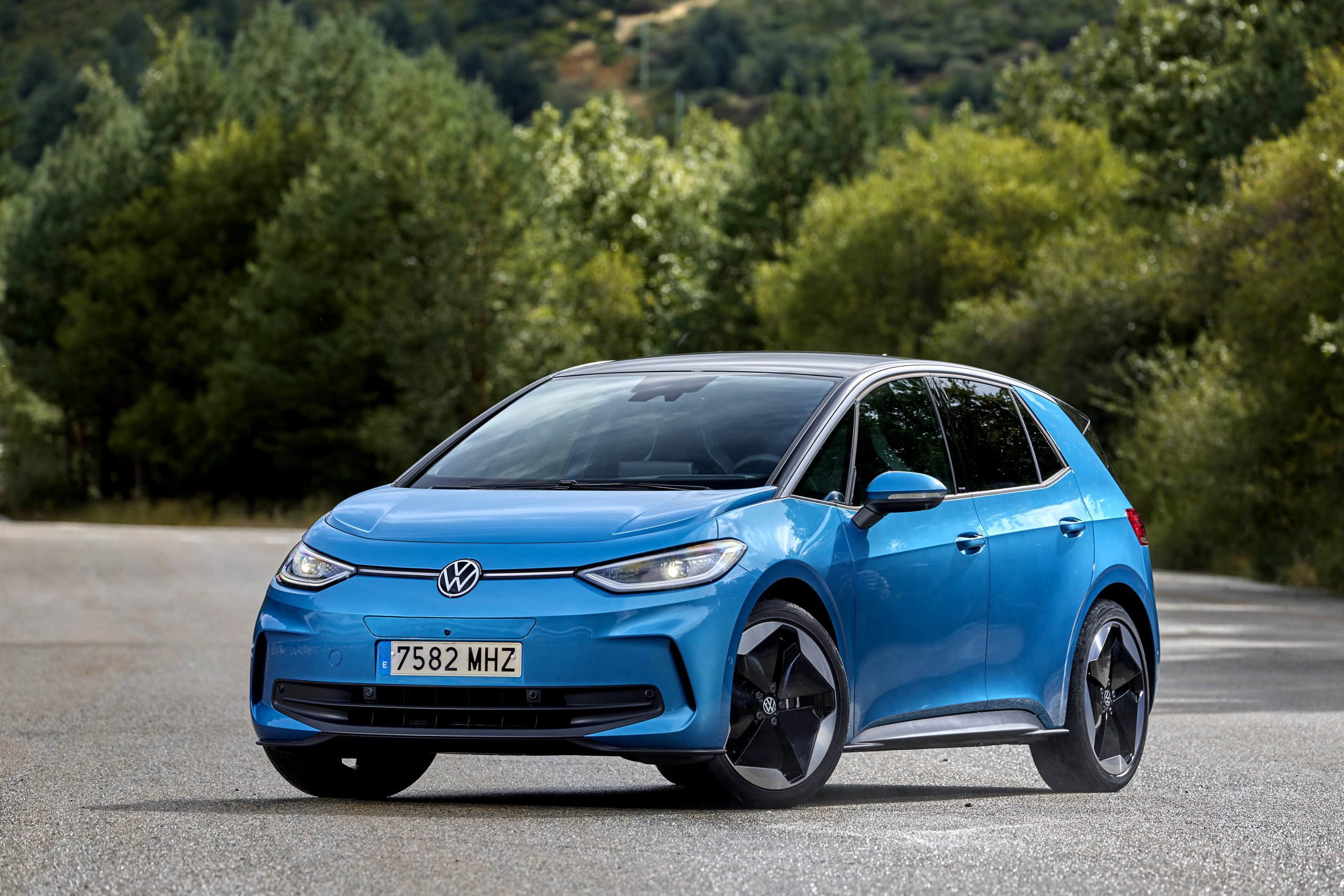
A practical guide to choosing a family electric compact in 2026 using three verifiable metrics: real motorway range, usable boot space with child seats, and €/100 km cost depending on how you charge.
Choosing a family electric compact in 2026 has become an exercise in honesty. WLTP figures alone are no longer a convincing argument, nor is power as a headline, nor is the showroom price without reading the fine print of the electricity tariff. A family considering the switch wants to know three things: how many kilometres it really covers between charges, whether the boot fits two child seats with the pushchair folded, and how much each 100 km will cost when the car lives plugged into a fast charger at a service station.
From the initial list of candidates we have ruled out the BYD models. In our editorial view, in this particular segment there are European and Korean alternatives with a better-resolved cabin and a more refined driving experience — steering, suspension tuning, ride filtering — that justify looking at those other candidates first. This is not a product criticism, it is a decision about focus.
What defines a family electric compact in 2026
We are talking about cars between 4.25 and 4.50 metres long, with a usable battery of 55 to 80 kWh, usually rear- or front-wheel drive, and a starting price between €35,000 and €45,000 before subsidies. A family electric compact in 2026 is not a large city car: it is the only car of a family of four, handling daily urban use and, two or three weekends a month, genuine road trips.
The three metrics that really matter
Real range at 120 km/h, usable boot litres with child seats fitted, and €/100 km cost by charging scenario. Everything else is brochure noise.
Real-world electric car range: why WLTP is not enough
WLTP is measured at a low average speed, with gentle acceleration and mild temperatures. On the motorway, at a real 120 km/h, an electric compact loses between 25% and 35% of that figure. A model rated at 450 km can drop to 310–330 usable km in winter with the climate control running. That is the number to write down.
Compact electric boot space: the child seat test
A Group 2/3 seat does not take up the same space as an infant Isofix seat with its base. The catalogue litre figure assumes an empty boot, no pushchair, no nappy bag and no weekend cool box. From 380 net litres onwards we can breathe; below 350 a long weekend becomes a game of Tetris.
Electric car charging cost: the real €/100 km
At home, on an off-peak tariff of €0.10/kWh and an average consumption of 17 kWh/100 km, it costs €1.70 per 100 km. At a motorway fast charger at €0.55/kWh, that same figure jumps to €9.35. A fivefold difference. Charging cost depends more on where you plug in than on which car you drive.
The candidates that make the recommendation
Volkswagen ID.3 — from €39,200
The ID.3 has been refined through successive updates, and the Pro S version with the 79 kWh battery is the one that makes sense for family use. Usable motorway range around 340 real km, 385 litres of boot space with an usable double floor, and a rear bench with room for two seats without the middle passenger being punished. The steering is a little heavier than we would like, but the overall package is coherent.
| Power kW | Power hp | Top speed | WLTP range | Consumption | Label | Fuel |
|---|---|---|---|---|---|---|
| 170 | 231 | 160 km/h | 559 km | 15.8 kWh/100 km | Zero | Electric |
Renault Megane E-Tech — from €36,900
The Megane E-Tech with its 60 kWh battery is probably the most balanced of the group for mixed use. It consumes little — 14.5 kWh/100 km real in gentle driving — and its OpenR Link remains a benchmark in usability. Its Achilles heel is the boot: 440 litres on paper that in practice feel short because of the loading height.
| Power kW | Power hp | Top speed | WLTP range | Consumption | Label | Fuel |
|---|---|---|---|---|---|---|
| 160 | 220 | 160 km/h | 468 km | 16.1 kWh/100 km | Zero | Electric |
Peugeot E-308 — from €38,540
The E-308 is the most “conventional” option in the lot, and that has its audience. Classic compact silhouette, 58.4 kWh battery and a very low homologated consumption (14.9 kWh/100 km) that holds up in practice if you do not abuse the fast lane. Its weak point is range: 450 WLTP km translate into roughly 310 real motorway km, which forces an extra stop on a Madrid–Valencia trip.
| Power kW | Power hp | Top speed | WLTP range | Consumption | Label | Fuel |
|---|---|---|---|---|---|---|
| 115 | 156 | 170 km/h | 450 km | 14.9 kWh/100 km | Zero | Electric |
Cupra Born — from €38,200
It shares the MEB platform with the ID.3 but with a different character: firmer suspension, heavier steering, sports seats that genuinely hold you. The 79 kWh version approaches 627 WLTP km and delivers 340–360 real km at motorway pace. 385-litre boot, adequate without being outstanding. For my taste it is the most fun of the group, although on broken surfaces the ride gets firmer than it should.
| Power kW | Power hp | Top speed | WLTP range | Consumption | Label | Fuel |
|---|---|---|---|---|---|---|
| 170 | 231 | 160 km/h | 627 km | 15.5 kWh/100 km | Zero | Electric |
Kia EV3 — from €41,053 (Long Range)
The EV3 mixes SUV styling with compact dimensions (4.30 m) and delivers what the segment had been crying out for: 460 litres of boot space, a well-managed 400 V architecture and a cabin that feels half a step above the average. The Long Range version with 81.4 kWh nominal / ~78 kWh usable is rated at 605 km and manages around 350 real motorway km without heroics.
| Power kW | Power hp | Top speed | WLTP range | Consumption | Label | Fuel |
|---|---|---|---|---|---|---|
| 150 | 204 | 170 km/h | 605 km | 14.9 kWh/100 km | Zero | Electric |
Hyundai Kona Electric — from €42,350
The Kona Electric with its 65.4 kWh battery remains a reference for real consumption (a well-achieved 14 kWh/100 km) and for a 466-litre boot that is among the best in the segment. It is not the quickest when charging — 102 kW peak — and that detail does penalise long journeys, something we already saw in our guide to electric compacts for long trips.
| Power kW | Power hp | Top speed | WLTP range | Consumption | Label | Fuel |
|---|---|---|---|---|---|---|
| 160 | 218 | 172 km/h | 514 km | 14.7 kWh/100 km | Zero | Electric |
Summary table and ranking
Score from 1 to 10 weighting real range, usable boot space and €/100 km in a mixed scenario (70% home, 30% fast charging).
| Model | Usable battery | Real range at 120 km/h | Boot | €/100 km mixed | From | Score |
|---|---|---|---|---|---|---|
| Kia EV3 LR | 78 kWh | ≈350 km | 460 L | €4.10 | €41,053 | 9.0 |
| Hyundai Kona 65 | 65.4 kWh | ≈330 km | 466 L | €3.95 | €42,350 | 8.4 |
| Cupra Born 79 | 79 kWh | ≈345 km | 385 L | €4.25 | €43,500 | 8.2 |
| VW ID.3 Pro S | 79 kWh | ≈340 km | 385 L | €4.30 | €39,200 | 8.0 |
| Renault Megane E-Tech | 60 kWh | ≈290 km | 440 L | €4.00 | €36,900 | 7.8 |
| Peugeot E-308 | 55.4 kWh | ≈310 km | 361 L | €4.20 | €38,540 | 7.2 |
Family electric buying guide: how to decide
If 80% of your kilometres are urban and you charge at home, the Peugeot E-308 or the Megane E-Tech make sense and the battery is more than enough. If the car will see the motorway every weekend, the Kia EV3 Long Range is the best family electric car of 2026 in the group for usable range and boot space. And if you want driving character without giving up space, the Cupra Born is the one that asks for it most. On current incentives, the current framework is the Plan Auto+; check the official website for up-to-date amounts, as they change.
A final note: before signing, calculate your real €/100 km with your home electricity tariff and the average price of the fast network you use. That number — not the WLTP figure or the 0–100 time — is the one you will be checking every month.
Frequently asked questions
How much real range does a family electric compact need for road trips?
For 400–500 km trips with a single charging stop, a model offering at least 320–350 real km at 120 km/h is advisable. Today that means usable batteries of 70 kWh or more.
What minimum boot size is recommended with two child seats?
From 400 net litres, day-to-day use is manageable without stress. Below that, a folded pushchair and a large suitcase already force you to fold down a seat.
How much does it cost to charge a family electric compact every 100 km?
At home on an off-peak tariff, between €1.70 and €2.20. At a motorway fast charger, between €8 and €10. The monthly average depends on the split between the two scenarios.
Are there current public incentives to buy an electric car in Spain in 2026?
Yes, the current framework is the Plan Auto+. The specific amounts and requirements are published on the official website and should be checked before closing the deal with the dealer.
Technical specifications of the cars in this article


 Peugeot E-208 GTi: a battery-powered toy that revives the spirit of the 1980s sports cars
 New Lexus ES: luxury grows and goes electric
 First contact with the Dacia Sandero Hybrid 155: power and efficiency from €19,890
Deja un comentario