BMW Peugeot Renault Skoda Tesla Electric Cars Buying Guides SUV
How to Choose a Family Electric SUV in 2026: Range, Practicality and Total Cost of Ownership
 Carlos Romero
15 July 2026
6 min.
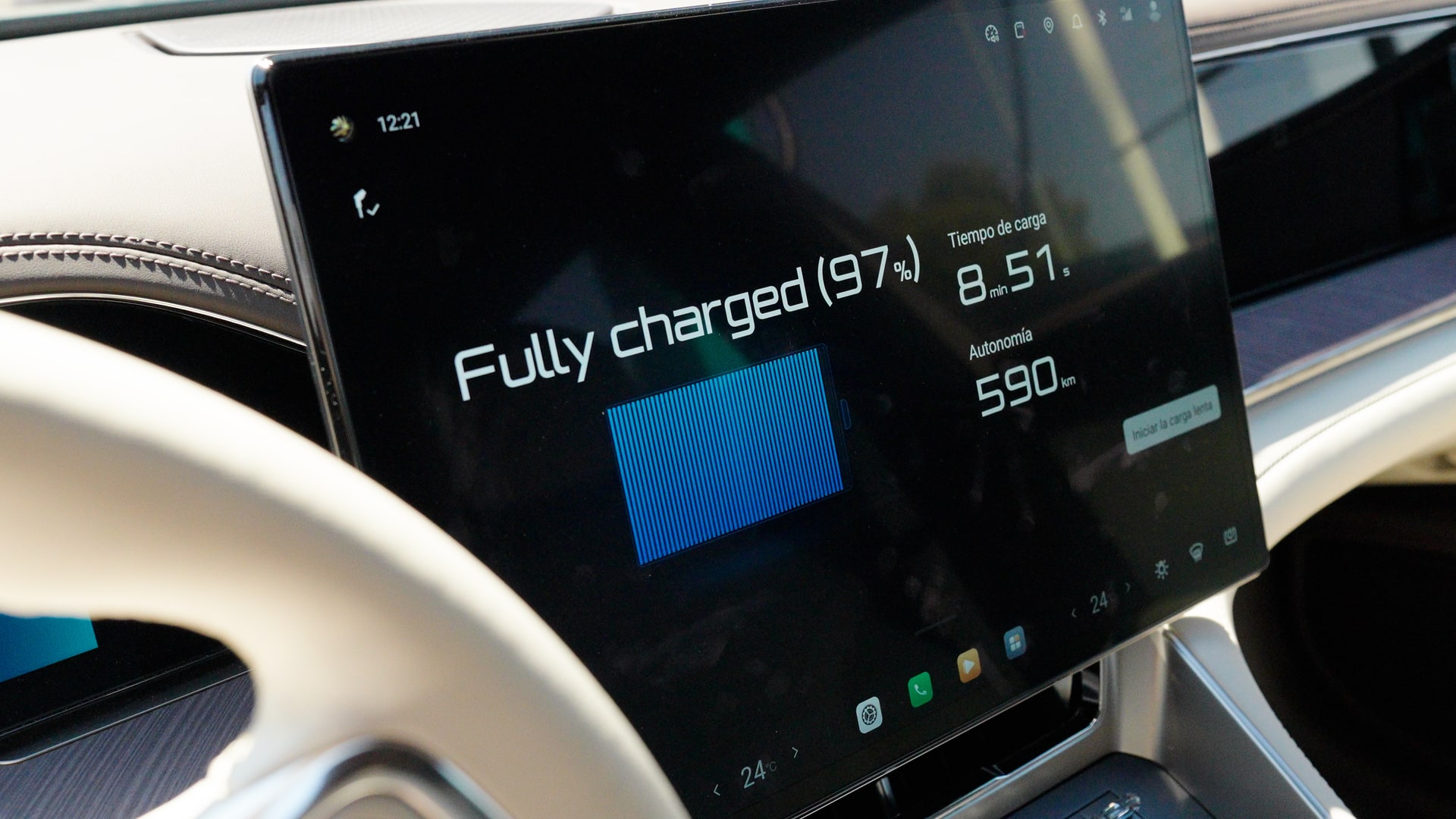
Highmotor’s editorial buying guide to choosing the best family electric SUV in 2026, with verifiable criteria for range, practicality and five-year TCO.
Choosing a family electric SUV in 2026 is no longer an act of faith. With the second wave of native electric platforms now established and a fast-charging network that is starting to prove reliable on key corridors, buyers finally have enough data to decide with their heads. At Highmotor we have reviewed the segment using the yardstick of real-world use: verifiable range at 120 km/h, boot litres in useful configurations, sustained charging power and five-year total cost of ownership, including the MOVES III incentive that is still in force.
Before getting into the details, an editorial decision: the range from BYD falls outside this selection. In our view, after the strong resurgence of European brands —with Renault, Peugeot and Skoda reaching industrial maturity in electric— and with the arrival in 2026 of new Chinese manufacturers that are recalibrating the value-for-money equation, the BYD proposal in the family SUV segment has lost relative competitiveness. This is not a criticism of the product, but an adjustment of focus: we believe there are more balanced alternatives today for the Spanish family.
What defines a family electric SUV in 2026
The bar has moved. Talking about a family electric SUV 2026 means a usable battery of at least 75 kWh, a well-executed 400 V architecture or, better still, an 800 V platform, and measured —not promised— practicality capable of accommodating two ISOFIX child seats in the second row without compromising the front. The rest is marketing copy.
Real-world range versus WLTP homologation
WLTP homologation remains an optimistic reference. Our internal criterion for assessing electric SUV range applies a factor of 0.78 to WLTP in mixed use and 0.68 on sustained motorway driving at 120 km/h. An SUV homologated at 500 km should deliver around 340 real km between charges on a long trip. Anything less than that, in 2026, is insufficient.
Practicality: dimensions, boot and modularity
The family electric car practicality is measured along three axes: wheelbase (ideally above 2.85 m), shoulder width in the second row and boot volume with the seatbacks in their usual position. The flat floor enabled by the electric platform is a tangible advantage: it frees up foot space and makes it easier to move between seats.
Five-year total cost of ownership
The electric SUV total cost of ownership radically changes the ranking compared with the list price. We add estimated depreciation, fully comprehensive insurance, maintenance, tyres, charging (70% home / 30% public fast charging mix) and taxes, subtracting MOVES III where applicable. The realistic range in this segment falls between €32,000 and €48,000 net over five years.
The contenders: guide by model
Kia EV9 — from €73,000
The benchmark if you are looking for a genuine 7-seater electric SUV. 800 V E-GMP platform, 800 km between charges with sensible planning and a third row usable by adults on short journeys. Its 333-litre boot with all seven seats in use scales up to 828 with the third row folded down.
| Power kW | Power CV | Top speed | Range | Consumption | Label | Fuel |
|---|---|---|---|---|---|---|
| 150 | 204 | 185 km/h | 563 km | 20.2 kWh/100 km | ZERO | Electric |
Hyundai Ioniq 5 — from €44,000
The technological sibling of the EV9 in a more compact format. Charges from 10 to 80% in 18 minutes thanks to the 800 V system. Angular design with a 3-metre wheelbase that translates into an excellent second row.
| Power kW | Power CV | Top speed | Range | Consumption | Label | Fuel |
|---|---|---|---|---|---|---|
| 168 | 228 | 185 km/h | 507 km | 16.9 kWh/100 km | ZERO | Electric |
Peugeot E-5008 — from €49,000
The serious outsider in the 7-seater electric SUV category. STLA Medium platform, third row included in the long-wheelbase version and an i-Cockpit that finally makes sense for the family format.
| Power kW | Power CV | Top speed | Range | Consumption | Label | Fuel |
|---|---|---|---|---|---|---|
| 157 | 213 | 170 km/h | 502 km | 17.8 kWh/100 km | ZERO | Electric |
Renault Scenic E-Tech — from €40,500
Reborn as an electric, it is the rational choice for a family of four. 545 km WLTP with the large battery and a real-world motorway consumption that surprises for its modesty.
| Power kW | Power CV | Top speed | Range | Consumption | Label | Fuel |
|---|---|---|---|---|---|---|
| 160 | 218 | 170 km/h | 545 km | 16.8 kWh/100 km | ZERO | Electric |
Skoda Enyaq — from €42,000
The group’s pragmatic approach Volkswagen: the best space-to-price ratio and Simply Clever details that only become apparent when you live with the car.
| Power kW | Power CV | Top speed | Range | Consumption | Label | Fuel |
|---|---|---|---|---|---|---|
| 210 | 286 | 180 km/h | 563 km | 16.6 kWh/100 km | ZERO | Electric |
Volkswagen ID.4 — from €43,500
Updated with new electronics and MEB 3.8 software, it finally corrects the infotainment problems that held back its early series.
| Power kW | Power CV | Top speed | Range | Consumption | Label | Fuel |
|---|---|---|---|---|---|---|
| 210 | 286 | 180 km/h | 550 km | 16.5 kWh/100 km | ZERO | Electric |
Tesla Model Y — from €45,000
It remains the benchmark for energy efficiency and access to Superchargers. The Juniper refresh corrects its historic shortcomings in acoustic comfort.
| Power kW | Power CV | Top speed | Range | Consumption | Label | Fuel |
|---|---|---|---|---|---|---|
| 220 | 299 | 217 km/h | 600 km | 15.0 kWh/100 km | ZERO | Electric |
2026 electric SUV comparison: summary table and scoring
Our score weighs real-world range, practicality, charging power, perceived quality and five-year TCO.
| Model | Range | Power CV | Price from | Seats | Score /10 |
|---|---|---|---|---|---|
| Kia EV9 | 563 km | 204 | €73,000 | 9.1 | |
| Hyundai Ioniq 5 | 507 km | 228 | €44,000 | 8.8 | |
| Peugeot E-5008 | 502 km | 213 | €49,000 | 8.4 | |
| Renault Scenic E-Tech | 545 km | 218 | €40,500 | 8.7 | |
| Skoda Enyaq | 563 km | 286 | €42,000 | 8.6 | |
| Volkswagen ID.4 | 550 km | 286 | €43,500 | 8.3 | |
| Tesla Model Y | 600 km | 299 | €45,000 | 9.0 |
Recommendation by family profile
For a large family that needs a genuine third row, the best family electric SUV is the Kia EV9, no question, with the Peugeot E-5008 as the more affordable alternative. For a family of four that does a lot of motorway driving, the Tesla Model Y and its Supercharger network remain unbeatable on efficiency. If budget comes first and use is urban-metropolitan with occasional getaways, the Renault Scenic E-Tech and Skoda Enyaq offer the most rational balance in the segment.
Frequently asked questions
How many real-world kilometres should I require from a family electric SUV in 2026?
At least 350 real km on the motorway at 120 km/h, which roughly equates to a WLTP homologation of 500–520 km. Below that figure, planning long journeys becomes uncomfortable.
Is it worth paying for a 7-seater electric SUV if the third row will be used little?
Only if you will use it at least once a month. The premium over a five-seater in the same segment is around €8,000–15,000 and penalises consumption and manoeuvrability. For occasional use, a five-seater with a large boot is more rational.
Is MOVES III still in force in 2026 and how much does it deduct?
The programme remains active with renewed funding, applying up to €7,000 with scrappage when buying an electric SUV. It must be applied for after registration and is taxed under income tax the following year.
How much does it really cost to maintain an electric SUV compared with an equivalent petrol or diesel one?
Scheduled maintenance is reduced by roughly 40% (there is no oil, filters or timing belt), but tyres wear out faster due to the greater weight and torque. The net saving over five years is around €3,500–4,500 compared with an equivalent diesel, not counting the energy cost differential.


 Peugeot E-208 GTi: a battery-powered toy that revives the spirit of the 1980s sports cars
 New Lexus ES: luxury grows and goes electric
 First contact with the Dacia Sandero Hybrid 155: power and efficiency from €19,890
Deja un comentario