C-HR Captur Hyundai Juke KIA Kona Niro Nissan Renault Toyota Hybrid Cars Buying Guides Tests SUV
How to Choose a Hybrid SUV for Urban Use in 2026: Real-World Consumption, Manoeuvrability and ECO Label
 Iván Navarro
1 October 2026
7 min.
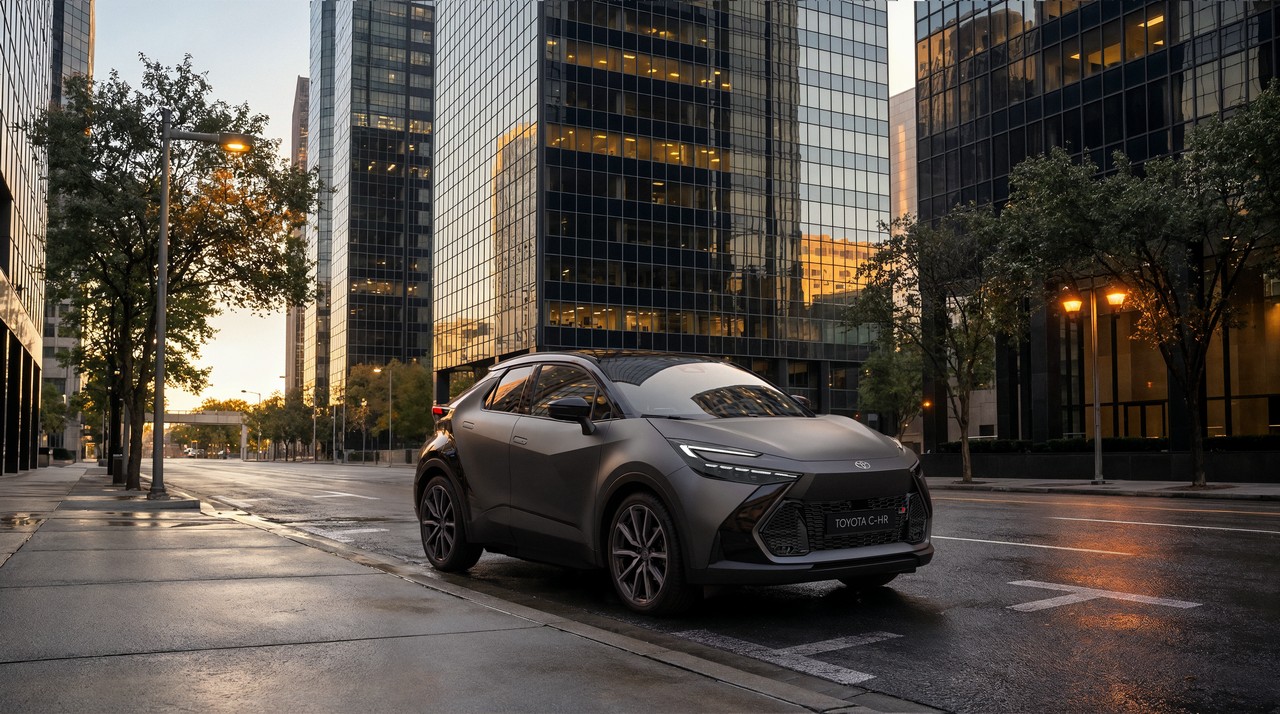
A practical guide to choosing an urban hybrid SUV in 2026, prioritising real-world city consumption, manoeuvrability and access to ZBE low-emission zones.
Choosing a hybrid SUV to get around a large Spanish city in 2026 is no longer just about consumption. It is about fitting a 4.3 or 4.4-metre car into an impossible space, getting in and out of a ZBE without headaches, and making sure the DGT label doesn’t limit your day-to-day life. For many urban drivers, the hybrid remains the sweet spot between cost, range and simplicity. But not all HEVs behave the same way stuck in traffic on the M-30 or on the Diagonal.
Why a hybrid SUV makes sense in the city in 2026
The city is the natural habitat of the hybrid. Pull-aways, braking, traffic lights: exactly where the electric motor works for free and the combustion engine barely wakes up. A well-calibrated HEV can run in electric mode for a notable share of urban driving, and that translates into real-world consumption figures that an equivalent diesel simply cannot come close to.
The SUV, moreover, solves a practical question: useful ground clearance for kerbs and speed bumps, an elevated driving position—very useful in dense traffic—and a sense of robustness that the Spanish market still loves.
ECO label and ZBE access: the red line
There are no nuances here. A 2026 urban hybrid SUV without an ECO or ZERO DGT label is, quite simply, a car with an expiry date in Madrid, Barcelona or any city with an active Low Emission Zone. Full HEVs (not 48V mild hybrids) obtain ECO; PHEVs with more than 40 km of homologated electric range qualify for ZERO.
For 2026, with ZBEs consolidating in provincial capitals, the label is no longer a bonus: it is the permit to enter.
Real-world city consumption: what matters versus WLTP
The WLTP cycle is useful for comparison, not for forecasting your fuel bill. In real urban use, a well-tuned compact hybrid SUV ranges between 4.5 and 6.0 l/100 km. Outside the city, the gap with a conventional petrol narrows. Inside it, the HEV wins hands down.
The variable that deceives most? Driving style. A nervous driver can inflate the consumption of an HEV by 25–30% without breaking a sweat.
Manoeuvrability: turning circle, cameras and dimensions
A useful urban SUV ideally measures less than 4.40 metres in length. Beyond that, parallel parking in central Madrid becomes a high-risk sport. A turning circle below 11 metres kerb-to-kerb is another parameter that, in our view, is undervalued in manufacturers’ spec sheets and is appreciated every single day.
360º cameras, front and rear sensors, and a competent parking assistant are no longer luxuries but essentials. Without them, that wide SUV you loved in the showroom will have you sweating in the supermarket car park.
The sensible candidates: six urban HEVs and the premium route
Below, one model per brand among the best-selling and most relevant HEVs in the B-SUV and C-SUV segments in Spain, plus the electric proposal from Volvo as a premium alternative for those who want to make the direct leap.
Toyota C-HR — from €32,000
The Japanese model is the segment benchmark. Mature hybrid system, real urban consumption around 4.8 l/100 km and proven reliability that shows in its residual value. Polarising design, admittedly: you either fall for it or dismiss it at first glance. In its latest update it has refined comfort details that were missing.
| Fuel | Label |
|---|---|
| Hybrid | ECO |
Hyundai Kona Hybrid — from €34,140 RRP
The hybrid Kona plays the card of equipment for money. 4.35 metres long, honest visibility and a multimedia interface that has improved considerably. The combined 139 hp system offers sufficient responses for city and outskirts without further pretensions.
| Fuel | Label |
|---|---|
| Hybrid | ECO |
Kia Niro Hybrid — from €33,175 RRP (1.6 HEV Concept)
Technical sibling of the Kona but with a different approach: more rational, cleaner in design, with a slightly roomier rear seat. For a small urban family, the best hybrid SUV for the city in terms of practicality per euro invested. Seven-year warranty as its differentiating argument.
| Fuel | Label |
|---|---|
| Hybrid | ECO |
Renault Captur E-Tech — from ~€27,500
The hybrid Captur is probably the most urban of all by dimensions (4.24 m) and thanks to a claw-clutch system that works very well in traffic jams. Contained real consumption, carefully finished interior for the B segment. It is less convincing on fast roads, but that is not its terrain.
| Fuel | Label |
|---|---|
| Hybrid | ECO |
Honda HR-V e:HEV — from ~€32,500
Honda has opted for a series-parallel hybrid system that, in the city, feels almost like an electric car. Outstanding refinement, an interior with the characteristic “Magic Seats” system and urban consumption that can drop below 5 l/100 km effortlessly. Expensive for what it offers in base equipment, admittedly.
| Fuel | Label |
|---|---|
| Hybrid | ECO |
Nissan Juke Hybrid — from €30,750 RRP (Hybrid 1.6 143 Acenta)
The Juke introduces the hybrid mechanics of Renault adapted. Distinctive design, notable manoeuvrability and competitive urban consumption. The rear seats remain tight—as expected—and the boot is not its strong point. Designed for one or two regular occupants.
| Fuel | Label |
|---|---|
| Hybrid | ECO |
Volvo EC40 Recharge BEV Single 238 Core — from €50,450
And here is the alternative that changes the question. Volvo does not build a conventional hybrid SUV in this segment: its answer is to skip the intermediate step. The EC40 is 100% electric, ZERO label, 486 km WLTP and rear-wheel drive that, in the city, behaves with a smoothness no HEV matches. For an urban driver with a charging point, the equation makes the traditional hybrid look much harder to justify. Volvo, in fact, has spent years pushing its entire range towards 100% electric, and the EC40 is the key piece of that transition in the premium compact segment.
| Power kW | Power hp | Top speed | WLTP range | Battery | Label | Fuel |
|---|---|---|---|---|---|---|
| 175 kW | 238 hp | 180 km/h | 486 km | 70 kWh nominal | ZERO | Electric |
If the budget allows for more range, the Extended Range version of the EC40 stretches the figure to 585 km WLTP with the 82 kWh battery, keeping the ZERO label and the same logic of comfortable urban use.
Comparison table and urban suitability score
Score out of 10 weighting urban consumption, dimensions, equipment, label and total cost of ownership in the city environment.
| Model | Fuel | Label | Price from | Urban score |
|---|---|---|---|---|
| Renault Captur E-Tech | Hybrid | ECO | ~€27,500 | 8.8 |
| Toyota C-HR | Hybrid | ECO | ~€32,000 RRP | 8.7 |
| Honda HR-V e:HEV | Hybrid | ECO | ~€32,500 | 8.5 |
| Hyundai Kona Hybrid | Hybrid | ECO | €34,140 RRP | 8.3 |
| Kia Niro Hybrid | Hybrid | ECO | €33,175 RRP | 8.2 |
| Nissan Juke Hybrid | Hybrid | ECO | €30,750 RRP | 7.9 |
| Volvo EC40 Single 238 Core | Electric | ZERO | €50,450 | 9.2 |
The prices indicated are the manufacturer’s recommended RRP, not accounting for dealer discounts, commercial campaigns or current public aid such as the Plan Auto+ —check the official website for updated amounts and conditions—.
So, hybrid or pure electric?
It depends on three things: budget, access to a charging point and real annual mileage. Without a plug at home or at work, a compact hybrid SUV with reasonable manoeuvrability and an ECO label remains the most rational decision in 2026. With a plug available and the budget for the leap, a premium electric car such as the EC40 completely changes the urban experience. It is not a question of fashion: it is a question of personal infrastructure.
For those looking for a broader comparison within the hybrid segment below €35,000, the field of play opens up considerably.
Frequently asked questions
Does a hybrid SUV automatically get an ECO label?
Only full HEVs obtain it. 48V mild hybrids receive a C label, not ECO. It is a nuance worth verifying on the official spec sheet before buying.
How much does a hybrid SUV really consume in the city?
In real urban use, the models in this analysis range between 4.5 and 6.0 l/100 km depending on driving style, traffic and climate. The Toyota and Honda systems tend to sit at the lower end of that range.
Is an electric SUV worth it compared with an HEV for the city?
If you have a private charging point, the running and cost per kilometre of an electric car such as the Volvo EC40 are hard to beat. Without charging at home, the HEV remains more practical.
What dimensions are reasonable for an urban SUV?
Below 4.40 metres in length and with a turning circle under 11 metres kerb-to-kerb, the car handles comfortably in dense urban environments. A 360º camera and perimeter sensors make the difference in day-to-day use.
Technical specifications of the cars in this article


 Peugeot E-208 GTi: a battery-powered toy that revives the spirit of the 1980s sports cars
 New Lexus ES: luxury grows and goes electric
 First contact with the Dacia Sandero Hybrid 155: power and efficiency from €19,890
Deja un comentario