Audi e-tron ES Genesis GV60 Lexus Q4 Q4 e-tron Electric Cars Buying Guides SUV
How to Choose a Premium Electric SUV in 2026 Without Spending More Than €70,000: Range, Charging and Equipment
 Iván Navarro
27 October 2026
6 min.
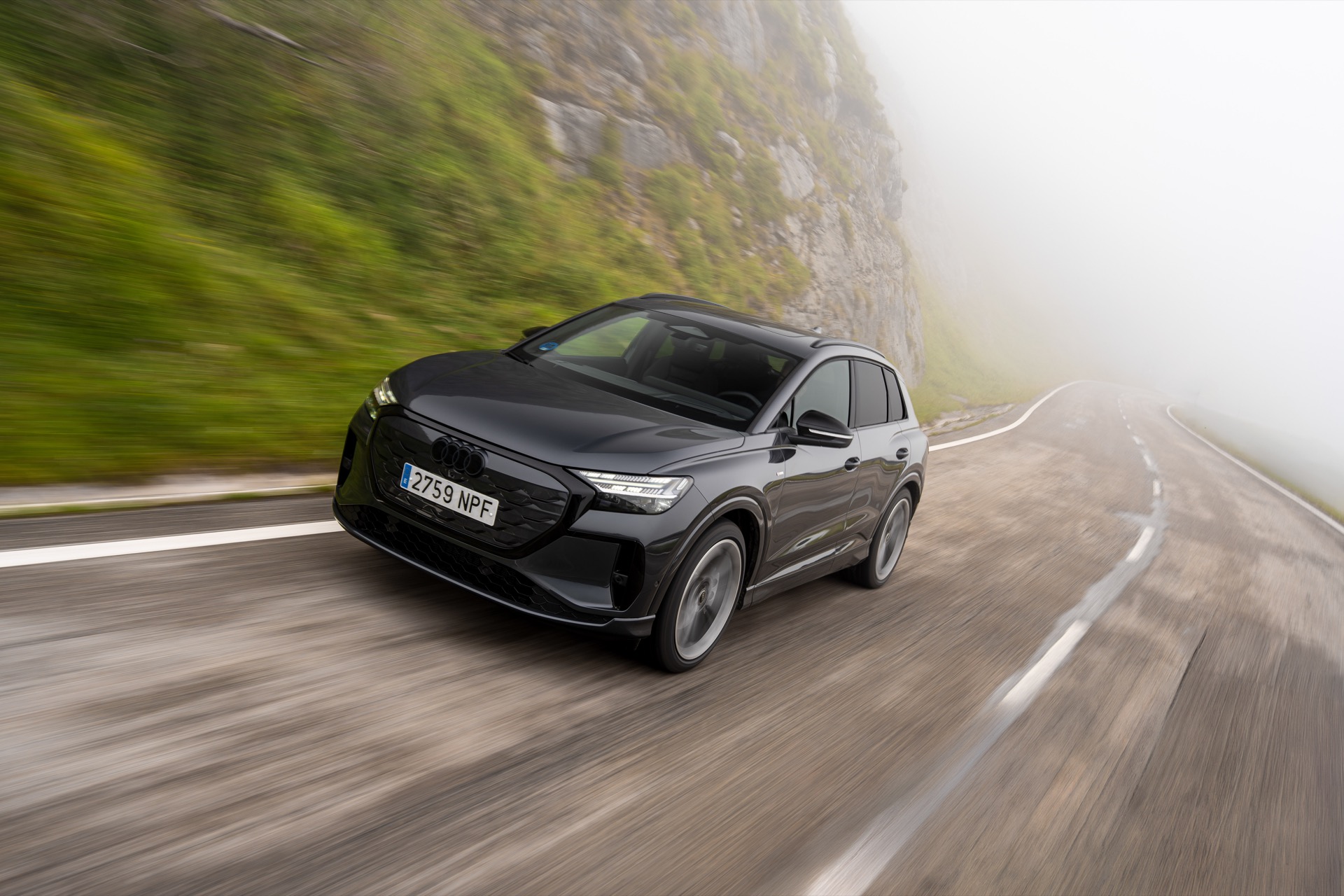
Buying guide for choosing a premium electric SUV in 2026 under €70,000, with criteria on real-world range, DC charging power and ADAS equipment. Comparison of six verified models on the Spanish market.
Choosing a premium electric SUV in 2026 is no longer an act of faith. Three years ago, buying one of these cars was, to a large extent, a bet on a range promise that was almost never met on the road. Today the Spanish market offers six or eight serious alternatives under €70,000, with 400V and 800V architectures sharing the same showroom, and with a real gap between what the WLTP spec sheet says and what the car delivers on a motorway at 120 km/h in winter. That gap is, precisely, the first thing you need to learn to read.
What defines a premium electric SUV in 2026
The badge on the bonnet is not enough. A premium electric SUV in 2026 is distinguished by three key points: a real-world range above 400 km in mixed conditions, a DC charging power that allows recovering from 10 to 80% in under 30 minutes, and an ADAS level that includes, at a minimum, adaptive cruise control with lane assist, emergency braking with pedestrian and cyclist detection, and a 360º camera. Everything else — leather, Burmester or Bang & Olufsen sound, giant screens — is a detail. Important, yes, but it does not define the category.
WLTP range vs real-world range: the first filter
The WLTP cycle remains the official reference, but it is wise to apply a mental discount of between 15% and 25% depending on the time of year and the use of climate control. A premium electric SUV with a WLTP range of 500 km usually works out in practice to between 380 and 420 km on the motorway. For a driver who makes interurban trips of 150–200 km several times a week, that margin is what decides whether you need to stop and charge or not. Our recommendation: always demand real consumption data, not just the homologated figure.
400V vs 800V architecture and DC charging power
Here lies the true technological gap in the segment. 800V systems — such as the one fitted to the Genesis GV60 — allow DC charging peaks of up to 350 kW and recover from 10 to 80% in about 18 minutes. 400V systems, still the majority in 2026, range between 100 and 175 kW at peak, which translates into 28–35 minutes for the same recovery. This is no minor point if you frequently take long journeys; for almost exclusively urban use, the difference matters much less.
Equipment and ADAS: what should come as standard
Below €70,000 it is no longer acceptable to lack a head-up display, memory seats or connectivity with OTA updates. Nor should an advanced level 2 lane-keeping assistant be missing. Here it is worth scrutinising what comes as standard and what is a paid option, because some premium brands still charge for the full assisted-driving package, something that in the Chinese segment — as we saw when analysing the Chinese premium electric SUV under €60,000 — usually comes included as standard.
Premium models verified in Spain under €70,000
BMW iX1 — from €47,984
The most affordable model in the BMW electric range in Spain. 400V architecture, a generous homologated range and dynamic behaviour that remains the segment benchmark for those who value driving feel above all else.
| Power (kW) | Power (CV) | Range | Fuel |
|---|---|---|---|
| 150 kW | 204 CV | 514 km | Electric |
Audi Q4 e-tron — from €49,970
Perhaps the most balanced of the comparison. Sober interior, a 520-litre boot and electronics that have matured considerably since launch. We analysed it against its most direct rival in our Volvo EX40 vs Audi Q4 e-tron.
| Power (kW) | Power (CV) | Range | Fuel |
|---|---|---|---|
| 150 kW | 204 CV | 440 km | Electric |
Volvo EX40 — from €46,950
The most compact Swede in the electric range. Benchmark passive safety in the segment and an interior design that, to my taste, remains the most accomplished in this group.
| Power (kW) | Power (CV) | Range | Fuel |
|---|---|---|---|
| 175 kW | 238 CV | 477 km | Electric |
Mercedes EQB — from €58,526
The only seven-seater in this selection, although the third row is more of an emergency resource than a real seat for adults. Range is somewhat tight by 2026 standards, but it makes up for it with space and ride comfort.
| Power (kW) | Power (CV) | Range | Fuel |
|---|---|---|---|
| 140 kW | 190 CV | 536 km | Electric |
Genesis GV60 — from €55,900
The most technically interesting: 800V architecture inherited from the Hyundai-Kia group, allowing the fastest charging in this whole group. It is debatable whether the brand yet has the recognition needed to justify the price for the average Spanish buyer, but on paper it is the most advanced SUV on the list.
| Power (kW) | Power (CV) | Range | Fuel |
|---|---|---|---|
| 168 kW | 229 CV | 561 km | Electric |
Lexus RZ — from €52,000
The most conservative in performance and the most reliable in terms of after-sales, backed by the reputation of Toyota. Range is not the panacea either, but its interior finish justifies much of the price.
| Power (kW) | Power (CV) | Range | Fuel |
|---|---|---|---|
| 165 kW | 224 CV | 559 km | Electric |
Comparison table and rating
| Model | Price from | Range | Architecture | Rating |
|---|---|---|---|---|
| BMW iX1 | €47,984 | 514 km | 400V | 8.2 |
| Audi Q4 e-tron | €49,970 | 440 km | 400V | 8.6 |
| Volvo EX40 | €46,950 | 477 km | 400V | 8.4 |
| Mercedes EQB | €58,526 | 536 km | 400V | 7.5 |
| Genesis GV60 | €55,900 | 561 km | 800V | 8.8 |
| Lexus RZ | €52,000 | 559 km | 400V | 7.9 |
Public aid and real purchase cost
The Plan Auto+ remains the reference framework for anyone wishing to reduce the final bill for a premium electric SUV in Spain. The amounts vary according to income and scrappage, so it is always advisable to check the official website before closing the purchase: it can make a difference of several thousand euros in the starting price.
Our final recommendation
If your priority is fast charging and you do not mind a less recognised badge, the Genesis GV60 is, in our view, the technically most advanced option on this list. If you are looking for the perfect balance between range, price and brand backing, the Audi Q4 e-tron remains hard to beat. And if the budget truly rules, the BMW iX1 comes in below €48,000 without giving up almost anything essential.
Frequently asked questions
What is the best premium electric SUV for less than €70,000 in 2026?
There is no single answer: the Genesis GV60 leads in charging power and 800V architecture, the Audi Q4 e-tron in overall balance and the BMW iX1 in price-to-performance ratio.
What is the difference between 400V and 800V architecture in an electric SUV?
The 800V architecture allows much higher DC charging peaks, cutting the 10–80% charging time almost in half compared with conventional 400V systems.
Does WLTP range correspond to real-world range?
Not entirely. On the road with climate control running, it is usual to lose between 15% and 25% of the homologated figure, depending on the time of year.
Can the Plan Auto+ be applied to a premium electric SUV?
Yes, as long as the vehicle and the buyer meet the requirements in force. The exact amounts should be checked on the plan’s official website before signing.
Technical specifications of this car


 The seven finalists for the 2027 European Car of the Year (COTY) are exclusively electric
 Peugeot E-208 GTi: a battery-powered toy that revives the spirit of the 1980s sports cars
 New Lexus ES: luxury grows and goes electric
Deja un comentario