Audi BMW ES Lexus Q3 UX Volvo X1 XC40 Electric Cars Hybrid Cars Comparisons SUV
How to Choose a Premium SUV for Under 60,000 Euros in 2026: Powertrain, Technology and Cost of Ownership
 Iván Navarro
4 September 2026
7 min.
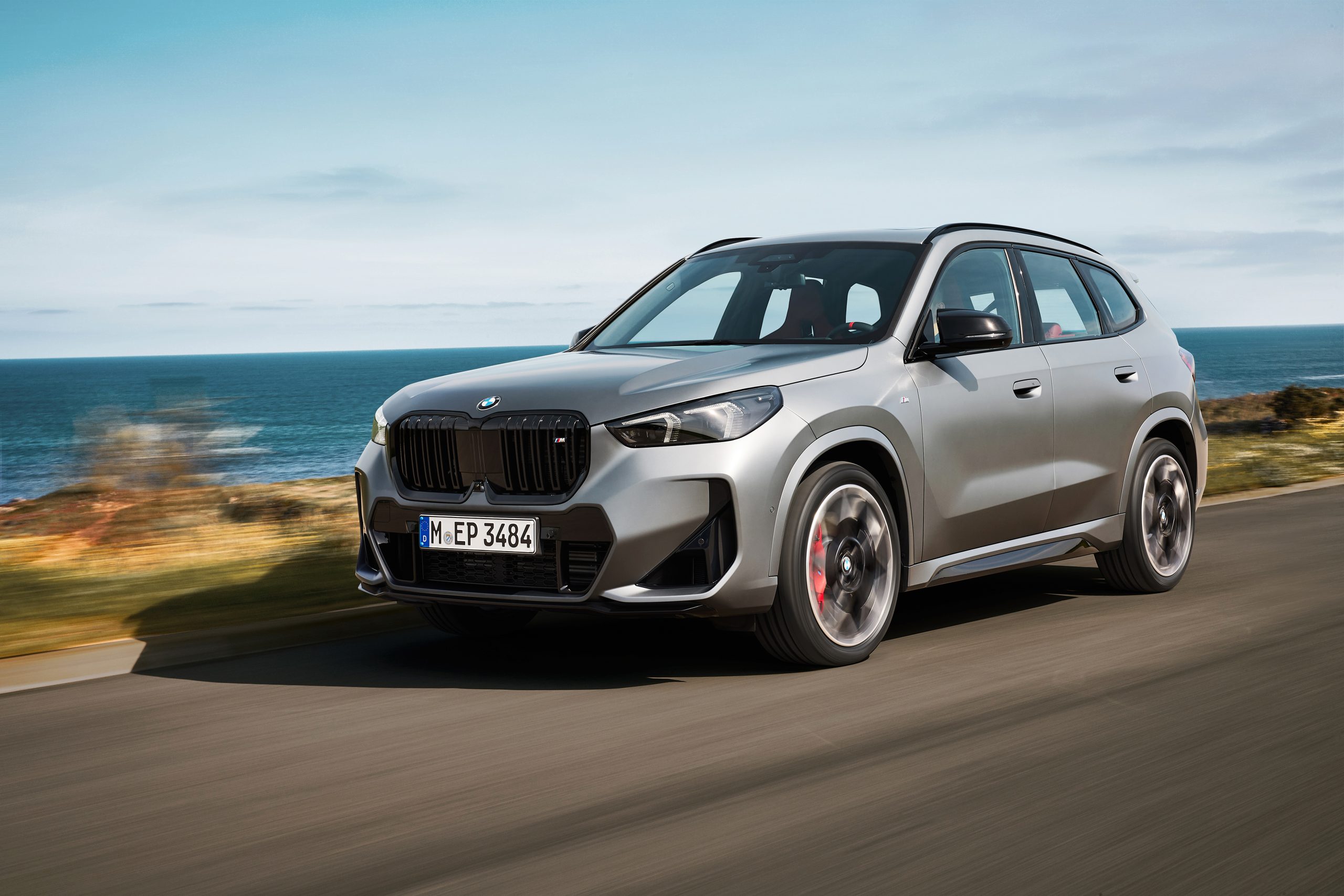
An editorial guide to choosing a premium SUV for under 60,000 euros in 2026, weighing powertrain, ADAS technology and real three-year cost of ownership.
The premium segment below 60,000 euros is going through an unusual moment. There has never been so much choice — mild hybrids, plug-in hybrids with over 90 km of electric range, battery electric vehicles with 400 real-world km — and yet choosing well has never been so complicated. A CERO label is no longer enough, nor is a large screen, and the list price says less and less about the real cost of keeping the car in the garage for three years.
It should be made clear from the outset that this guide leaves out two names the reader might expect. BYD, because in our view in 2026 the buyer has premium alternatives with a finer balance between technology, perceived quality and after-sales network. And Nissan, whose electric offering in this range sits — according to our editorial judgement — a step below its direct rivals in finish, sound insulation and overall software experience. This is not a disqualification; it is an editorial fit decision.
What to demand from a premium SUV in 2026
Three deciding factors. A powertrain suited to real use, not to the brochure. A minimum technology specification — level 2+ ADAS with semi-autonomous motorway driving, infotainment with OTA updates, wireless charger and tri-zone climate control — which in a premium car can no longer be optional. And three-year cost of ownership, where residual value weighs as much as consumption.
PHEV, electric or mild hybrid: which powertrain fits your use
There is no single answer here. A PHEV with 80-100 km of electric range makes sense if there is a plug at home and the daily commute is around those kilometres: you drive it as an electric car during the week and forget about it on the road. If most use is urban and peri-urban with overnight charging, the battery electric vehicle comes out ahead — less maintenance, lower cost per kilometre, guaranteed CERO label. The mild hybrid is for those who clock up many motorway kilometres without easy access to charging: it is not the panacea, but it simplifies life.
For the detail of plug-in figures in this same segment, the duel between the BMW X3 and the Mercedes-Benz GLC serves as a useful reference.
BMW X1 (from 55,940 €)
The X1 remains the most sensible entry point to the brand. Polished chassis, usable rear seat, iDrive 9 with standard OTA and an xDrive25e PHEV version that is homologated at close to 83 km of electric range WLTP. In the real world, with calm driving, 65-70 km can be achieved. It is not the sportiest member of the family, but it is the most balanced for the use that 80% of its buyers will make.
| Power kW | Power CV | Top speed | Electric range | Consumption | Label | Fuel |
|---|---|---|---|---|---|---|
| 180 kW | 245 CV | 190 km/h | 83 km | 0.8 l/100 km | CERO | PHEV |
Audi Q3 (from 56,090 €)
The refreshed Q3 bets on a cleaner interface and a plug-in TFSI e version that competes directly with the X1. Interior with a better tactile feel than the previous generation, and a slightly higher driving position that appeals to the family buyer. That said, the boot with the batteries under the floor loses some capacity compared with the mild-hybrid variant.
| Power kW | Power CV | Top speed | Electric range | Consumption | Label | Fuel |
|---|---|---|---|---|---|---|
| 200 kW | 272 CV | 215 km/h | 119 km | 1.7 l/100 km | CERO | PHEV |
Mercedes-Benz GLA (from 55,710 €)
The GLA 250e is the option for those who prioritise the interior over the mechanics. MBUX remains a benchmark for voice integration, and the new software leap with broad OTA updates brings it up to date. In dynamics, it is honest without reaching the composure of the X1. A classic premium, with all the good and predictable things that implies.
| Power kW | Power CV | Top speed | Electric range | Consumption | Label | Fuel |
|---|---|---|---|---|---|---|
| 160 kW | 218 CV | 210 km/h | 75 km | 1.0 l/100 km | CERO | PHEV |
Volvo XC40 Recharge (from 48,500 €)
The Swedish brand’s electric model has gained efficiency with the latest update. Native integrated Google — a real advantage over proprietary systems that still arrive late with improvements — rear-wheel drive as standard on the Single Motor, and finishes that remain its trademark. The homologated range approaches 467 km; on the motorway at 120, expect around 350 real km.
| Power kW | Power CV | Top speed | Range | Consumption | Label | Fuel |
|---|---|---|---|---|---|---|
| 175 kW | 238 CV | 180 km/h | 467 km | 16.7 kWh/100 km | CERO | Electric |
Lexus UX 300h (from 41,750 €)
Lexus’s bet is reliability as a selling point. The UX 300h with the new hybrid generation gains power and refinement without the need to plug in. It is not CERO — it falls under ECO — but for those who clock up motorway kilometres and have no charging point, the three-year cost of ownership comes out very competitive. The update being prepared for the NX ahead of 2027 confirms that the brand is still refining software, its historically weakest point.
| Power kW | Power CV | Top speed | Range | Consumption | Label | Fuel |
|---|---|---|---|---|---|---|
| 146 kW | 199 CV | 177 km/h | — | 5.2 l/100 km | ECO | Hybrid |
Genesis GV60 (from 55,900 €)
The high-priced Korean entry within this guide’s ceiling. Shares the E-GMP platform with the Kia EV6 and Ioniq 5 — 800 V architecture, charging from 10 to 80% in 18 minutes on a 350 kW fast charger — an interior with an upholstery and insulation level that surprises, and a 5-year warranty with no mileage limit. In practice, the best argument against the German brands in the electric segment.
| Power kW | Power CV | Top speed | Range | Consumption | Label | Fuel |
|---|---|---|---|---|---|---|
| 168 kW | 229 CV | 185 km/h | 561 km | 16.7 kWh/100 km | CERO | Electric |
Minimum technology to demand: where not to compromise
In a 2026 premium car, three things are non-negotiable: level 2+ ADAS with active lane centring and GPS-predictive adaptive cruise control, infotainment with OTA that updates the ADAS and not just the icons, and climate control with a heat pump if the car is electric or PHEV. Without a heat pump, winter range drops by 25-30%. It is the fine print nobody mentions at the dealership.
Three-year cost of ownership: the figure that matters
List price, insurance, scheduled maintenance, consumption and estimated residual value. At 30,000 km a year, a PHEV with a home plug and mostly electric use comes in at 0.08-0.10 €/km in energy terms; a petrol mild hybrid, between 0.12 and 0.14; a pure electric car with home charging, around 0.04. The Plan Auto+ continues to act as a framework for purchase aid for electrified vehicles — check the official website for the amount in force at the time of the transaction.
Summary table and editorial rating
| Model | Price from | Powertrain | CERO/mixed range | Technology | 3-year cost | Overall score |
|---|---|---|---|---|---|---|
| BMW X1 xDrive25e | 55,940 € | PHEV | 83 km | 9/10 | 8/10 | 9.0 |
| Audi Q3 TFSI e | 42,900 € 56,090 € | PHEV | 119 km | 8/10 | 8/10 | 8.5 |
| Mercedes-Benz GLA 250e | 46,200 € 55,710 € | PHEV | 75 km | 9/10 | 7/10 | 8.3 |
| Volvo XC40 Recharge | 48,500 € | Electric | 467 km | 9/10 | 9/10 | 8.8 |
| Lexus UX 300h | 41,750 € | Hybrid | 5.2 l/100 | 7/10 | 9/10 | 8.2 |
| Genesis GV60 | 55,900 € | Electric | 561 km | 9/10 | 8/10 | 8.7 |
Frequently asked questions
Which premium SUV under 60,000 euros offers the best value for money in 2026?
In our view, the BMW X1 xDrive25e for its dynamics, technology and residual value, and the Volvo XC40 Recharge if your use justifies a pure electric car. The Genesis GV60 makes a strong case with its warranty and 800 V architecture.
Is a plug-in hybrid or an electric premium SUV better in this price range?
It depends on use. With a home charging point and daily journeys under 80 km, the PHEV covers almost everything in electric mode and handles long trips without range anxiety. If use is mostly urban and overnight charging is available, the pure electric car works out cheaper over three years.
What ADAS technology should a premium SUV offer in 2026?
Level 2+ with active lane centring, GPS-predictive adaptive cruise control, semi-automatic lane change, and OTA updates that include improvements to these systems, not just the interface.
What does a premium SUV really cost to run over three years?
Adding list price, comprehensive insurance, official maintenance, consumption and estimated depreciation, between 0.45 and 0.60 €/km for a PHEV, and between 0.35 and 0.50 €/km for an electric car with home charging and use of the Plan Auto+.
Technical specifications of the cars in this article

 Kia offers an electric range of 10 models, 50 versions and 400 possible combinations
 The seven finalists for the 2027 European Car of the Year (COTY) are exclusively electric
 Peugeot E-208 GTi: a battery-powered toy that revives the spirit of the 1980s sports cars
Deja un comentario