Citroen Clase V Ford Mercedes Proace Verso SpaceTourer Toyota Transit Verso Comerciales Comparisons Furgonetas Minivans
How to Choose a Profitable Vehicle for Road Transfer Companies in 2026: Consumption, Maintenance and Residual Value
 Dani Montesinos
11 November 2026
7 min.
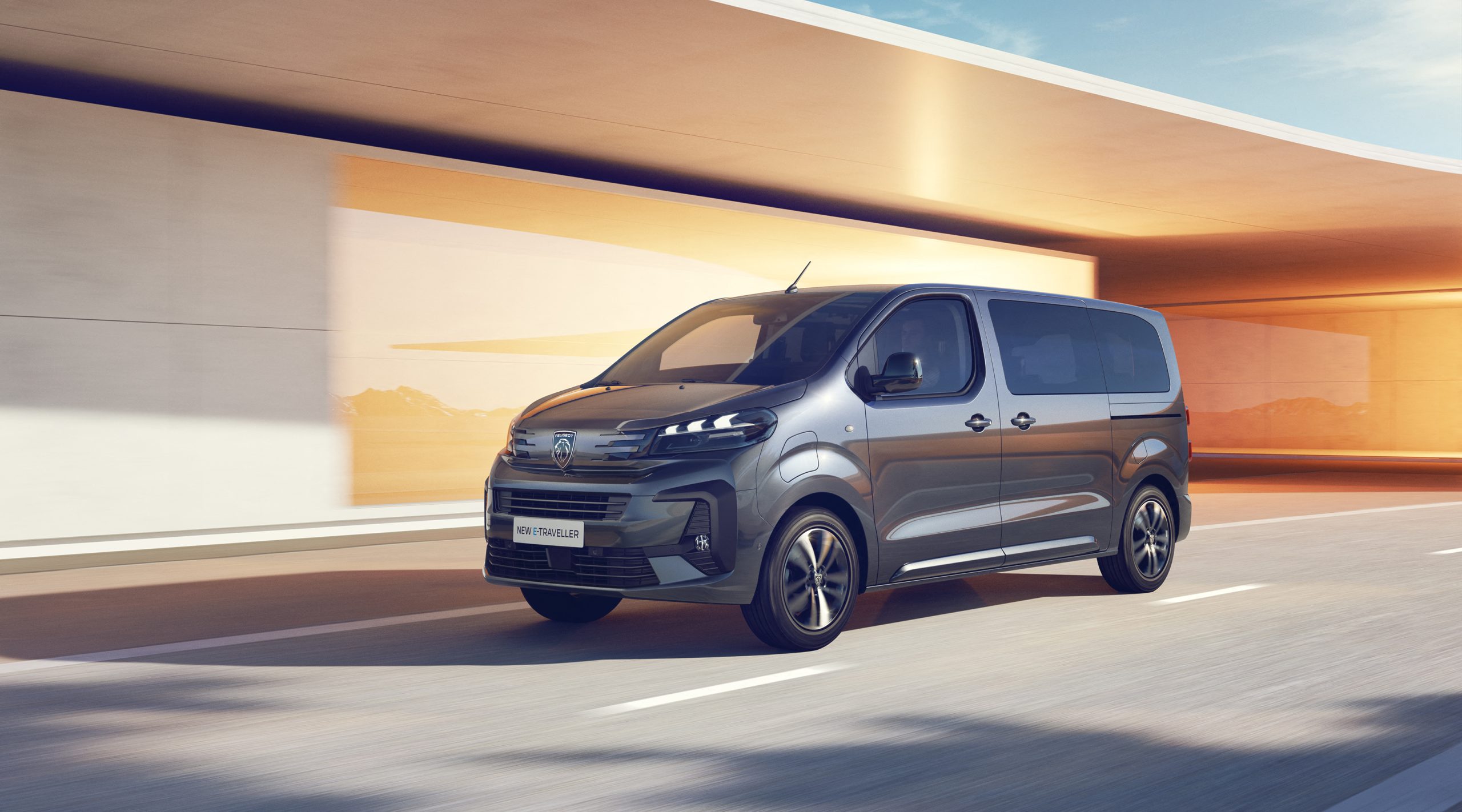
A guide for fleet managers on how to choose the profitable vehicle for transfers in 2026, with TCO, real-world consumption, maintenance and residual value over 4 years
Choosing the wrong vehicle for a transfer fleet doesn’t show up in the first month. It shows up in the second year, when the workshop calls more often than expected and the resale value has sunk below what the depreciation schedule predicted. For a road transfer company—intercity routes, airport runs, long last-mile trips—the vehicle is not a catalogue whim. It is a working tool that must justify itself in euros per kilometre, not in brochures.
What “profitable” means in a transfer fleet: the TCO framework
The purchase price is only the entry ticket. The total cost of ownership (TCO) for a road fleet adds depreciation, fuel, maintenance, insurance, tyres and the time the vehicle spends in the workshop instead of generating revenue. A van that is €4,000 cheaper on the initial invoice can end up costing twice as much in unscheduled stoppages by 150,000 km. That is why the criterion that truly separates a good decision from a bad one is not the list price, but the real €/km over four years.
Real consumption vs WLTP: the first filter for choosing a profitable vehicle for transfer companies
WLTP figures are useful for comparison, but not for budgeting. A van that homologates at 6.5 l/100 km can run closer to 8 l/100 km in real motorway use, loaded with four passengers and luggage, especially on airport routes with constant air conditioning. Real-world van consumption depends more on the route profile than on the spec sheet: steady intercity driving penalises less than the stop-and-start of urban last-mile work. It is advisable to ask the supplier for consumption data at maximum load, not only when empty.
Maintenance and residual value: the two costs that decide the €/km
Fleet maintenance for transfer companies weighs more the more intensive the use. A vehicle doing 60,000 km a year triples the service intervals of a private car, and that requires specific maintenance plans, not the generic retail ones. Brands with a broad after-sales network and accessible spare parts—here Volkswagen, Mercedes-Benz, Ford and the Stellantis and Renault groups stand out for workshop coverage in Spain—reduce downtime, which is ultimately the most expensive cost of all: a stationary vehicle earns nothing.
The residual value of commercial vehicles after four years usually ranges between 35% and 50% of the purchase price, depending on brand, mileage and condition. German premium vans hold their value better in the professional used market, but their entry and maintenance costs are higher. Mid-range options offset a slightly lower residual with a more predictable spending curve.
Best van for transport companies 2026: the candidates under examination
Volkswagen Caravelle — from €53,870
The historical reference of the premium passenger segment. Available in its new version with a 232 CV plug-in hybrid powertrain, a very extensive workshop network in Spain and a residual value that usually holds up well over the years. That said, maintenance is not the cheapest in the group.
| Model | Power CV | Power kW | Consumption | Label | Fuel |
|---|---|---|---|---|---|
| Volkswagen Caravelle | 232 CV | 171 kW | 3.9 l/100 km | ECO | Petrol |
Mercedes-Benz V-Class — from €73,478
The highest point of the segment in perceived quality, something we already analysed when comparing it with the Volkswagen Multivan for private transfers. Ideal for executive-level airport services, although its high residual value does not always offset the extra purchase cost in high-mileage fleets.
| Model | Power CV | Power kW | Consumption | Label | Fuel |
|---|---|---|---|---|---|
| Mercedes-Benz V-Class 250d | 190 CV | 140 kW | 7.1 l/100 km | C | Diesel |
Ford Transit Custom Kombi — from €33,480
The balance between price and robustness. Less cabin luxury than the German models, but one of the lowest cost-per-kilometre figures in the group thanks to affordable maintenance and a very widespread road workshop network.
| Model | Power CV | Power kW | Consumption | Label | Fuel |
|---|---|---|---|---|---|
| Ford Transit Custom Kombi 2.0 EcoBlue | 136 CV | 100 kW | 7.2 l/100 km | C | Diesel |
Citroën Spacetourer — from €40,525
Capacity and manoeuvrability are well resolved for long last-mile work, with contained consumption for its size. The interior feels a step below the Transit in materials, but the price makes up for it.
| Model | Power CV | Power kW | Consumption | Label | Fuel |
|---|---|---|---|---|---|
| Citroën Spacetourer BlueHDi 180 | 180 CV | 133 kW | 6.9 l/100 km | C | Diesel |
Peugeot Traveller — from €39,968
Practically the mechanical sibling of the Spacetourer, with a slightly more refined finish and a marginally higher residual value in the Spanish B2B used market.
| Model | Power CV | Power kW | Consumption | Label | Fuel |
|---|---|---|---|---|---|
| Peugeot Traveller BlueHDi 180 | 180 CV | 133 kW | 7.0 l/100 km | C | Diesel |
Renault Trafic Combi — from €43,189
The most competitive entry option on purchase price, although its intensive maintenance after 100,000 km tends to push up the TCO if fleet turnover is not fast.
| Model | Power CV | Power kW | Consumption | Label | Fuel |
|---|---|---|---|---|---|
| Renault Trafic Combi Blue dCi | 170 CV | 125 kW | 6.9 l/100 km | C | Diesel |
Toyota Proace Verso — from €53,980
It is marketed with a diesel engine of Stellantis origin, although there is also a fully electric version for those who prefer it, so its consumption figures are quite similar to the models seen above.
| Model | Power CV | Power kW | Consumption | Label | Fuel |
|---|---|---|---|---|---|
| Toyota Proace Verso | 150 CV | 110 kW | 6.5 l/100 km | C | Diesel |
Summary table and TCO score
| Model | Price from | Consumption | Label | TCO score (1-10) |
|---|---|---|---|---|
| Volkswagen Caravelle | €53,870 | 3.9 l/100 km | ECO | 7.5 |
| Mercedes-Benz V-Class | €73,478 | 7.1 l/100 km | C | 6.8 |
| Ford Transit Custom Kombi | €33,480 | 7.2 l/100 km | C | 8.2 |
| Citroën Spacetourer | €40,525 | 6.9 l/100 km | C | 8.0 |
| Peugeot Traveller | €39,968 | 7.0 l/100 km | C | 8.1 |
| Renault Trafic Combi | €43,189 | 6.9 l/100 km | C | 7.4 |
| Toyota Proace Verso | €53,980 | 6.5 l/100 km | C | 8.9 |
Which vehicle to choose by use case
For long-distance intercity transfers, comfort takes priority and the C label does not penalise as much: Mercedes V-Class. For airport services, where the margin per trip is tighter, the Ford Transit Custom Kombi and the Peugeot Traveller offer the best €/km without giving up brand image. For long last-mile work—routes with many stops and frequent starts—the Volkswagen Caravelle plug-in hybrid is, by far, the one that best turns urban consumption into real monthly savings.
Plan Auto+ and fleet taxation
Transfer companies may benefit from the Plan Auto+ for fleet renewal in certain cases involving low-emission vehicles, although the exact amount and requirements should always be checked on the official website before budgeting a purchase, as conditions vary by call for applications.
Frequently asked questions
Which is the profitable vehicle for transfer companies with the lowest cost per kilometre in 2026?
Among the models analysed, the Volkswagen Caravelle plug-in hybrid and the Toyota Proace Verso offer the best balance between purchase price, consumption and maintenance, with the hybrid of Toyota leading on routes with frequent urban traffic.
How is the total cost of ownership of a road fleet calculated?
By adding depreciation, fuel, maintenance, insurance and tyres over the planned period of use, usually four years, and dividing by the total kilometres driven to obtain the €/km.
What residual value can be expected from a commercial van after four years?
Between 35% and 50% of the original purchase price, depending on brand, accumulated mileage and documented maintenance condition.
Is it worth paying more for a premium van for airport transfers?
It depends on the positioning of the service: if the customer pays for image and comfort, yes; if the margin depends on trip volume, a mid-range model with good consumption is usually more profitable in the long run.
Technical specifications of this car


 Kia offers an electric range of 10 models, 50 versions and 400 possible combinations
 The seven finalists for the 2027 European Car of the Year (COTY) are exclusively electric
 Peugeot E-208 GTi: a battery-powered toy that revives the spirit of the 1980s sports cars
Deja un comentario