Citroen E-Transit Expert Ford Jumpy Opel Peugeot Renault Trafic Transit Transporter Vivaro Volkswagen Electric Cars Furgonetas Buying Guides Rankings
2026 ranking: the 5 best electric medium vans for range-payload in the Spanish market
 Dani Montesinos
11 November 2026
6 min.
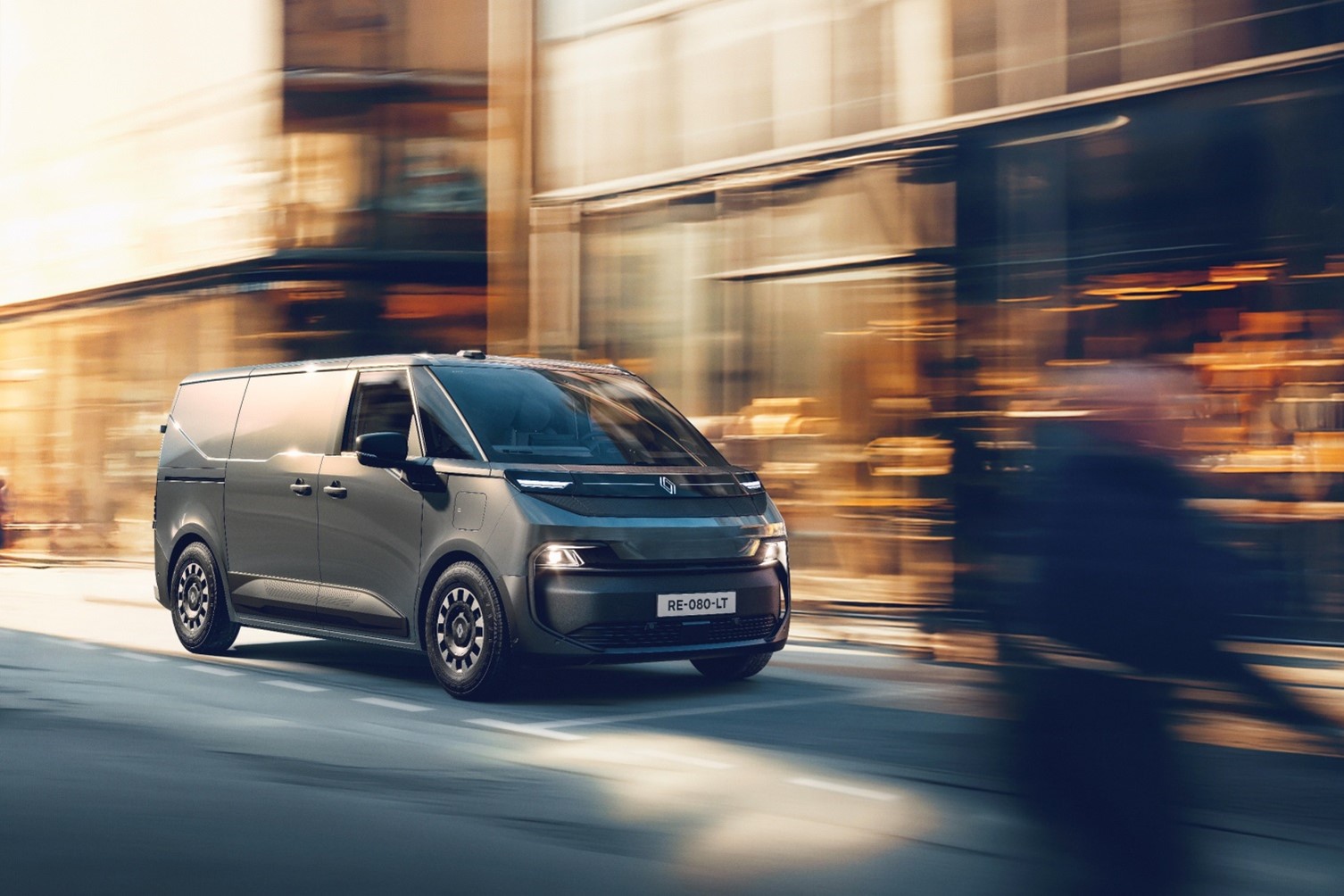
We analyse the electric medium vans with the best combination of WLTP range and payload available, with prices from VAT-included and technical data
Buying an electric medium van in 2026 is no longer an act of faith. There is real supply in Spanish dealerships, there is verified range data and, above all, there are fleets that have been running them for two or three years and measuring every kilowatt. The problem in this segment is still the same as ever: range and payload pull in opposite directions. Adding more battery adds kilometres, but subtracts kilos of load. And in a delivery or technical service business, those kilos are revenue.
What makes an electric medium van competitive in 2026
Three variables decide a professional purchase: homologated WLTP range, payload in kilograms and price with VAT included at a Spanish dealership. On top of that comes real availability — a model announced is of no use if delivery takes six months — and unrestricted access to the Low Emission Zones of the major cities.
WLTP range vs real-world range: what to expect on the road
The WLTP cycle remains the legal reference, but in a loaded van with climate control running, the real figure drops by between 15% and 25% depending on the season. A van homologated at 330 km can drop to 260 real km with a full load in winter. This should be kept in mind before planning delivery routes that are tight to the limit.
Payload: the figure that decides last-mile fleets
This is the real fine print of the segment. The battery has weight, and that weight is deducted from the homologated payload. Vans with longer ranges tend to lose between 100 and 200 kg of capacity compared with their equivalent diesel versions. For a parcel courier, this can mean one fewer trip per day.
Methodology of this Highmotor ranking
We have cross-referenced WLTP range, payload in kg and price from VAT-included of the closed-body van versions available in the Spanish commercial network in 2026. We discarded versions only announced or with limited availability in other European markets. The final score weights both variables equally, because no fleet van survives with just one criterion satisfied.
2026 ranking: the 5 electric medium vans with the best range-payload
1. Peugeot e-Expert — from 29,251 €
The e-Expert has been on the market longer than almost any rival, and that shows in the maturity of its battery management software. With the 75 kWh battery it reaches around 330 km WLTP and keeps a payload close to 1,100 kg, a balance few match without giving something up along the way.
| Power (kW) | Power (CV) | Range | Consumption | Label | Fuel |
|---|---|---|---|---|---|
| 100 kW | 136 CV | 330 km | 22 kWh/100 km | ZERO | Electric |
2. Citroën ë-Jumpy — from 27,950 €
Platform sibling of the e-Expert, the ë-Jumpy repeats nearly identical mechanics and figures, but its entry price usually sits somewhat lower in the most basic configuration. For fleets that do not need extra equipment, it is the most reasonable point of entry to the segment.
| Power (kW) | Power (CV) | Range | Consumption | Label | Fuel |
|---|---|---|---|---|---|
| 100 kW | 136 CV | 330 km | 22 kWh/100 km | ZERO | Electric |
3. Renault Trafic E-Tech — from 31,652 €
It is the only one in this ranking with a 90 kWh battery, and it shows: it exceeds 400 km WLTP, the highest figure in the group. That said, that larger battery takes away some payload compared with the Peugeot, leaving it just below 1,000 kg in its longest-range configuration.
| Power (kW) | Power (CV) | Range | Consumption | Label | Fuel |
|---|---|---|---|---|---|
| 160 kW | 220 CV | 470 km | 17.2 kWh/100 km | ZERO | Electric |
Ford E-Transit4. Ford E-Transit Custom — from 31,950 €
The most powerful engine in the group, with 218 CV that is noticeable when overtaking loaded on the motorway. Its range falls somewhat behind the Renault, at around 300 km WLTP, but it compensates with a payload of around 1,100 kg thanks to a tighter weight distribution.
| Power (kW) | Power (CV) | Range | Label | Fuel |
|---|---|---|---|---|
| 160 kW | 218 CV | 305 km | ZERO | Electric |
5. Mercedes-Benz eVito — from 73,755 €
It closes the ranking by price, not by quality: it is the group’s premium option and this is felt in the interior and the steering feel. Its range is somewhat tight for those who run long routes, and there it loses points against its French rivals.
| Power (kW) | Power (CV) | Range | Label | Fuel |
|---|---|---|---|---|
| 150 kW | 204 CV | 380 km | ZERO | Electric |
Comparative summary table
| Model | WLTP range | Approx. payload | Price from | Score |
|---|---|---|---|---|
| Peugeot e-Expert | 330 km | 1,100 kg | 29,251 € | 8.7 |
| Citroën ë-Jumpy | 330 km | 1,100 kg | 27,950 € | 8.8 |
| Renault Trafic E-Tech | 470 km | 980 kg | 31,652 € | 8.9 |
| Ford E-Transit Custom | 305 km | 1,100 kg | 31,950 € | 8.3 |
| Mercedes-Benz eVito | 380 km | 950 kg | 73,755 € | 7.6 |
Other alternatives in the segment to consider
The Opel Vivaro-e shares a platform with the Peugeot and the Citroën, so its figures are practically interchangeable, with an intermediate price positioning. The Toyota Proace Electric comes in through the same route, with the Japanese group’s commercial warranty as an added argument. The Volkswagen e-Transporter, more oriented to fleets that demand a premium brand image, offers a somewhat shorter range but an interior finish that is noticed in the driver’s day-to-day.
ZBE and Plan Auto+: the regulatory framework driving the purchase
Unrestricted access to the Low Emission Zones remains the most repeated commercial argument from dealerships, and it is no bluff: in Madrid, Barcelona or Valencia, a diesel van over five years old already faces real traffic restrictions. Added to this is the Plan Auto+, the state aid programme for purchasing electrified vehicles, whose amount and conditions should always be checked on the official website before closing the deal, because they vary by autonomous community and type of applicant.
Which electric van suits which professional use
For urban last-mile delivery with frequent stops, the Peugeot e-Expert or the Citroën ë-Jumpy easily cover the working day without needing an intermediate recharge. If the route includes long interurban journeys, the Renault Trafic E-Tech is the only one that offers a real range margin. And if the priority is charging to the limit without worrying about kilos, the Ford E-Transit Custom offers the best balance of power and capacity. Anyone who has already read our analysis of medium diesel vans and their payload-price relationship will know that this comparison always ends up being a question of priorities, not of an absolute winner.
Frequently asked questions
Which electric medium van has the most range in Spain in 2026?
The Renault Trafic E-Tech, with its 90 kWh battery, homologates around 470 km WLTP, the highest figure in this ranking.
Which electric van has the best payload in the segment?
The Peugeot e-Expert, Citroën ë-Jumpy and Ford E-Transit Custom are around 1,100 kg, above models with larger batteries.
Is an electric van worth it compared with a diesel for last-mile fleets?
In urban environments with restricted access to Low Emission Zones, yes: fuel savings and the absence of restrictions offset the initial extra cost in a few years of intensive use.
Do Plan Auto+ aid schemes apply to electric commercial vans?
Yes, the programme includes electric commercial vehicles among its subsidisable categories, although the exact amount and requirements should be verified on the official website before formalising the purchase.
Technical specifications of the cars in this article
 Kia offers an electric range of 10 models, 50 versions and 400 possible combinations
 The seven finalists for the 2027 European Car of the Year (COTY) are exclusively electric
 Peugeot E-208 GTi: a battery-powered toy that revives the spirit of the 1980s sports cars
Deja un comentario