Berlingo Caddy Citroen Combo Ford Opel Partner Peugeot Transit Volkswagen Comparisons Furgonetas Buying Guides Tests
How to Choose a Small Van for the Self-Employed with Mixed City-Road Use in 2026: Real Consumption, Manoeuvrability and Load Space
 Dani Montesinos
10 November 2026
7 min.
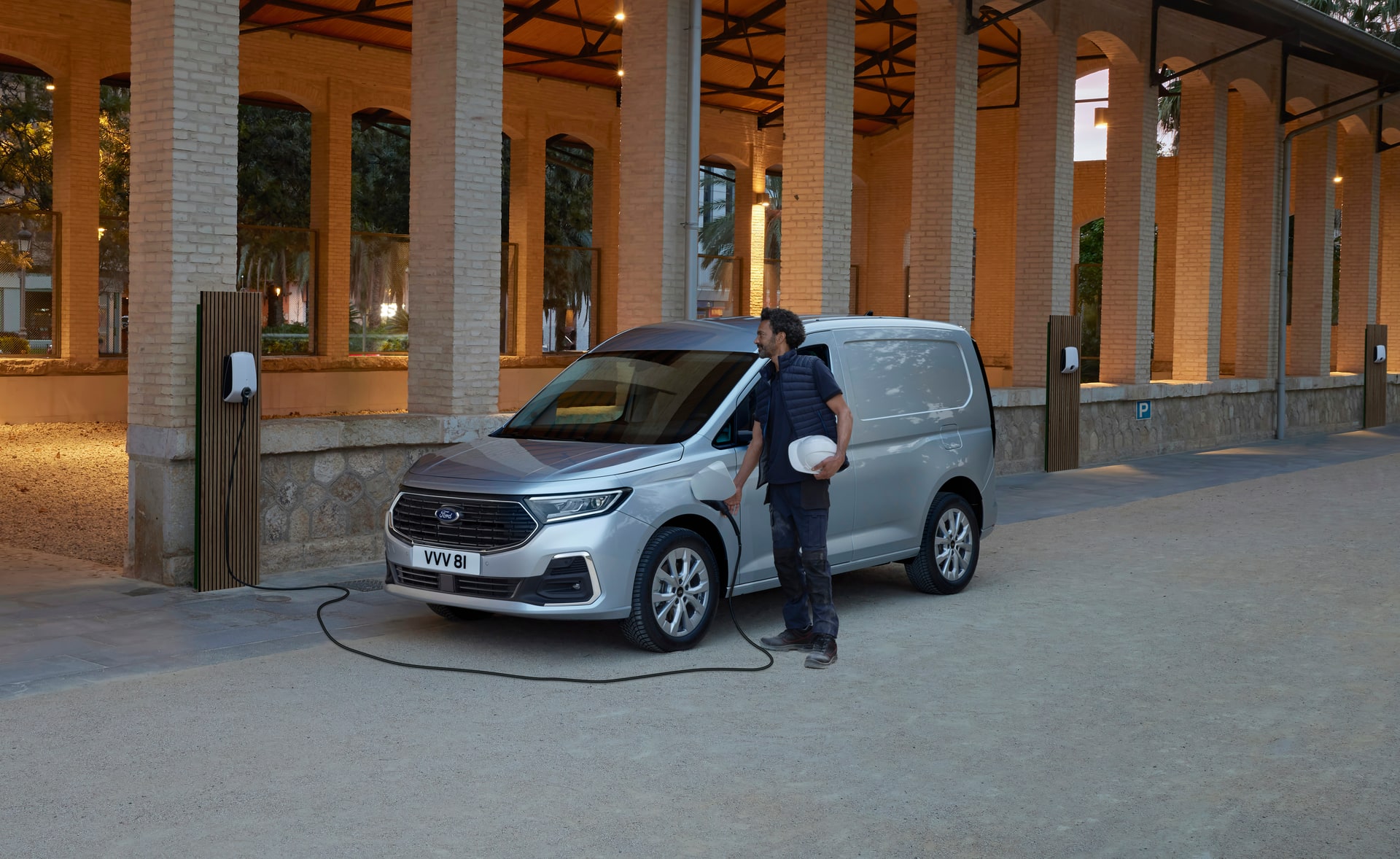
2026 comparison of the best-selling small vans for self-employed workers in Spain, with real-world consumption in mixed use, urban manoeuvrability and total cost of ownership
Choosing a small van when you work for yourself is not the same as choosing a car. Here, every litre of diesel, every minute spent looking for parking and every cubic metre of load space has a price that you feel at the end of the month. And in 2026, with six very mature offerings on the Spanish market, the decision has become more interesting than ever — and more confusing if you don’t look at it with a clear set of criteria.
What a self-employed worker really needs from a small van in 2026
The typical profile is neither that of a pure urban delivery fleet nor that of a long-distance haulier. It is someone who makes deliveries in the historic centre in the morning and drives 80 kilometres on the motorway in the afternoon to visit a client in another province. That mixed use completely changes which variables matter: it is no longer enough to look at the list price; you have to add real consumption, manoeuvrability and useful load volume into a single calculation.
Real consumption in mixed city-road use: diesel vs electric vs hybrid
This is where technical datasheets lie the most. A diesel homologated at 5.2 l/100 km can rise to 6.5 l/100 km if the journey mixes roundabouts, traffic lights and sustained 120 km/h on the motorway with the van loaded. Electric vans, on the other hand, behave the opposite way: they perform better in town than on the road, because regenerative braking offsets the extra consumption, while aerodynamic drag at high speed soars.
For a self-employed worker who does not exceed 25,000 km a year and makes most of their trips within the metropolitan area, an electric van such as the Citroën ë-Berlingo or the Opel Combo-e can work out cheaper per kilometre. For someone who uses the motorway every day, diesel remains more predictable — and, on top of that, it does not depend on finding a free charging point at eight in the morning.
Urban manoeuvrability: why size matters more than power
In narrow streets and restricted loading zones, turning radius counts for more than horsepower. The Renault Kangoo and the Ford Transit Connect stand out for a tight turning circle that is appreciated in old town centres; the Volkswagen Caddy, with a slightly longer wheelbase, requires more forethought when parking in a bay. The difference between a turning circle of 11 metres and one of 12.3 metres does not sound like much on paper, but you notice it every time you have to turn around in a one-way street.
Boot space and load volume: how to compare figures between models
Load volume figures vary depending on the version (short or long) and on whether they are measured with or without the passenger seat folded down. The Peugeot Partner and the Citroën Berlingo — mechanical cousins that share a platform — come in at around 3.3 to 3.9 m³ depending on length, while the Opel Combo falls within similar ranges as it also shares its development with the Stellantis group. The Volkswagen Caddy Cargo offers between 3.1 and 3.7 m³ depending on the version. It is also worth looking at the width between wheel arches: for anyone transporting European pallets, that figure is more decisive than total volume.
2026 comparison of small vans for the self-employed
Citroën Berlingo — from €25,569
The Berlingo has for years been the benchmark in the segment thanks to its balance of price and practicality. The BlueHDi 100 version is more than adequate in town and holds its composure on the road without straining the engine.
Peugeot Partner — from €19,885
The same technical DNA as the Berlingo, but with an interior finish that leans slightly more towards those who occasionally use the van as a family vehicle too.
Renault Kangoo — from €20,171
For many, the Kangoo remains the most agile option in town thanks to its small turning radius and a raised driving position that makes manoeuvring in narrow streets easier.
Ford Transit Connect — from €20,854
A compromise between manoeuvrability and mechanical robustness, with motorway behaviour that feels a little more settled than that of its French rivals.
Volkswagen Caddy — from €30,045
It is the most expensive option at the starting price, but also the one that ages best on the inside: the quality of materials and sound insulation are noticeably above the segment average.
Opel Combo — from €28,388
Technically a sibling of the Peugeot Partner and the Citroën Berlingo, the Combo tends to come with somewhat more aggressive commercial discounts, which makes it an option to watch if price is the decisive factor.
Diesel vs electric professional van: what makes sense depending on annual mileage
The break-even point is roughly at 20,000–25,000 km a year with mostly urban use. Below that figure, electric versions — the ë-Berlingo, e-Partner, Kangoo E-Tech Electric or Combo-e, all with homologated ranges of around 280–300 km — tend to pay back their higher initial cost sooner thanks to a lower cost per kilometre and the tax advantages linked to the Plan Auto+, whose amounts should be checked on the official website before closing the purchase. Above that figure, with frequent motorway journeys, diesel remains the lower-risk option operationally: it does not depend on the availability of charging points or on waiting times that a self-employed worker cannot afford.
Total cost of ownership: beyond the purchase price
The list price only tells part of the story. You also have to add maintenance, commercial-use insurance, depreciation and, in the case of diesel, the regulatory uncertainty around low-emission zones in large cities. Electric vans make up for it with cheaper maintenance — fewer moving parts, no particulate filter to keep an eye on — but they suffer in depreciation if annual mileage is low and the battery does not pay for itself in time.
Summary comparison table
Which van to choose according to your profile as a self-employed worker
If you spend the day making deliveries in the centre and parking in impossible gaps, the Kangoo or the Berlingo will give you fewer headaches. If your work combines urban delivery with frequent trips to nearby provinces, the Partner or the Combo offer the best balance between consumption and boot space. And if you value the interior above all else — because you spend more hours inside the van than at home — the Caddy justifies its premium with a cab that feels a step above. For those who have already accepted that the city is their natural territory, it is also worth reviewing which criteria define a
small SUV for the city, since many of the manoeuvrability criteria overlap.
Frequently asked questions
What is the best small van for a self-employed worker with mixed use in 2026?
There is no single valid answer for every profile: the diesel Citroën Berlingo offers the best overall balance between price, consumption and boot space, while the Renault Kangoo wins on pure manoeuvrability for intensive urban deliveries.
Does an electric van make more sense than a diesel for a self-employed worker?
It does if annual mileage stays below 20,000–25,000 km with predominantly urban use. Above that figure, with frequent motorway driving, diesel remains more profitable and predictable.
Which small van has the best load space for professional use?
The Berlingo, the Partner and the Combo — all sharing the Stellantis group platform — offer the most generous volumes in their long versions, between 3.3 and 3.9 m³ depending on configuration.
Is it worth waiting for a small van with Plan Auto+ aid?
It depends on the model and the variant chosen. The Plan Auto+ can significantly reduce the cost of electric versions, but you should always check the current amounts and deadlines on the official website before making the purchase decision.
Technical specifications of the cars in this article


 Kia offers an electric range of 10 models, 50 versions and 400 possible combinations
 The seven finalists for the 2027 European Car of the Year (COTY) are exclusively electric
 Peugeot E-208 GTi: a battery-powered toy that revives the spirit of the 1980s sports cars
Deja un comentario