Atto 3 Avenger BYD e-2008 EX30 Hyundai Jeep Kona Peugeot Volvo Electric Cars Buying Guides SUV
How to Choose an Urban Electric SUV in 2026 by Prioritising Maintenance Cost, Real-World Range and Battery Warranty
 Eduardo Molina
29 November 2026
7 min.
Buying an urban electric SUV in 2026 is no longer an act of faith. The Spanish market has enough choice, prices have settled and the fine print of warranties is starting to differentiate more than the power figures do. The problem is that most comparisons still focus on the brochure numbers: the WLTP figure, the 0-100 time, the design. Here we will look at the three data points that really shape the owner’s wallet over the next five or six years: how far the car actually travels in the city, what happens to the battery as its capacity declines, and how much it costs to maintain compared with an equivalent combustion model.
Real-world range versus WLTP: the first filter in the city
The WLTP cycle measures under controlled conditions that have little to do with an urban journey involving traffic, adverse weather and climate control switched on. In practice, an urban electric SUV loses between 10% and 25% of its homologated range when used in real city conditions, especially in winter. The good news is that the urban cycle is usually kinder than the mixed one, because low speeds and constant regenerative braking help efficiency. A car homologated at 420 km WLTP can perfectly well deliver 360-380 km on purely urban trips, but those same 420 km drop to 300 if the driver uses the motorway with the air conditioning at full blast. The real-world SUV electric range that matters is not the catalogue figure: it is the one the owner verifies on their usual journeys, and for that reason it is always advisable to ask the dealership for winter consumption data, not just the summer figure that usually appears in press road tests.
Battery warranty: years, kilometres and SoH explained
The electric car battery warranty has become the real contract of trust in this segment. The unwritten market norm hovers around 8 years or 160,000 km, with a commitment to maintain a minimum State of Health (SoH), usually 70%. Below that threshold, the manufacturer replaces or repairs the battery at no cost. It is worth reading the fine print: some brands cover progressive degradation while others only cover manufacturing faults, which are different things. Explicitly asking about the guaranteed SoH and not just the number of years is probably the most valuable question a buyer can ask at the dealership.
Five-year maintenance cost: the calculation that is rarely made
With no combustion engine, no clutch and no oil to change every 15,000 km, the electric SUV maintenance cost falls noticeably compared with an equivalent petrol or diesel. Servicing is largely limited to brakes, tyres, cabin filter and battery coolant. Over five years, a well-chosen urban electric SUV can cost between 30% and 40% less to maintain than its combustion equivalent, although insurance and tyres (heavier because of the battery, and wearing out sooner) somewhat qualify that advantage.
The 8 urban electric SUVs competing in Spain in 2026
Using these three criteria as a filter, this is the most honest comparison of small electric SUVs we can make today with models genuinely on sale in Spain.
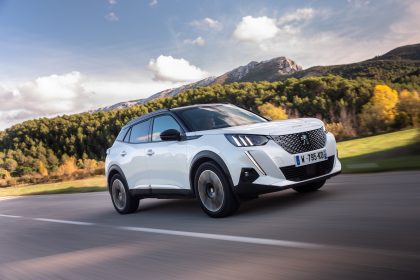
Peugeot e-2008: from €36,900
| Power | WLTP range | Consumption | Fuel |
|---|---|---|---|
| 115 kW / 156 CV | 406 km | 16.4 kWh/100 km | Electric |
The e-2008 has matured well: a recognisable i-Cockpit interior, fast charging to 80% in 30 minutes and a real-world range of around 340 km in the city. What is less convincing is the price once options are added, which climbs quickly.
Jeep Avenger: from €35,900
| Power | WLTP range | Consumption | Fuel |
|---|---|---|---|
| 115 kW / 156 CV | 400 km | 16.2 kWh/100 km | Electric |
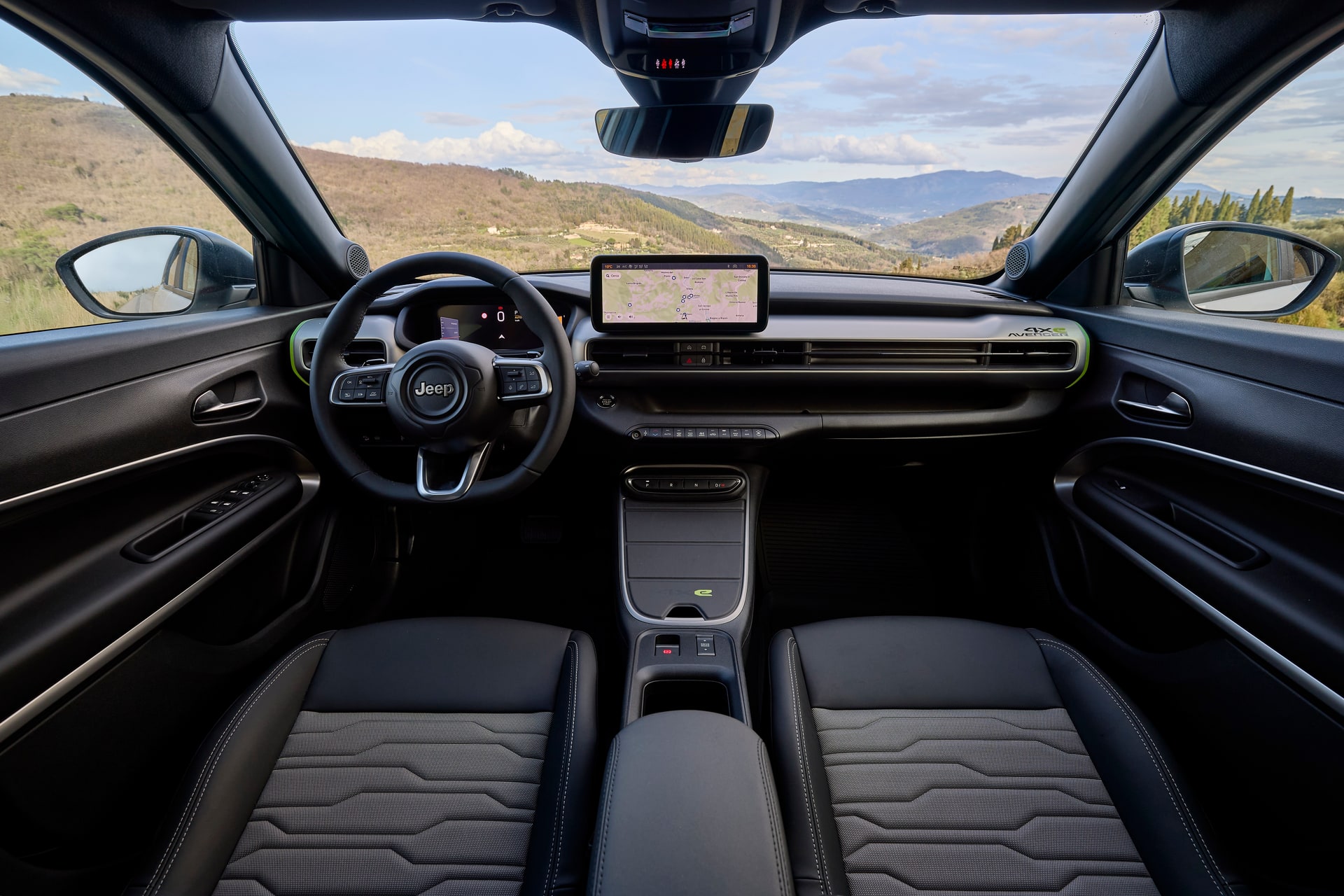
It shares its platform with the e-2008 and it shows: the same performance and the same 54 kWh battery. The Avenger wins on aesthetic character and on seating height, something appreciated in the city when parking.
Hyundai Kona Electric: from €36,550
| Power | WLTP range | Fuel |
|---|---|---|
| 150 kW / 204 CV | 490 km | Electric |
The Hyundai Kona in its Long Range version is probably the one that best balances homologated range and price within the group. In real urban use it drops to around 400 km, a figure that remains among the best in the group.
Kia Niro EV: from €43,335
| Power | WLTP range | Fuel |
|---|---|---|
| 150 kW / 204 CV | 460 km | Electric |
A mechanical sibling of the Kona, with a slightly more practical boot and an exterior design that divides opinion. Price is the main obstacle compared with its Korean cousin.
Volvo EX30: from €36,590
| Power | WLTP range | Fuel |
|---|---|---|
| 200 kW / 272 CV | 480 km | Electric |
The Volvo EX30 combines the performance of a larger SUV with urban dimensions. It is the fastest of the eight and offers the best interior finish, although its centralised screen with no instrument cluster in front of the driver is not for everyone.
Smart #1: from €37,250
| Power | WLTP range | Fuel |
|---|---|---|
| 200 kW / 272 CV | 440 km | Electric |
Born from the Mercedes-Geely alliance, the #1 surprises with its perceived quality and with fast charging that accepts up to 150 kW. That said, its real size is slightly larger than that of a conventional SUV-B.
BYD Atto 3: from €29,990
| Power | WLTP range | Fuel |
|---|---|---|
| 150 kW / 204 CV | 420 km | Electric |
The cheapest candidate for an affordable urban electric SUV in the group. The BYD Blade battery has a reputation for ageing well, and its battery warranty is among the longest on the market. The interior, with its distinctive rotating screen, remains its signature feature.
MG ZS EV: from €28,500
| Power | WLTP range | Fuel |
|---|---|---|
| 130 kW / 177 CV | 320 km | Electric |
The most affordable of all, aimed at those who prioritise the entry price over range. In the city it copes without difficulty, but it is not the car for those who frequently make trips outside the metropolitan area.
Summary comparison table 2026
| Model | Starting price | WLTP range | Power | Score |
|---|---|---|---|---|
| Peugeot e-2008 | €36,900 | 406 km | 156 CV | 7.5 |
| Jeep Avenger | €35,900 | 400 km | 156 CV | 7.4 |
| Hyundai Kona Electric | €36,550 | 490 km | 204 CV | 8.6 |
| Kia Niro EV | €43,335 | 460 km | 204 CV | 7.8 |
| Volvo EX30 | €36,590 | 480 km | 272 CV | 8.8 |
| Smart #1 | €37,250 | 440 km | 272 CV | 8.0 |
| BYD Atto 3 | €29,990 | 420 km | 204 CV | 8.3 |
| MG ZS EV | €28,500 | 320 km | 177 CV | 7.0 |
Plan Auto+ and how it affects the final price
The public aid Plan Auto+ remains the variable that can shift the final price of any of these models by several thousand euros. The amounts and deadlines change fairly often, so it is sensible to always check the plan’s official website before signing, rather than relying on the figure the salesperson gives you from memory.
Verdict: which urban electric SUV to choose depending on your use
If the criterion is real-world range without overpaying, the Kona Electric Long Range is hard to beat. If budget is decisive and battery warranty weighs heavily in the decision, the BYD Atto 3 comes in strongly. And if what you are looking for is the best urban electric SUV in driving feel and finish, the EX30 takes the prize, although its entry price rises quickly with options. There is no single winner: there is a winner for each way of using the car. Anyone who wants to go deeper into the savings calculation against combustion can also review the ranking of urban electric SUVs with the lowest five-year maintenance cost, which expands on the calculation we have only sketched here.
Frequently asked questions
Which urban electric SUV has the most real-world range in 2026?
Among the models analysed, the Hyundai Kona Electric Long Range offers the highest WLTP figure (490 km) and maintains solid real-world performance in the city, above 400 km in mild conditions.
How long does an electric car battery warranty last in Spain?
The usual market reference is 8 years or 160,000 km, with a guaranteed minimum SoH of around 70%. It is worth confirming with each brand whether it covers progressive degradation or only manufacturing defects.
Is it cheaper to maintain an electric SUV than a combustion one?
Yes, in general. Savings on five-year maintenance are usually around 30-40%, as oil changes, clutch work and much of the mechanical servicing associated with the combustion engine are eliminated.
Which urban electric SUV is the cheapest in Spain in 2026?
The MG ZS EV and the BYD Atto 3 lead the entry bracket, with prices from €28,500 and €29,990 respectively before applying Plan Auto+ aid.
Technical specifications of the cars in this article
 Kia offers an electric range of 10 models, 50 versions and 400 possible combinations
 The seven finalists for the 2027 European Car of the Year (COTY) are exclusively electric
 Peugeot E-208 GTi: a battery-powered toy that revives the spirit of the 1980s sports cars
Deja un comentario