C-HR Captur Ford Hyundai KIA Kona Kuga Niro Renault Toyota Hybrid Cars Buying Guides SUV
How to choose an urban hybrid SUV in 2026 if you only make short trips: why a PHEV doesn't always pay off
 Iván Navarro
16 November 2026
6 min.
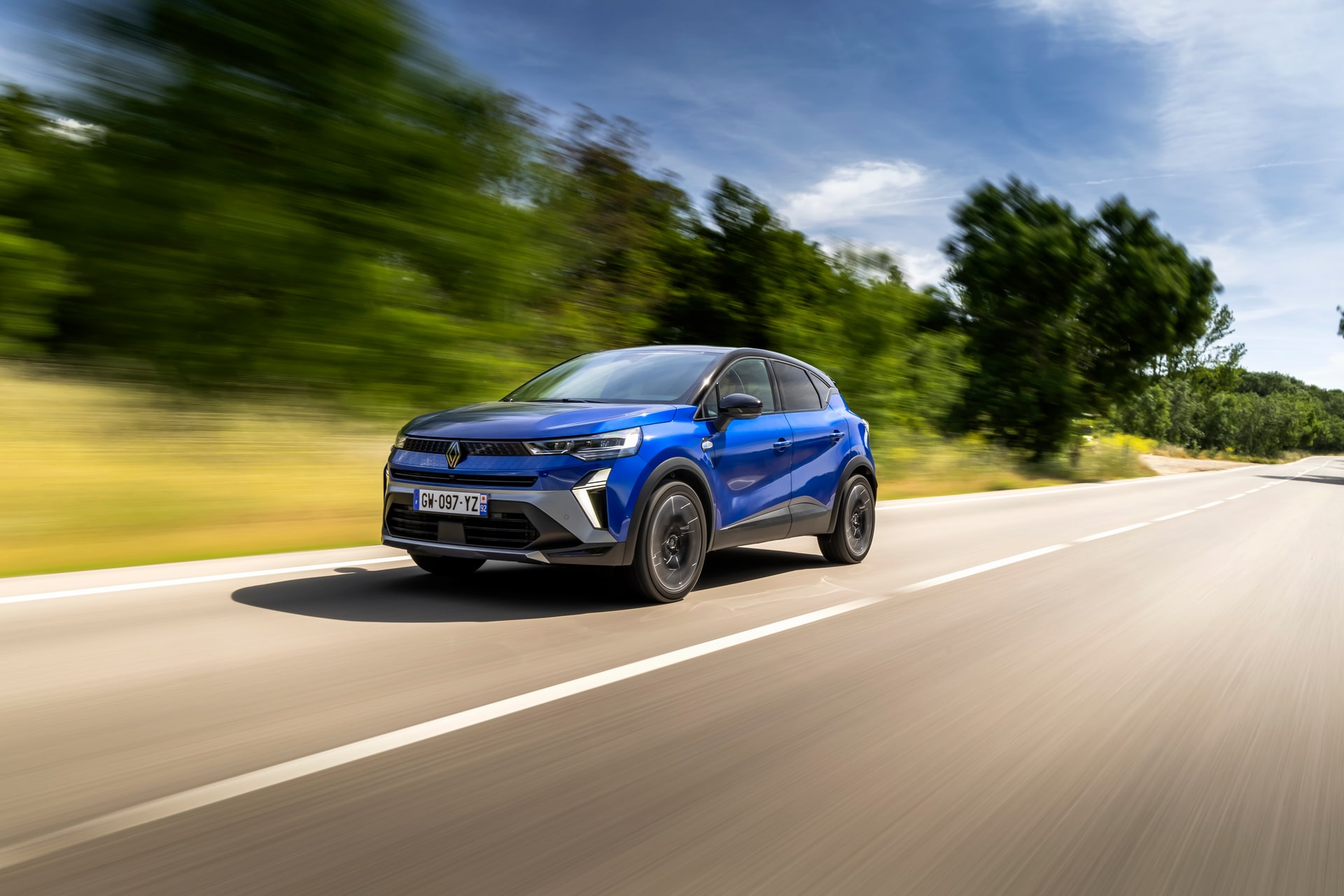
For years we have heard the same sales pitch: the bigger the battery a car carries, the better deal you get. It sounds logical, but in everyday urban Spain in 2026 that rule breaks more often than the dealership will admit. If your car sleeps on the street, you have no wallbox and your daily commute barely exceeds 20 or 25 kilometres, a PHEV can turn into a conventional hybrid weighing 1,800 kilos that never recharges its large battery. And that costs you dearly.
The assumption to break: more battery does not mean more savings
The PHEV (plug-in hybrid) makes sense when it is plugged in every day. If you don’t, it runs almost always on the combustion engine while dragging a 15–18 kWh battery that is useless except for adding weight. A HEV (full hybrid) is designed precisely for the opposite: moving in electric mode during starts and slow traffic without depending on any cable. For anyone who only drives in the city, that difference in concept matters more than any marketing brochure.
HEV: what it is and how it works in the city
The full hybrid recovers energy during braking and deceleration and feeds it into a small battery (between 1 and 1.5 kWh) that powers the electric motor during the first metres and in stationary traffic. It needs no plug, has never needed one, and at traffic lights and roundabouts it can run in zero-emissions mode for short stretches. It is, by far, the usage profile where this type of powertrain performs best: the more stop-and-go, the more efficient it becomes.
PHEV: the promise of zero litres that depends on a cable
A homologated PHEV can list consumption figures of 1.0 or 1.2 l/100 km on paper, but that figure only holds if you charge the battery every night and drive fewer kilometres than its electric range. If you don’t plug it in, the car hauls between 150 and 250 kg of extra battery and electric motor without using them, and real consumption can approach that of a conventional petrol SUV, around 7–8 l/100 km. It is a fantastic powertrain on paper, but a poor decision if charging is not part of the equation.
The four objective criteria: upfront cost, weight, charging and depreciation
Purchase premium
A PHEV costs on average between 8,000 and 14,000 euros more than its HEV equivalent within the same range. That difference has to be recovered through fuel savings, and on short urban trips without daily recharging, it takes years to pay back.
The extra weight penalises acceleration and braking
Carrying a large battery that is never fully discharged also doesn’t help in town: more mass means more energy needed to brake and accelerate, precisely the cycle that repeats every 200 metres in an average Spanish city.
Without a wallbox, the PHEV becomes a heavy and expensive hybrid
If you live in a flat without a garage space or your community has not yet installed a charging point, plugging in every day is nearly impossible. And without that discipline, the PHEV loses its only real advantage.
How many years it takes to amortise the difference
With a mileage of 12,000–15,000 km per year and no regular charging, amortising the PHEV’s premium over an HEV can take between 8 and 12 years, a period longer than the average ownership lifespan of a car in Spain.
The best urban hybrid SUVs of 2026
Toyota C-HR
The veteran of the segment, with the most refined HEV powertrain on the market after two decades of development Toyota.
| Power | Consumption | Label | Fuel | Price from |
|---|---|---|---|---|
| 103 kW / 140 CV | 4.7 l/100 km | ECO | Hybrid | €31,750 |
Hyundai Kona Hybrid
One of the lowest real-world consumptions in its category, as we already verified in our review of the Kona Hybrid.
| Power | Consumption | Label | Fuel | Price from |
|---|---|---|---|---|
| 104 kW / 141 CV | 4.5 l/100 km | ECO | Hybrid | €29,740 |
Kia Niro
It shares its mechanical platform with the Kona but has a taller body and a more practical boot.
| Power | Consumption | Label | Fuel | Price from |
|---|---|---|---|---|
| 104 kW / 141 CV | 4.4 l/100 km | ECO | Hybrid | €30,360 |
Suzuki S-Cross Full Hybrid
The most affordable on the list, with a simple, reliable powertrain that still earns the ECO label.
| Power | Consumption | Label | Fuel | Price from |
|---|---|---|---|---|
| 85 kW / 116 CV | 5.2 l/100 km | ECO | Hybrid | €31,050 |
Renault Captur E-Tech full hybrid
Analysed in depth in our review of the Captur E-Tech, it stands out for its electric management during starts.
| Power | Consumption | Label | Fuel | Price from |
|---|---|---|---|---|
| 105 kW / 145 CV | 4.6 l/100 km | ECO | Hybrid | €27,490 |
When the PHEV is worth it: the two profiles that justify it
There are two scenarios where the PHEV clearly wins: a private garage with a wallbox and daily charging habits, or daily trips of 40–50 km that almost exactly match the homologated electric range. In those cases the battery is genuinely used every day and the fuel savings are real, not theoretical.
Ford Kuga Plug-in Hybrid, the example of a well-used PHEV
With a homologated electric range of roughly 60–69 km, it is one of the few PHEVs in the segment able to cover a full daily urban commute in zero-emissions mode, as long as it is plugged in every night.
| Power | Electric range | Label | Fuel | Price from |
|---|---|---|---|---|
| 179 kW / 243 CV | 65 km | CERO | PHEV | €42,300 |
ECO label and city access: what changes (and what doesn’t)
For most urban traffic restrictions, the ECO label of an HEV and the CERO label of a PHEV give practically the same practical access in 2026: both exempt from pollution-episode restrictions in almost all Spanish cities. The real difference lies in your wallet, not in the DGT badge. It is also worth remembering that public purchase aid exists within the framework of the Plan Auto+, with conditions that should be checked on the official website before deciding, since they may vary depending on the type of powertrain.
Comparative summary table
| Model | Type | Consumption | Label | Price from | Urban use score |
|---|---|---|---|---|---|
| Toyota C-HR | HEV | 4.7 l/100 km | ECO | €31,750 | 8.5 |
| Hyundai Kona Hybrid | HEV | 4.5 l/100 km | ECO | €29,740 | 9 |
| Kia Niro | HEV | 4.4 l/100 km | ECO | €30,360 | 8.7 |
| Suzuki S-Cross Full Hybrid | HEV | 5.2 l/100 km | ECO | €31,050 | 8 |
| Renault Captur E-Tech full hybrid | HEV | 4.6 l/100 km | ECO | €27,490 | 9.1 |
| Ford Kuga Plug-in Hybrid | PHEV | n/a without daily charging | CERO | €42,300 | 6 (no wallbox) / 9 (with wallbox) |
For a 100% urban use with low mileage, the ranking clearly tilts towards the most efficient urban hybrid SUV that does not depend on any cable.
Frequently asked questions
Is a hybrid or a PHEV better for city-only driving?
If you have no wallbox and your trips don’t exceed 30 km a day, a self-charging HEV usually works out more cost-effective: lower upfront premium, less weight and more stable real-world consumption.
How many km a day do I need to drive for a PHEV to pay off?
The break-even point is usually between 40 and 50 km a day with nightly charging. Below that figure, the large battery is rarely used to its full potential.
What environmental label do self-charging hybrids carry?
Most current HEVs run with the ECO label, enough to access virtually all Spanish low-emission zones without restrictions in 2026.
Are there public subsidies to buy a hybrid SUV in 2026?
Yes, within the framework of the Plan Auto+, although amounts and requirements vary depending on the type of powertrain, and you should check them directly on the official website before closing the purchase.
Technical specifications of the cars in this article

 Kia offers an electric range of 10 models, 50 versions and 400 possible combinations
 The seven finalists for the 2027 European Car of the Year (COTY) are exclusively electric
 Peugeot E-208 GTi: a battery-powered toy that revives the spirit of the 1980s sports cars
Deja un comentario