Hyundai designs a revolutionary sunroof
 Mónica Redondo @MonicaRedondoD
15 March 2023
2 min.
Hyundai has filed a patent application for a revolutionary sunroof.
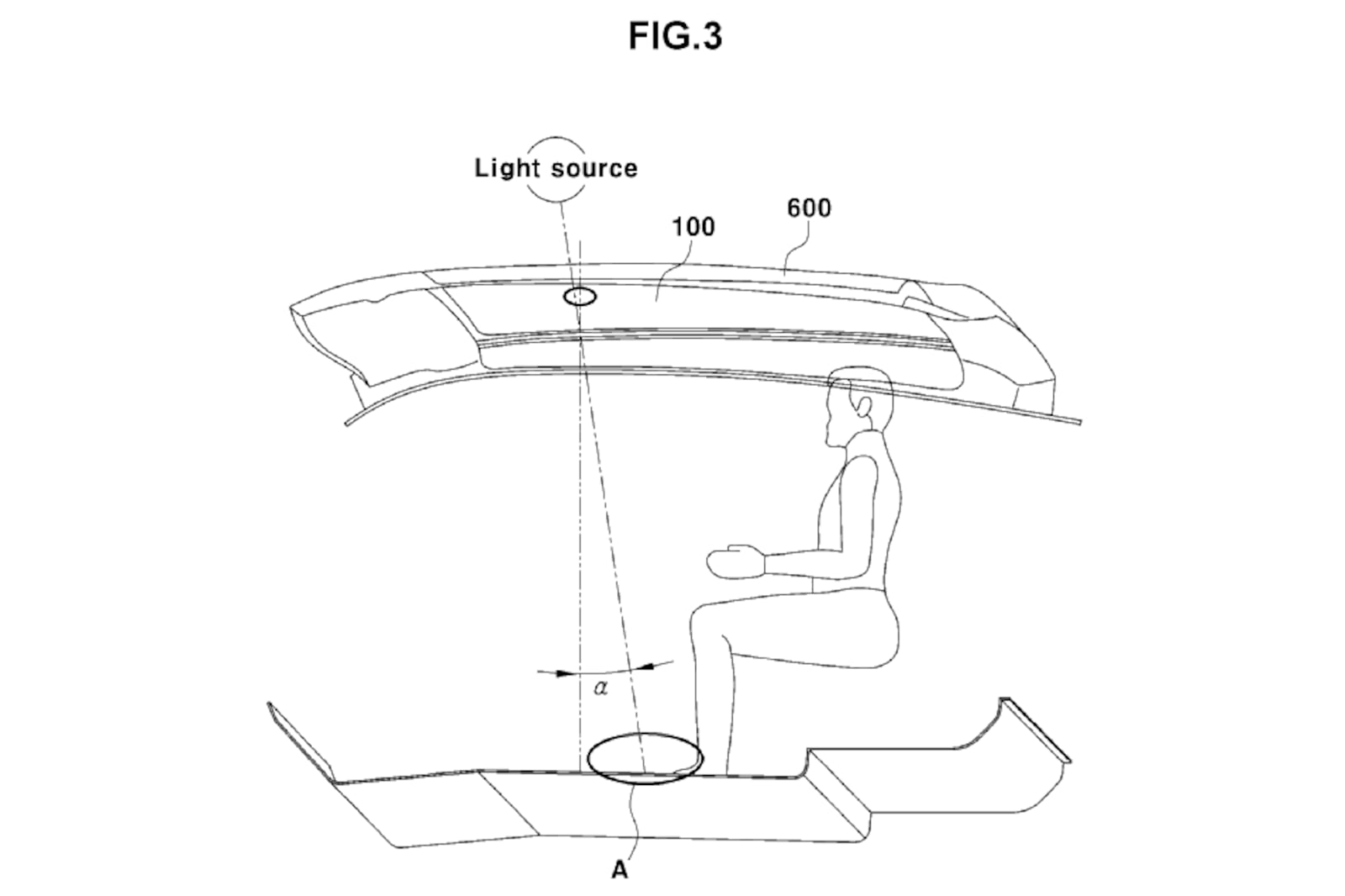
Hyundai is developing a revolutionary sunroof that uses smart blockers to control the interior shade. A specialized source has found a patent at the United States Patent and Trademark Office in which Korean engineers have devised a way to use a series of input sensors to operate a “smart blocking unit” in the glass sunroof, to distribute shade points throughout the vehicle.
Data reception is linked to a camera and light intensity sensors around the cabin. The camera is tasked with detecting the positions and movement of the occupants, and the light intensity sensors determine how much light is available. Along with the camera system, there are external sensors mounted on the roof to determine the intensity of the incoming natural light, as well as its orientation relative to the vehicle.
Natural light will be the main light source during the day, but this can be increased with interior-mounted lighting units controlled by the same logic if the natural light is below the level desired by the driver.
This is how the new sunroof of Hyundai would work
The available natural light may make the cabin brighter than desired. In that case, the smart blocking units will automatically darken to reduce the ambient light. If it clouds over, the darkening will lighten to maintain a constant light level inside the vehicle.
Many control algorithms are built into the control unit to decide which light source should be prioritized. If natural light is the dominant contributor, this controller will activate the innovative light-blocking units in the roof glass to darken or lighten. This will regulate the overall level of light entering the vehicle to dim or increase the interior light.
The control unit also determines the lighting around the occupants and can darken specific areas of the roof to keep its occupants cool in the shade. By working with the roof-mounted light sensor and the interior camera, the system will also move the dark areas over the vehicle’s occupants to ensure they are not exposed to direct sunlight.
A key technology here is the electrochromic glass inserts in the sunroof panel, which can change their opacity and/or color in response to the application of an electrical voltage. This is not new technology, but the way it is applied here is unique.


 Peugeot E-208 GTi: a battery-powered toy that revives the spirit of the 1980s sports cars
 New Lexus ES: luxury grows and goes electric
 First contact with the Dacia Sandero Hybrid 155: power and efficiency from €19,890
Deja un comentario