Corolla Hyundai i30 Prius Toyota Hybrid Cars Compact Comparisons Review
Hyundai i30 vs Toyota Corolla: which compact hybrid offers the best onboard technology under 32,000 euros
 Iván Navarro
26 September 2026
7 min.
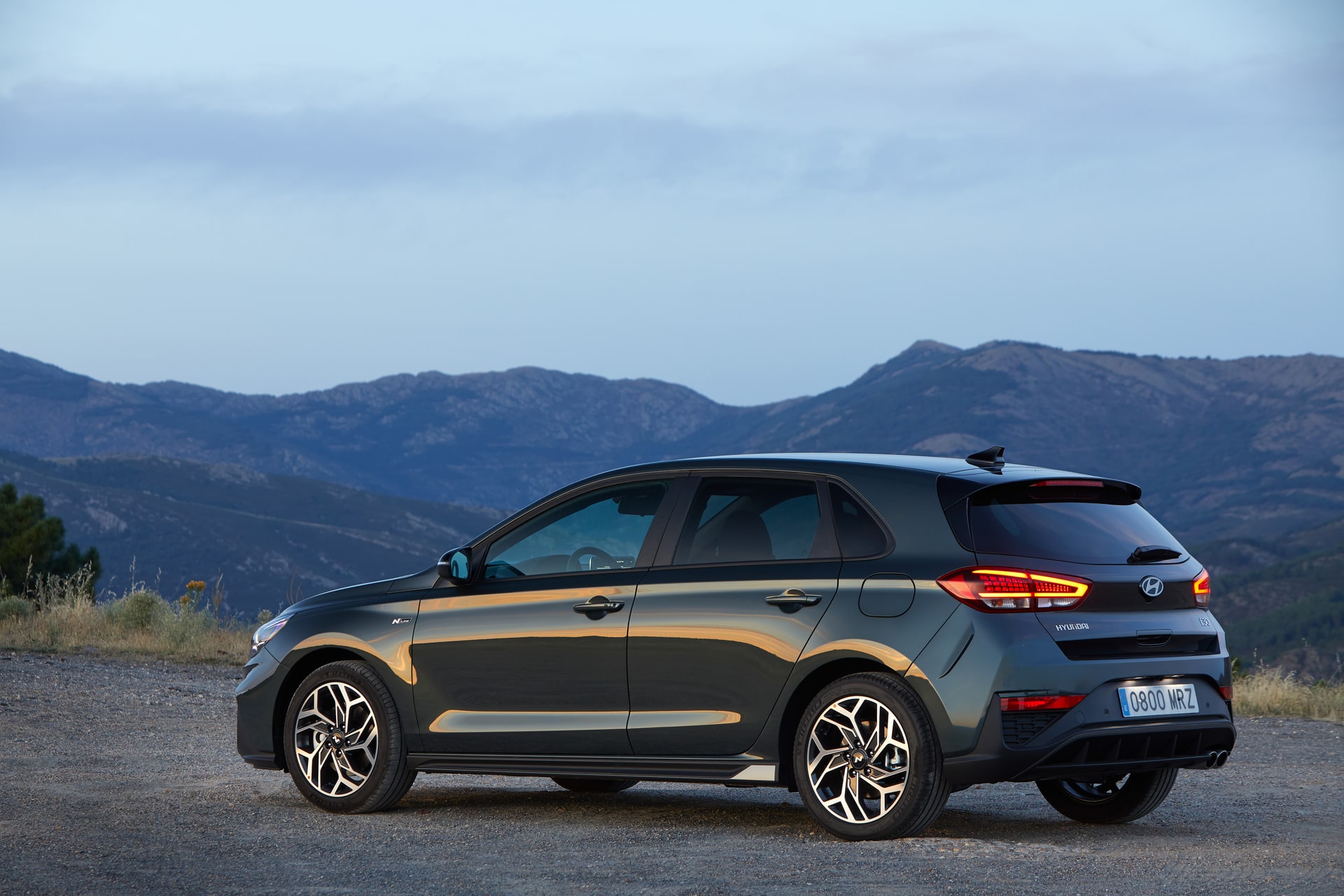
Technical comparison between the Hyundai i30 Fastback mild hybrid and the Toyota Corolla 140H hybrid, focusing on infotainment, ADAS and connectivity for less than 32,000 euros.
The C-segment remains a reliable barometer of what mainstream brands consider “reasonable technology” for the average customer. There are no 15-inch screens or subscription-based systems here: there are engineering decisions, ADAS packages that are either paid for or not, and hybrid architectures that make a real difference in everyday driving. And two cars that, below the psychological barrier of 32,000 euros, remain an essential reference on any shopping list: the Hyundai i30 and the Toyota Corolla.
From the earlier list of candidates we have deliberately ruled out the proposals from BYD and Nissan in this segment. In our opinion, neither of them manages to measure up to the latest-generation alternatives in the specific combination of infotainment, ADAS integration and hybrid system refinement that we analyse here — an editorial decision, not an absolute judgement on those cars. With that clarified, let’s get into the duel.
Hyundai i30 vs Toyota Corolla hybrid: the approach
Let’s start with the obvious, which isn’t always the case. The i30 and the Corolla don’t play the same mechanical game, even though they share the same showroom. The Korean car comes with 48-volt mild hybridisation on a 1.0 TGDi three-cylinder petrol engine; the Japanese car, with a full hybrid in a series-parallel architecture, the school Toyota has been refining since the first Prius. Two different philosophies for the same budget, with direct implications for consumption, environmental label and also — as it turns out — what they offer onboard.
Hyundai i30 Fastback 1.0 TGDi 100 48V Klass — from ≈29,700 €
The i30 Fastback Klass with the 1.0 TGDi mild hybrid is the most sensible technological entry point in the range in Spain. It is not a full hybrid and it’s worth saying so clearly: the 48V system assists the combustion engine, allows extended engine stop-start and smooths out starts, but it cannot drive the car on pure electric power. In return, the whole package is lighter and the response on motorways feels direct, without the “rubber band” sensation that sometimes appears with CVT hybrids.
For infotainment, the i30 has a central touchscreen with Android Auto and Apple CarPlay — wireless depending on the trim level, something worth checking at the dealership because Hyundai has been changing the spec through recent updates. The instrument cluster combines an analogue dial with a TFT display, a decision that in our view works well: it is legible, not fatiguing, and doesn’t force the driver to “learn” the car every time they get in. For ADAS, the SmartSense package comes as standard and covers autonomous emergency braking with pedestrian detection, active lane keeping, adaptive cruise control and blind-spot detection on the higher trims.
| Power kW | Power CV | Top speed | Consumption | Emissions | Label | Fuel |
|---|---|---|---|---|---|---|
| 74 kW | 100 CV | 178 km/h | 5.4 l/100 | 119 g/km | ECO | Petrol mild hybrid |
Toyota Corolla 140H Active Plus — from ≈32,300 €
The Corolla hybrid in the 140H Active Plus version with e-CVT transmission is, at this point, an almost mature product to the point of being boring — in the best possible sense. Toyota has refined the fifth generation of its hybrid until it has become a silent powertrain in town, capable of covering entire urban stretches in pure electric mode without fuss and with real-world consumption figures that come very close to the homologated ones. On paper, 4.4 l/100 and an ECO label.
On the technology side, the updated Corolla features the Toyota Smart Connect system with a larger central touchscreen than the previous generation, cloud processing for navigation, OTA updates and — this is a point worth highlighting — wireless Apple CarPlay and Android Auto integrated as standard on the Active Plus. The 12.3-inch digital cluster is reserved for the higher trims; on the Active Plus it makes do with a more discreet mixed format. For ADAS, the third-generation Toyota Safety Sense suite comes complete: pre-collision with pedestrian and cyclist detection, adaptive cruise control with sign recognition, a proactive driving assistant and assisted lane change. No extras, no optional packages, no small print. It is probably where it pulls furthest ahead of the entry-level i30.
| Power kW | Power CV | Top speed | Consumption | Emissions | Label | Fuel |
|---|---|---|---|---|---|---|
| 103 kW | 140 CV | ≈180 km/h | 4.4 l/100 | ≈100 g/km CO₂ | ECO | Petrol/electric hybrid |
Infotainment: two schools, one shared goal
This is where the analysis gets interesting. Hyundai has spent years boasting — rightly — about clean interfaces, quick response and logical menus. The i30 Klass’s screen is not the largest in the segment, but it runs without lag and doesn’t force you to dig through submenus to adjust the climate control. Toyota, which had a reputation for dated systems, has made a notable leap with Smart Connect: the cloud integration, OTA updates and the “Hey Toyota” voice assistant close the gap with what Koreans and Germans offer.
On wireless smartphone connectivity, both are level on paper. In real-world use, the Corolla’s implementation strikes us as one step more polished — fewer failed reconnections, better handling of simultaneous Bluetooth audio. A detail we already highlighted in the review of the Corolla as an efficiency benchmark, and which carries over here to the digital chapter.
ADAS: the chapter where Toyota scores first
The third-generation Toyota Safety Sense suite comes fully standard across all Corolla 140H trims. Full stop. That “full stop” carries weight. On the Hyundai i30 Klass, SmartSense covers the essentials but leaves certain functions out of the standard specification (active lane-change assist, blind-spot monitoring on some trims) that the Corolla already includes. If ADAS is a priority criterion — and for many buyers it is — the scales tip clearly. A more detailed look at the subject is in this guide to Level 2 ADAS packages in compact cars.
Summary table and editorial scoring
| Model | Price from | Power | Consumption | Infotainment (1-10) | Standard ADAS (1-10) | Efficiency (1-10) | Technology value/€ (1-10) |
|---|---|---|---|---|---|---|---|
| Hyundai i30 Fastback 1.0 TGDi 100 48V Klass | ≈29,700 € | ≈100 CV | 5.4 l/100 | 7.5 | 7 | 7 | 8 |
| Toyota Corolla 140H Active Plus e-CVT | ≈32,300 € | ≈140 CV | 4.4 l/100 | 8 | 9 | 9 | 8 |
Which to choose under 32,000 euros?
If the budget is tight and cannot stretch beyond 30,000, the i30 Klass is a rational purchase: functional mild hybridisation, sufficient technology and a brand with a seven-year warranty that remains a benchmark. If you can stretch to around 32,300, the Corolla 140H Active Plus offers more power, lower consumption, better standard ADAS and a slightly superior digital experience. In our view, the best technology-to-price balance within the range lies with the Japanese car — though with the caveat that the i30 wins on dynamic response and steering feel for those who prioritise driving over screens.
We remind you that all prices quoted are the manufacturer’s recommended retail price, without dealer discounts, one-off campaigns or aid from the Plan Auto+ scheme, which should be checked on the official website for the current amount.
Frequently asked questions
What is the difference between the Hyundai i30’s 48V mild hybrid and the Toyota Corolla’s full hybrid?
The i30’s 48V system assists the petrol engine but cannot drive the car in pure electric mode; it smooths out starts, allows extended engine stop-start and slightly reduces consumption. The Corolla’s full hybrid does run on electric power at low speeds and recovers energy more efficiently, with homologated consumption around 4.4 l/100 versus the i30’s 5.4 l/100.
Do both models have wireless Apple CarPlay and Android Auto?
The Toyota Corolla 140H Active Plus includes them as standard with a wireless connection. On the Hyundai i30 Klass, wireless availability depends on the trim and recent updates, so it’s worth verifying at the dealership before buying.
Which car offers the best standard ADAS package under 32,000 euros?
The Toyota Corolla, thanks to the third-generation Toyota Safety Sense included on all trims. It covers pre-collision with pedestrian and cyclist detection, adaptive cruise control with sign recognition and a proactive driving assistant without needing extra options.
Does the Hyundai i30 have an ECO label like the Corolla?
Yes, both share the DGT’s ECO environmental label. The i30 gets it thanks to its 48V mild hybridisation, and the Corolla through being a petrol/electric full hybrid.
Technical specifications of the cars in this article


 Peugeot E-208 GTi: a battery-powered toy that revives the spirit of the 1980s sports cars
 New Lexus ES: luxury grows and goes electric
 First contact with the Dacia Sandero Hybrid 155: power and efficiency from €19,890
Deja un comentario