Avenger Bayon Ford Hyundai Jeep Puma Electric Cars Hybrid Cars Comparisons SUV Urban
Jeep Avenger vs Ford Puma: which urban SUV-B offers the best equipment-to-price ratio in 2026
 Iván Navarro
11 November 2026
6 min.
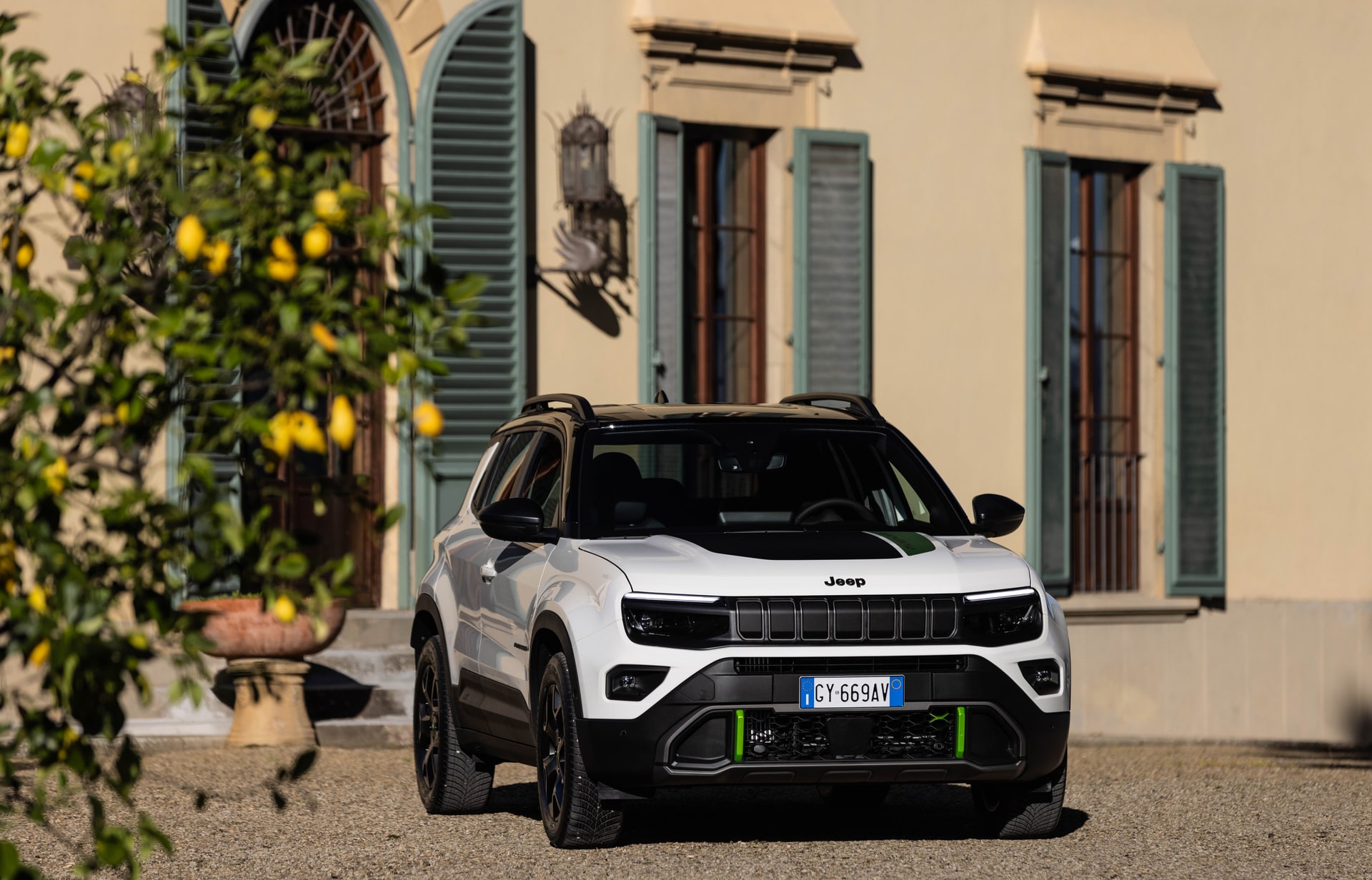
We compare the Jeep Avenger e-Hybrid eAWD and the electric Ford Puma, two urban SUV-Bs with opposing propulsion approaches. We analyse price, power, range and equipment for the Spanish buyer of 2026.
Choosing an urban SUV-B in 2026 is no longer just a question of size or design. It is deciding, from the outset, what kind of car you want in the garage: one you plug in, or one you refuel as you always have, even with electric assistance. The Jeep Avenger e-Hybrid eAWD and the electric Ford Puma represent those two philosophies almost to the millimetre, and both sit in a price band close enough to create real doubts at the dealership.
Jeep Avenger e-Hybrid eAWD: price from €33,700
The Avenger comes with a curious proposition for the segment: light all-wheel drive combined with mild hybridisation. It is not a plug-in hybrid and does not aim for pure electric driving, but it adds an extra margin of safety on slippery surfaces that few rivals of its size offer. Its 1.2 145 CV engine is paired with a six-speed SDCT system that, in town, feels smooth rather than sporty.
| Model | Power (kW) | Power (CV) | Top speed | Consumption | CO₂ | Fuel |
|---|---|---|---|---|---|---|
| Jeep Avenger e-Hybrid eAWD | 107 kW | 145 CV | 194 km/h | 5.3-5.4 l/100 km | 121-123 g/km | Mild hybrid (petrol/electric) |
Ford Electric Puma: price from €35,100
The electric Puma plays a different game. No fuel, no refuelling: a battery of roughly 53 kWh gross (46.8 kWh usable) that promises around 417 km of homologated range, a figure that in real urban use —where consumption drops thanks to constant regenerative braking— tends to perform better than on the open road. Its 168 CV (about 124 kW) gives it noticeably livelier acceleration than the Avenger, something you feel as soon as you press the accelerator when merging.
| Model | Power (kW) | Power (CV) | Top speed | Range | Battery | Fuel |
|---|---|---|---|---|---|---|
| Ford Electric Puma | 124 kW | 168 CV | 160 km/h | ≈417 km | ≈53 kWh (≈46.8 kWh usable) | Electric |
Propulsion: mild hybrid with all-wheel drive vs. 100% electric
Here lies the real point of friction between the two. The Avenger does not pretend to be a hidden electric car: it is a petrol-assisted vehicle with light all-wheel drive that makes a difference on rainy days or on the occasional dirt track, something unusual in this segment. The Puma, by contrast, commits fully to electrification, with no combustion backup engine. That simplifies maintenance —fewer moving parts, fewer oil changes— but brings the buyer the familiar question: do I have a place to charge?
Power and urban performance
On paper, the Puma wins with 168 CV against the Avenger’s 145. And you can feel it: the instant response of the electric motor makes the Ford feel more agile at traffic lights and roundabouts, while the Jeep needs a moment longer to deploy its thrust. The Avenger, however, compensates with a sense of mechanical robustness that many SUV-B drivers still value more than horsepower on paper.
Range and refuelling vs. charging: real-world use
The Avenger has no meaningful range limit: it refuels in five minutes at any petrol station, which remains gold for anyone making long, unplanned journeys. The Puma, with its 417 homologated km, comfortably covers a typical week of urban use without touching a charger, but requires planning if you leave the city often. For a buyer who rarely drives on the highway, the Puma’s range is more than enough. For someone who travels to another province every fortnight, the Avenger removes that variable from the equation.
Equipment and price-to-equipment ratio
With barely €1,400 difference in RRP, the real question is what each one gives you for that money. The Avenger e-Hybrid eAWD justifies part of its price with all-wheel drive, a mechanical extra not usually given away in this range. The electric Puma, for its part, compensates with higher power and fuel savings in the medium term, although those savings depend entirely on having easy access to a charging point.
RRP prices: the small print you need to read
To be clear: both figures —€33,700 for the Avenger and €35,100 for the Puma— are manufacturer’s recommended retail prices, without dealer discounts, one-off campaigns or purchase aid such as the Plan Auto+. The final price a buyer pays can vary considerably depending on the autonomous community and the campaign in force at the time of purchase, so always check the official website for the updated amount.
Comparison summary table
| Model | Power | Range/Consumption | Price from | Score |
|---|---|---|---|---|
| Jeep Avenger e-Hybrid eAWD | 145 CV | 5.3-5.4 l/100 km | €33,700 | 7.5/10 |
| Ford Electric Puma | 168 CV | ≈417 km | €35,100 | 8/10 |
The Puma’s score rests on its higher power and on the success of full electrification for urban use; the Avenger’s recognises the versatility of not depending on charging and an all-wheel drive that is rare in the segment.
Which to choose depending on your use?
If your daily life is pure city driving, with a private garage or a nearby charging point, the electric Puma makes more sense: more power, zero local emissions and a lower cost per kilometre. If instead you make frequent trips outside the city, or simply don’t want to depend on charging infrastructure, the Avenger e-Hybrid eAWD is the calmer option, with the added benefit of all-wheel drive. We have already discussed this dilemma between urban SUV-B and real-world efficiency when comparing other proposals in the segment, and the pattern repeats: there is no absolute winner, only a match with each buyer’s real use.
For those still undecided between body style and city use before looking at propulsion, it is worth first reviewing how to choose a small SUV for the city, because manoeuvrability and visibility weigh as much as horsepower in day-to-day driving.
Frequently asked questions
Which is cheaper, the Jeep Avenger e-Hybrid or the Ford electric Puma?
The Avenger e-Hybrid eAWD starts at an indicative RRP of around €33,700, compared with €35,100 for the electric Puma. The difference is just over €1,400, and both figures are without discounts or aid applied.
Does the Ford electric Puma have enough range for daily use?
With around 417 homologated km and a battery of approximately 53 kWh gross (46.8 kWh usable), it easily covers a typical week of urban use, although on long and frequent trips you will need to plan your charging stops.
What real advantage does all-wheel drive give the Jeep Avenger e-Hybrid?
It improves grip on wet surfaces, light snow or dirt tracks, something unusual in SUV-Bs of this size, which usually offer only front-wheel drive.
Do the prices of €33,700 and €35,100 include aid such as the Plan Auto+?
No. They are manufacturer’s recommended retail prices, without dealer discounts or public aid such as the Plan Auto+. The final amount may vary depending on the campaign in force; check each brand’s official website.
Technical specifications of the cars in this article


 Kia offers an electric range of 10 models, 50 versions and 400 possible combinations
 The seven finalists for the 2027 European Car of the Year (COTY) are exclusively electric
 Peugeot E-208 GTi: a battery-powered toy that revives the spirit of the 1980s sports cars
Deja un comentario