Lamborghini Coches clásicos Sports Cars
Lamborghini Espada, the legendary V12 bull
 Mónica Redondo @MonicaRedondoD
31 July 2022
3 min.
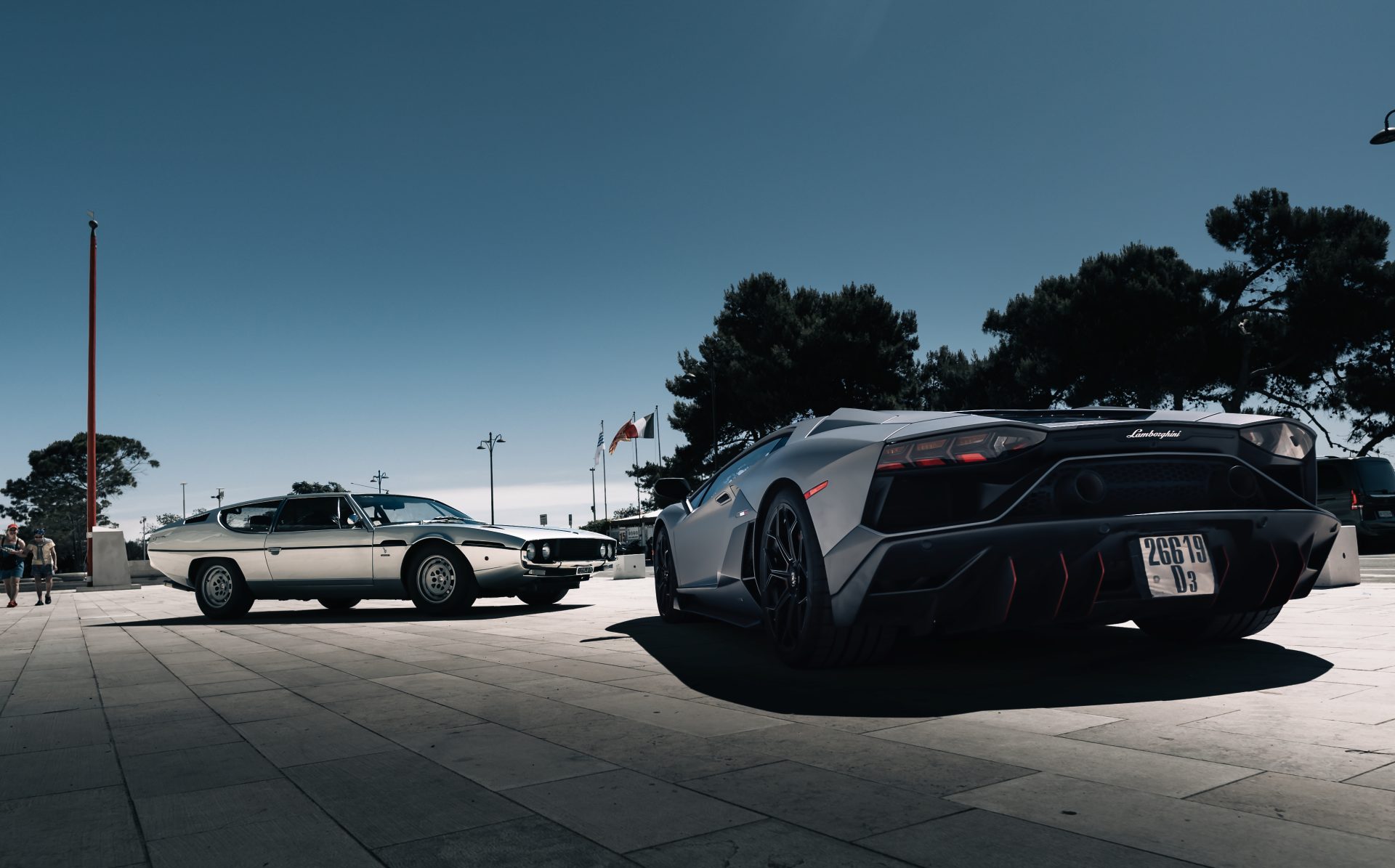
The Sant’Agata Bolognese brand pays tribute to its iconic V12 engine and to the Lamborghini Espada 400 GT. Would you like to know more?
Lamborghini is celebrating and commemorating the anniversary of its iconic twelve-cylinder V12 engine. One of the most emblematic models to be fitted with this engine is the Lamborghini Espada 400 GT. In addition, the Espada became the brand’s first four-seat vehicle and one of its best-selling models for years. At the end of this year, the manufacturer will stop producing its V12.
Ferruccio Lamborghini aimed to produce the fastest, most luxurious and most comfortable grand tourer. From the very beginning of his venture into car manufacturing, the company’s founder, Ferruccio Lamborghini, expressed his goal very clearly. He wanted to build the best grand tourer: a sports car that was not only fast but also comfortable and finished to a luxurious standard. Presented at the Geneva Motor Show in March 1968, the Espada 400 GT embodied this idea perfectly for more than a decade.
The Espada could comfortably accommodate four adults and offered more space for both luggage and passengers than the 400 GT 2+2 (its predecessor) and the Islero 400 GT 2+2. In addition, the Espada featured truly outstanding finishing, with generous amounts of leather and other refined materials, as well as the option of air conditioning. Power steering was introduced as an option in 1969 and became standard from 1972.
A car that made history
The technical cornerstone of the Espada was the 60° V12 engine, first produced in 1963 with a displacement of 3.5 litres, which had already been increased to 4 litres (3929 cc) in 1964. It is a remarkable example of engine development technology, and it produced 325 CV at 7200 rpm when first fitted to the Espada. This rose to 350 CV at 7500 rpm in the Espada Series II, presented in 1970.
Fed by six Weber 40 DCOE side-draught carburettors, the V12 had a compression ratio of 9.5:1 (rising to 10.7:1 from the Series II onwards) and two chain-driven overhead camshafts per bank. It weighed only 232 kg thanks to the extensive use of aluminium not only for the cylinder head but also for the sump and pistons. It was mounted at the front in a slightly more forward position compared with the earlier 350/400 GT engines, so that the interior would be more spacious. Thanks to the large opening under the aluminium bonnet, it was easily accessible.
The chassis was based on that of the 400 GT but was lengthened so that the wheelbase reached 2650 mm, and it was also widened, increasing the track to 149 cm. It had independent suspension on all four wheels, with double wishbones and coil springs. In November 1968, an Espada “Lancomat” with hydropneumatic suspension was shown at the Turin Motor Show. The system was available on request, but in the end very few owners chose it.
The Espada was an extremely fast grand tourer that could reach a top speed of between 245 and 260 km/h and keep pace with the Miura sports car in most conditions.


 Peugeot E-208 GTi: a battery-powered toy that revives the spirit of the 1980s sports cars
 New Lexus ES: luxury grows and goes electric
 First contact with the Dacia Sandero Hybrid 155: power and efficiency from €19,890
Deja un comentario