Atto 3 BYD Hybrid Cars Comparisons SUV
Omoda 7 vs Jaecoo 7: which Chinese C-SUV petrol offers more value under 35,000 euros
 Iván Navarro
2 September 2026
7 min.
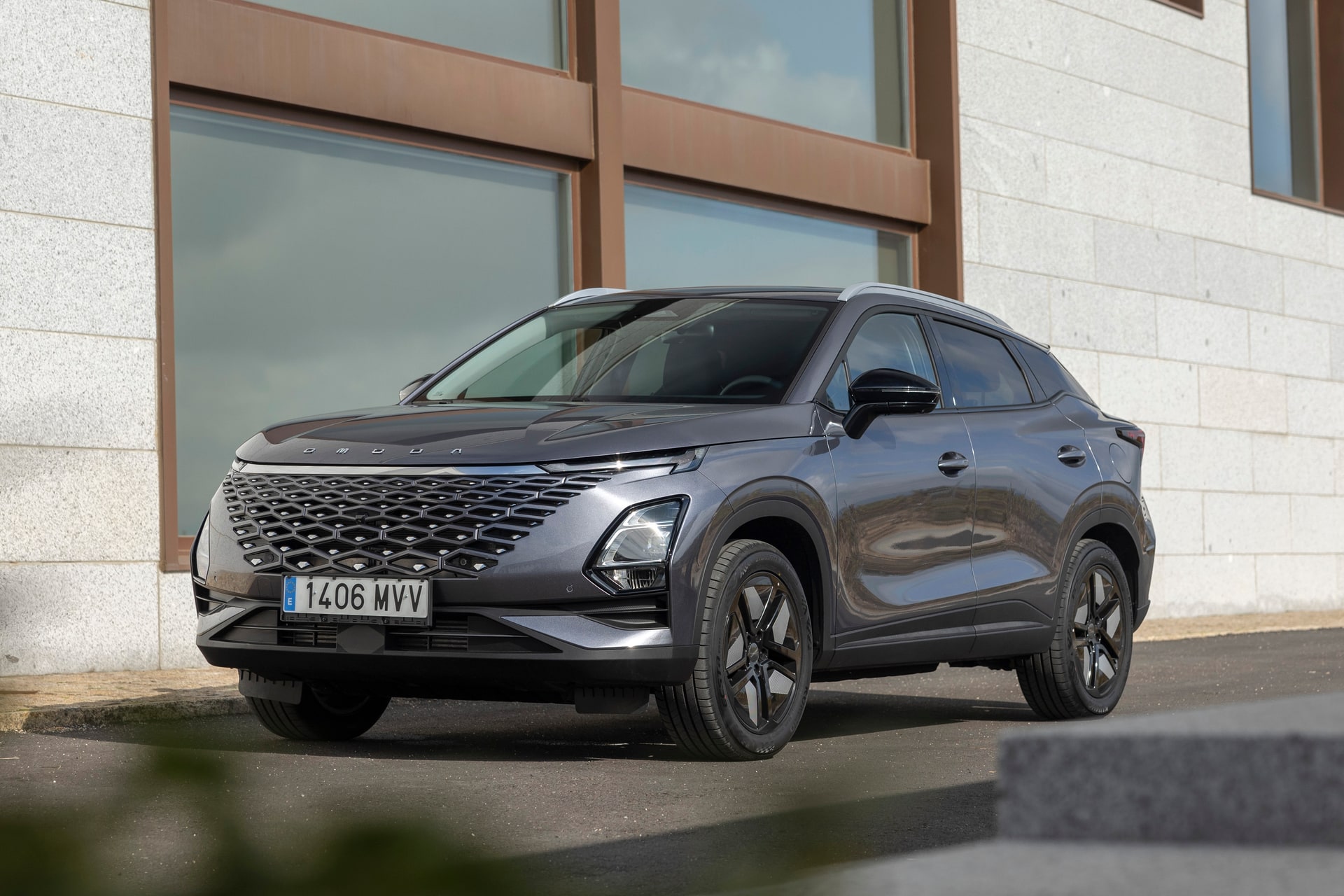
We compare the Omoda 7 PHEV and the Jaecoo 7 petrol to decide which Chinese C-SUV offers the best value-for-equipment ratio near the 35,000-euro threshold.
The C-SUV segment has become the main battleground for Chinese brands in Spain. Aggressive pricing, generous equipment and a mechanical offer that is beginning to segment itself with clear criteria. Within the Chery group, two siblings with opposing approaches share the same showroom: one bets on the high-voltage plug-in hybrid, the other on pure petrol with no complications. The question is simple and tricky at the same time: which one comes closer to the 35,000-euro threshold with the better proposition?
From the list of earlier candidates we have ruled out the BYD Atto 3. The segment has evolved at a notable pace in recent months and, in our view, the manufacturer’s offer no longer strikes the price-product balance it did a year ago against rivals such as those we analyse today. It is not a brand problem, it is a reading of the current competitive moment.
Two philosophies under the same umbrella: Chery and its double bet
Omoda and Jaecoo belong to the same group, but they target different buyers. The first explores the SUV-crossover terrain with a certain coupé nod and high-performance electrified mechanics; the second anchors itself in the orthodoxy of the compact family SUV with a petrol engine and dual-clutch gearbox. They are not alternatives by chance. They are calibrated so as not to cannibalise each other.
And yet, the buyer who walks in to look at one ends up test-driving the other. It is inevitable.
Omoda 7 from ≈42,900 €: the PHEV that treads on premium ground
The Omoda 7 arrives with the most ambitious approach. A 1.5 TGDI engine paired with a plug-in hybrid system delivering around 279 CV combined, an 18.4 kWh battery and a homologated electric range of 92 km. CERO label, declared mixed consumption of around 2.3 l/100 and CO₂ emissions of approximately 53 g/km. Figures that place it squarely in the territory of the competent PHEV, with real capacity to cover day-to-day use in electric mode if it is charged with discipline.
The problem—if it can be called that—is the price. With a RRP from approximately 42,900 €, the Omoda 7 moves quite far from the 35,000-euro threshold we set as reference. It is a different budget league. It offers more car, but asks for more money. In practice, it competes with higher-segment European PHEVs that until recently played alone in that bracket, something we already analysed in the ranking of plug-in hybrid SUVs with the best value-for-money below 45,000 euros.
| Power kW | Power CV | Top speed | Electric range | Consumption | Label | Fuel |
|---|---|---|---|---|---|---|
| 205 kW | 279 CV | ≈180 km/h | 92 km | 2.3 l/100 | CERO | PHEV |
Jaecoo 7 from ≈33,900 €: the pragmatic petrol that brushes 35,000 €
The Jaecoo 7 plays a different game. A 1.6 TGDI petrol engine, 145 CV, seven-speed dual-clutch automatic gearbox and a top speed around 180 km/h. No battery, no cable, no complications. Homologated consumption of 7.0 l/100 (4×2) / 8.0 l/100 (4×4) and emissions close to 159 g/km (4×2) / 182 g/km (4×4), leaving it with a C label—correct for mixed use except for ZBE access restrictions in the main capitals.
Its great argument? The price. RRP from approximately 33,900 €, very close to that 35,000 € frontier fixed by the analysis. With a reasonable dealer promotion, the car falls within that range without forcing it. And it offers a tangible product: a C-SUV with presence, an interior with two large, well-resolved screens, a panoramic roof usual in mid-range trims and a broad list of driver-assistance systems. That said, the real motorway consumption rises and penalises the long-term running-cost equation. It is not the panacea of savings.
| Power kW | Power CV | Top speed | Range | Consumption | Label | Fuel |
|---|---|---|---|---|---|---|
| 108 kW | 145 CV | ≈180 km/h | data not available | ≈7.5 l/100 **7.0 l/100 (4×2)** | C | Petrol |
Price against performance: what each one really buys
The Omoda 7 offers a clear jump in power—almost double the CV—, a CERO label and an unbeatable homologated consumption provided the battery is charged. It is a car designed for the driver with a plug at home or a garage space with charging. Without that context, the PHEV loses much of its appeal and real consumption climbs above pure petrol. We have seen this again and again.
The Jaecoo 7 forgoes that sophistication and in exchange offers simplicity, a lower entry price and a predictable driving experience. For the buyer who drives 15,000 km a year, without convenient access to charging, with mixed routes and a tight budget, the equation is transparent. Ten thousand euros of difference buys a lot of petrol.
Real running cost: where the PHEV shines or darkens
A PHEV charged daily on the off-peak tariff can come to roughly the energy equivalent of 1.5 to 2 euros per 100 electric km. If the user keeps that routine, the Omoda 7 amortises part of the premium within a few years. If not—and this is the usual trap of the plug-in—the petrol engine carries all the hybrid mechanics on its back and consumes above what is declared. It is a demanding car for its owner.
The Jaecoo 7, with its 145 CV engine and 7DCT, moves in real consumption of 7.5 to 9 l/100 depending on the route. Nothing extraordinary, nothing dramatic. Predictable cost.
Notice on prices and the aid framework
All prices used in this comparison are manufacturer’s RRP, without dealer discounts, without one-off commercial campaigns and without public aid. The Omoda 7, as a PHEV with a CERO label and an electric range above the minimum required, is a candidate to benefit from the Plan Auto+; it is advisable to consult the official website for the current amount and the conditions applicable at the time of purchase. The Jaecoo 7 petrol falls outside that aid perimeter.
Summary table and editorial score
| Model | Price from | Power | Label | Consumption | Value under 35,000 € | Score |
|---|---|---|---|---|---|---|
| Omoda 7 PHEV | ≈42,900 € | 279 CV | CERO | 2.3 l/100 | Out of range | 7.5/10 |
| Jaecoo 7 1.6 TGDI | ≈33,900 € | 145 CV | C | 7.0 l/100 (4×2) | Close to the threshold | 8/10 |
Verdict: who wins the contest below 35,000 €
If the criterion is getting close to the marked threshold, the Jaecoo 7 wins without discussion. It is the only one of the two that can come close to 35,000 € with a reasonable dealer negotiation, and it offers a complete C-SUV, with equipment at a higher level than was conceivable two years ago in that bracket. The Omoda 7 is the better car in absolute terms—more power, better label, more technology—but it plays at a different price and for a different buyer profile.
In my opinion, the Jaecoo 7 is the right answer to the question posed. The Omoda 7 is the right answer to a different question: that of who wants a Chinese PHEV with premium ambition without going to European brands.
Frequently asked questions
Which of the two offers the better environmental label?
The Omoda 7 carries a CERO label thanks to its condition as a PHEV with more than 40 km of homologated electric range. The Jaecoo 7 petrol obtains a C label, sufficient for mixed use but with potential restrictions in ZBE zones of large cities.
Can I apply for the Plan Auto+ with the Jaecoo 7?
No. The Plan Auto+ is mainly aimed at electrified vehicles with a CERO label. The Jaecoo 7 petrol falls outside that framework. The Omoda 7 PHEV is a candidate; check the official website for the current amount.
Which Chinese petrol C-SUV pays off most if I drive few kilometres?
The Jaecoo 7 makes sense for mixed use of up to around 15,000 km per year without access to charging. Above that mileage, the consumption equation starts to favour the PHEV provided it is plugged in regularly.
Do the prices indicated include discounts?
No. They are manufacturer’s RRP, without dealer discounts, one-off campaigns or public aid. The final price after negotiation is usually lower, especially with Chinese brands that run active commercial policies.

 Peugeot E-208 GTi: a battery-powered toy that revives the spirit of the 1980s sports cars
 New Lexus ES: luxury grows and goes electric
 First contact with the Dacia Sandero Hybrid 155: power and efficiency from €19,890
Deja un comentario