OMODA 9 vs Jaecoo 7: two visions of the aspirational Chinese SUV under the same Chery umbrella
 Iván Navarro
29 May 2026
7 min.
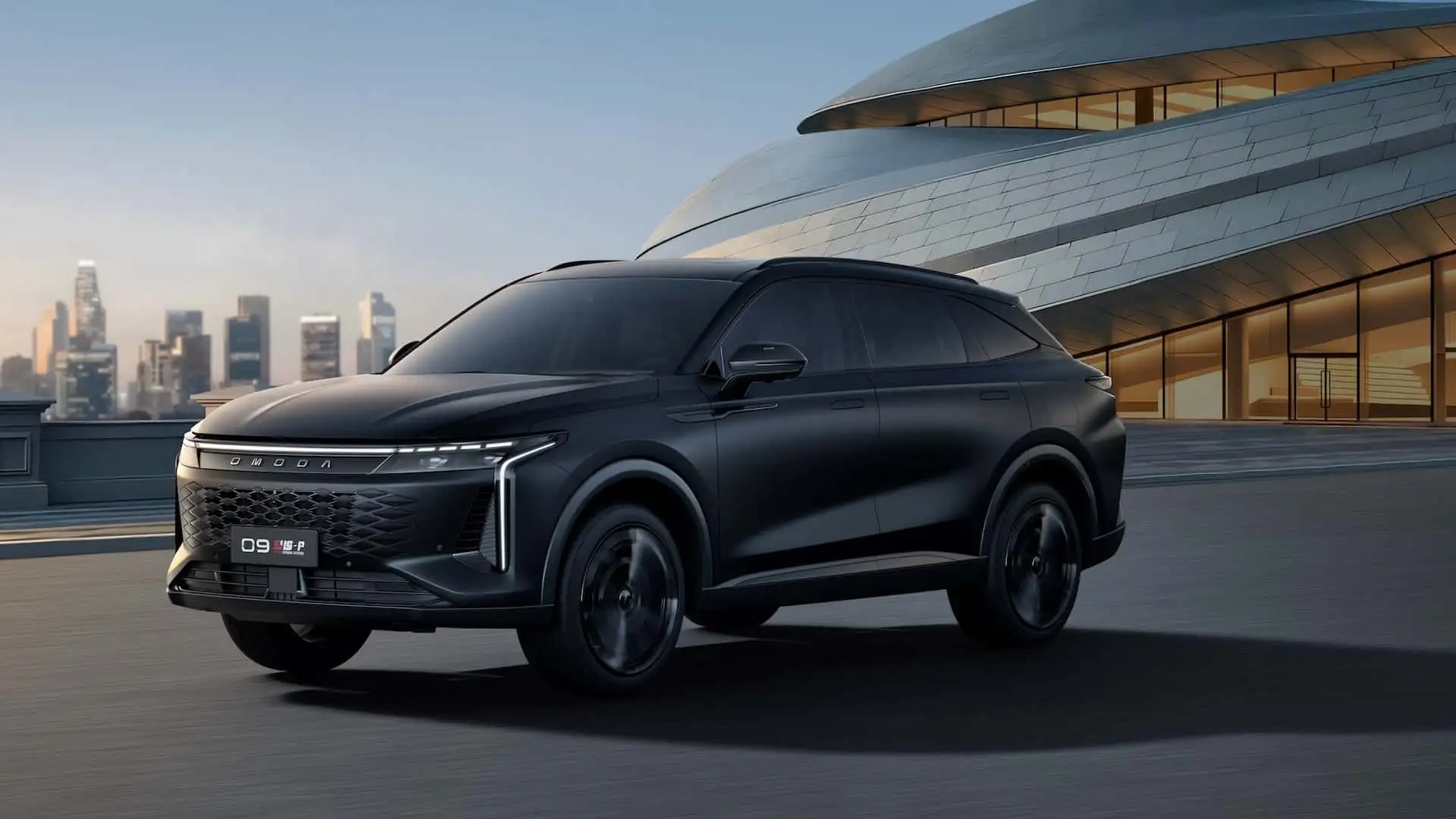
We analyse the OMODA 9 vs Jaecoo 7 comparison, two aspirational Chinese SUVs from the Chery group that coexist in Spain with opposing proposals: urban-premium electric versus adventurous-accessible petrol.
The arrival of Chery in Europe is not taking place under a single banner, but as a carefully segmented multi-brand architecture. The Chinese giant has decided that none of its products will compete against itself: each sub-brand targets a different buyer, with its own design language and a differentiated mechanical offer. In Spain, this strategy is embodied today in two protagonists that share an industrial platform but diverge in philosophy: the OMODA 9, electric and refined, and the Jaecoo 7, petrol-powered and with a soft off-road vocation. Let’s take them apart piece by piece.
Chery’s multi-brand strategy in Europe
Chery is not a newcomer. It has been China’s largest car exporter for over two decades, and its European strategy reproduces, on a larger scale, what Volkswagen Group has been doing on the old continent: a mainstream brand (OMODA), an aspirational brand with an adventurous bias (JAECOO) and a third, LEPAS, not yet commercially launched. LEPAS has been presented as the group’s future lifestyle sub-brand, aimed at a young, urban public, and will complete the triangle when it reaches European dealerships.
OMODA and JAECOO: platform siblings, philosophical cousins
OMODA and JAECOO share base engineering, electronics, drivetrains and suppliers. But the way each one interprets the SUV is radically different. OMODA plays the card of the futuristic crossover coupé, with taut lines, narrow headlights and an interior that looks to Lexus and Genesis. JAECOO, by contrast, openly draws on the Land Rover imagery: vertical grille, flat bonnet, flush door handles and an air of refined adventurer that in Spain appeals to a public that wants visual toughness without giving up technology.
OMODA 9: the electric flagship — from ≈€37,900
The OMODA 9 is the brand’s most ambitious bet in Spain. It is an electric compact SUV with 537 CV (395 kW), a 61 kWh battery and a homologated range close to 430 km. Its top speed is around 170 km/h and its RRP starts at around €37,900, placing it in the upper-middle band of the electric segment. The Comfort trim is loaded with equipment: curved screen, dual-zone climate control, ventilated seats and an interior feel that justifies the word “premium”.
| Power kW | Power CV | Top speed | Range | Consumption | Label | Fuel |
|---|---|---|---|---|---|---|
| 150 kW | 537 CV | ≈170 km/h | ≈430 km | ≈16.5 kWh/100 | Zero | Electric |
Jaecoo 7: the accessible adventurous compact SUV — from ≈€33,900
The Jaecoo 7 attacks the heart of the market: a compact SUV with a 1.6 turbo petrol engine producing 150 CV (110 kW), a 7DCT dual-clutch gearbox and an indicative RRP from €33,900. Its top speed is around 180 km/h, with a homologated consumption of around 7.5 l/100 km and emissions close to 170 g/km of CO₂. It is the car a rational family buyer can understand without effort: combustion, C label, contained price and styling that looks twice as expensive.
| Power kW | Power CV | Top speed | Range | Consumption | Label | Fuel |
|---|---|---|---|---|---|---|
| 110 kW | 150 CV | ≈180 km/h | ≈800 km tank | ≈7.5 l/100 | C | Petrol |
Two buyers, two cars: urban-premium vs adventurous-accessible
The OMODA 9 targets those who have already embraced electromobility: metropolitan user, garage with a wallbox, sensitivity to design and willingness to pay for sophistication. The Jaecoo 7 appeals to the rational buyer who prioritises total range, quick refuelling and a low entry price. They are two different cars because they address two different fears: the fear of not making it, and the fear of falling behind technologically.
The context: Chinese rivals in the Spanish market
MG HS — from ≈€25,000
MG has been the icebreaker of the Chinese phenomenon in Spain. The MG HS, in its petrol or plug-in hybrid version, combines aggressive pricing and generous equipment, and is probably the first rival a Jaecoo 7 buyer will visit at the dealership.
| Power kW | Power CV | Top speed | Range | Consumption | Label | Fuel |
|---|---|---|---|---|---|---|
| 125 kW | 170 CV | ≈190 km/h | ≈750 km tank | ≈7.4 l/100 | C | Petrol |
Geely EX5 — from ≈€35,000
Geely enters Spain with the EX5, an electric SUV aimed squarely at the OMODA 9 with a range close to 430 km and a very complete technological approach. The parent brand of Volvo, Polestar and Zeekr arrives with solid credentials.
| Power kW | Power CV | Top speed | Range | Consumption | Label | Fuel |
|---|---|---|---|---|---|---|
| 160 kW | 218 CV | ≈175 km/h | ≈430 km | ≈15.8 kWh/100 | Zero | Electric |
Zeekr 7X — from ≈€55,000
Zeekr positions itself as the premium-tech brand of the Geely group. The Zeekr 7X plays in a different league of price and performance, with much higher outputs and ultra-fast charging. It is the aspirational reference the OMODA 9 glances at. Zeekr shows how far the Chinese car can scale when it stops competing on price.
| Power kW | Power CV | Top speed | Range | Consumption | Label | Fuel |
|---|---|---|---|---|---|---|
| 310 kW | 646 CV | ≈210 km/h | ≈615 km | ≈18 kWh/100 | Zero | Electric |
Denza Z9 GT — from ≈€75,000
Denza, the premium brand of the BYD group, has landed in Europe with proposals that no longer aim to be cheap. The Denza Z9 GT is an electric grand tourer that demonstrates Chinese technical maturity. It does not compete directly with the OMODA 9, but it defines the aspirational ceiling of the segment.
| Power kW | Power CV | Top speed | Range | Consumption | Label | Fuel |
|---|---|---|---|---|---|---|
| 500 kW | 680 CV | ≈240 km/h | ≈630 km | ≈20 kWh/100 | Zero | Electric |
Changan Deepal S07 — from ≈€38,000
Changan Deepal is another newcomer with technological ambition. The Deepal S07 offers an electric SUV of similar size to the OMODA 9 with competitive range. Changan Deepal is being built in Spain as a tech-forward brand, with emphasis on assisted driving and digital integration.
| Power kW | Power CV | Top speed | Range | Consumption | Label | Fuel |
|---|---|---|---|---|---|---|
| 160 kW | 218 CV | ≈180 km/h | ≈475 km | ≈16.8 kWh/100 | Zero | Electric |
KGM Torres — from ≈€28,000
KGM (formerly SsangYong) represents a Korean route with indirect Chinese capital. The KGM Torres bets on the family petrol SUV with a very competitive price and a design reminiscent of the rugged 90s utility vehicle, updated.
| Power kW | Power CV | Top speed | Range | Consumption | Label | Fuel |
|---|---|---|---|---|---|---|
| 120 kW | 163 CV | ≈190 km/h | ≈700 km tank | ≈8 l/100 | C | Petrol |
Summary comparison table and score
We score from 1 to 10 considering price/equipment ratio, performance, range and positioning in the Spanish market.
| Model | Fuel | ||||
|---|---|---|---|---|---|
| OMODA 9 | Electric | 537 | ≈430 km | ≈€37,900 | 8.5 |
| Jaecoo 7 | Petrol | 150 | ≈800 km | ≈€33,900 | 8.2 |
| MG HS | Petrol | 170 | ≈750 km | ≈€25,000 | 8.0 |
| Geely EX5 | Electric | 218 | ≈430 km | ≈€35,000 | 8.4 |
| Zeekr 7X | Electric | 421 | ≈480 km | ≈€55,000 | 9.0 |
| Denza Z9 GT | Electric | 680 | ≈630 km | ≈€75,000 | 9.3 |
| Changan Deepal S07 | Electric | 218 | ≈475 km | ≈€38,000 | 8.3 |
| KGM Torres | Petrol | 163 | ≈700 km | ≈€28,000 | 7.8 |
All prices mentioned correspond to the manufacturer’s recommended RRP and are indicative. They do not include current offers, dealer discounts, promotional campaigns or public purchase aid.
Highmotor verdict
OMODA 9 and Jaecoo 7 do not compete with each other: they complement each other. Whoever seeks electric sophistication and an urban vocation will find in the OMODA 9 a solid proposal against Geely, Zeekr or Changan Deepal. Whoever prioritises combustion range, versatility and contained price will have in the Jaecoo 7 a strong argument against MG or KGM. And when LEPAS lands in Spain, the Chery triangle will be closed.
FAQ
What real difference is there between OMODA and JAECOO if they share a platform?
They share base engineering and suppliers, but diverge in design, offered mechanics and target audience: OMODA bets on the futuristic crossover (even 100% electric in the case of the 9), while JAECOO interprets the SUV with an adventurous look and combustion powertrains such as the Jaecoo 7’s 1.6 turbo.
Is the OMODA 9 competitive against a Zeekr or a Denza?
It competes on price and equipment against the Geely EX5 or Changan Deepal S07. The Zeekr and Denza play in a higher bracket (€55,000–75,000) with power and performance of another level, so they are aspirational references more than direct rivals.
Is the Jaecoo 7 worth it against the MG HS or the KGM Torres?
The Jaecoo 7 offers a more premium image and a superior interior finish, in exchange for a higher RRP than the MG HS or KGM Torres. It is the option for those who want a Chinese SUV with an adventurous look.
When will LEPAS arrive in Spain?
LEPAS is the third sub-brand announced by Chery, aimed at a lifestyle and urban audience. Its European launch is planned in the short term, although there is still no commercial network or official prices confirmed for the Spanish market.

 Peugeot E-208 GTi: a battery-powered toy that revives the spirit of the 1980s sports cars
 New Lexus ES: luxury grows and goes electric
 First contact with the Dacia Sandero Hybrid 155: power and efficiency from €19,890
Deja un comentario