Peugeot 207 1.6 HDi 112 CV, test drive (Engine and performance)
 Diego G. Moreira
13 March 2012
4 min.
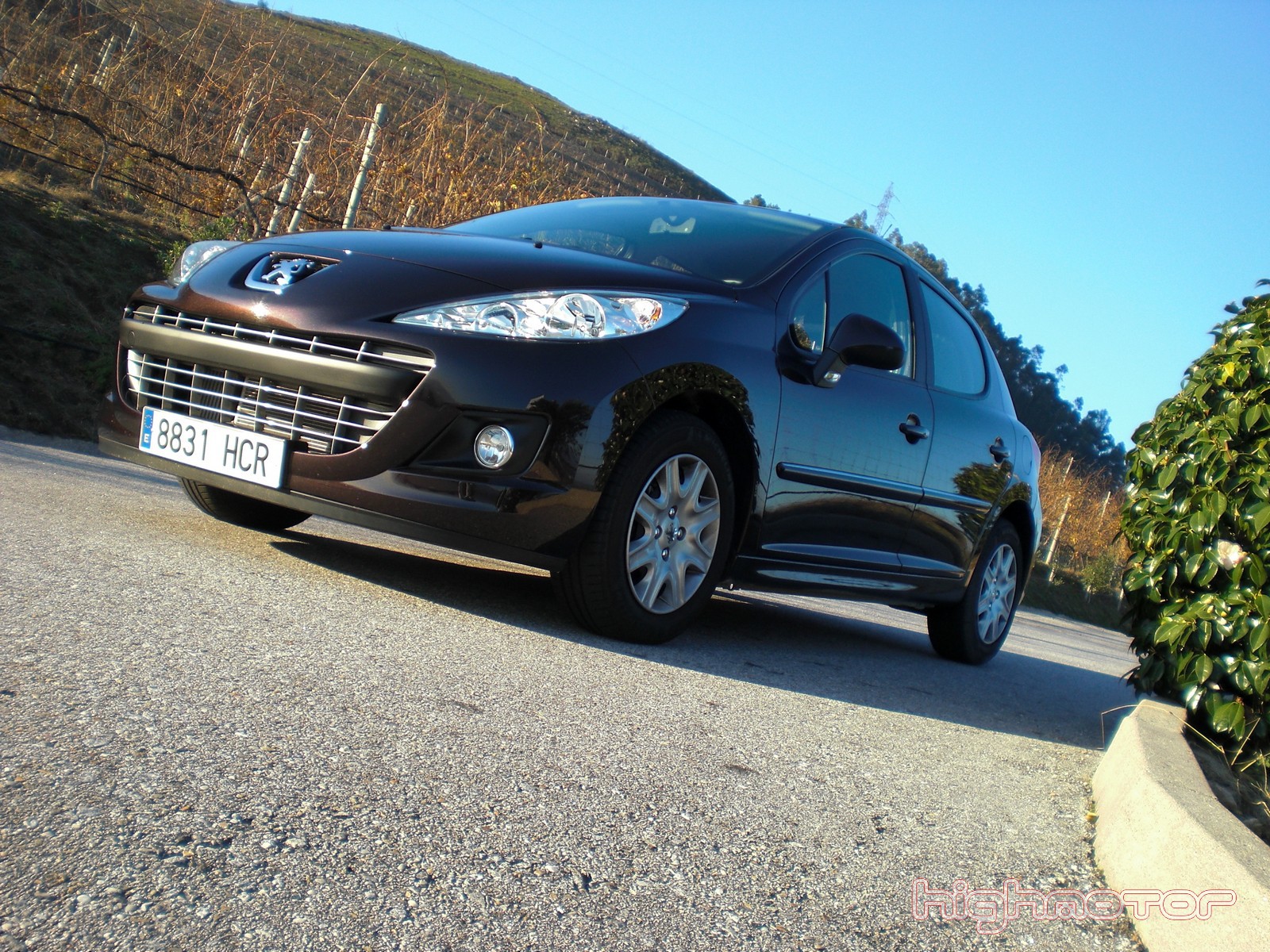
Test drive of the Peugeot 207 with 1.6 HDi 112 CV diesel engine; in this part we talk about the engine, performance, handling and fuel consumption.
Tests of powerful or expensive vehicles tend to appeal to a large part of our readers, but that does not mean we only test that kind of car. Now that the word crisis is so fashionable and fuel prices are at prohibitive levels, we want to bring you a fun alternative, with low consumption and an attractive price (now that the new Peugeot 208 is arriving).
We are talking about the Peugeot 207, a veteran model that still ranks among the best-selling cars in our country, month after month. For this test we opted for the most powerful diesel engine, capable of delivering 112 CV; that is precisely where the fun of this diesel city car lies, consuming 4.6 litres on the open road.
After the Peugeot 207 test, we will continue with city cars and diesel versions; specifically, we will bring you the test of an Italian with 95 CV. Now, returning to the Peugeot, we begin with the test…
Engine and performance
Three diesel engines are available for the Peugeot 207: on one hand, the 1.4 HDi with 70 CV, the 1.6 HDi with 92 CV and the 112 CV. Based on the 1.6 HDi, this version is capable of reaching 112 CV, and that much power under the bonnet in a car weighing 1,295 kg makes the 207 a fun city car with good response on the open road.
Continuing with the figures, the torque sits at 270 Nm (not a small figure for a city car), while the engine’s response is noticeable from 1,800 rpm up to 4,000 rpm.
These figures translate into a firm response when we press the accelerator, and the engine also has good in-gear recovery, so thanks to this 112 CV HDi unit we can move the 207 with total ease, quickly and nimbly.
Without doubt it is a recommendable engine for getting the most out of the Peugeot 207, offering good response while keeping consumption in check. Its most notable quality is its response at low revs and its pulling power.
Paired with the engine is a six-speed manual gearbox, and thanks to sixth gear we achieve fairly modest consumption on motorways. However, the gearbox feel could be improved, mainly because we did not find it precise. That said, it is within acceptable limits for a city car.
Handling
With all of the above, the main point is agility. This is what best defines the 207 with this diesel engine. But we must qualify some details of the handling, because it is a very agile car, especially in the city, it is fun but it is not a sports car and does not behave like one.
The suspension setup is that of a city car, which limits the sporty behaviour the engine promises. Dynamically the front end does its job correctly with a sound setup, without showing much body roll. But the rear end is less reliable and may give you a scare if you drive more briskly than usual, although nothing the ESP cannot correct in time.
Otherwise, we liked how it takes corners, putting power down without problems and with the agility it displays. On the comfort side, on roads in poor condition it does not fully filter out irregularities and the suspension feels somewhat firm.
One point that always stands out in Peugeot vehicles is the brakes. This 207 is no exception, since the four disc brakes stop the car with full control and confidence.
Consumption
Having analysed the engine and handling of this city car, now we turn to fuel consumption. This is one of the car’s most favourable points, because it really achieves tight figures, something very welcome given today’s fuel prices.
On the motorway over our usual 1,200 km route we achieved an average of 4.4 litres per 100 km, an excellent figure considering the 112 CV of power. On country roads it manages with just 4.6 litres per 100 km, and in general it is very easy to keep it below 5 litres on extra-urban routes.
Finally, the consumption figure in town rises to 6.5 litres per 100 km. Again this is a good result, which combined with the model’s agility makes it a good car for navigating city streets.
In the second part we will discuss the exterior and interior design, equipment and our overall assessment.
Photos | Diego G. Moreira


 Peugeot E-208 GTi: a battery-powered toy that revives the spirit of the 1980s sports cars
 New Lexus ES: luxury grows and goes electric
 First contact with the Dacia Sandero Hybrid 155: power and efficiency from €19,890
2 comentarios
Deja un comentario
di la verdad la caja no es buena, hasta tengo mejor caja en mi 206 gti de ace 10años el problema de psa es que montan cajas de hace 1000 años la misma que monta el bx o zx y hablo en la experiencia de tener 7 psa en casa y todos de distintos años
podria ponerle a este coche una suspension algo mas dura?