Alto Captur Honda Hyundai KIA Kona Renault S-Cross Sportage Suzuki Toyota Yaris Yaris Cross ZR-V Hybrid Cars Compact Rankings SUV
Ranking 2026: the 6 hybrid compact SUVs with the best real-world consumption-to-equipment ratio on the Spanish market
 Iván Navarro
22 November 2026
6 min.
The homologated consumption figure has been a benchmark for years, but it falls short of what the on-board computer shows after three months of real use. That is why this ranking is not built on WLTP figures alone: it cross-references real litres per 100 kilometres, standard equipment and selling price in Spain, which is ultimately what decides whether a hybrid compact SUV is worth it or not.
We have left out PHEVs and focused on self-charging hybrids, which need no plug and handle everyday driving without any need for charging infrastructure. Six models, six brands, no filler.
How we built this ranking
The criterion is simple to state and considerably harder to measure: real mixed-cycle consumption (urban, road and some motorway driving), not the catalogue figure. From there, we assessed what each model includes as standard in its entry-level trim with hybrid powertrain: driver assistance systems, screen, air conditioning, alloy wheels, lighting. We then cross-referenced this with the starting price, which is what truly compares what you pay.
The result does not always reward the cheapest option or the one that uses the least on paper. It rewards the one that offers the most for what it costs, which is not quite the same thing.
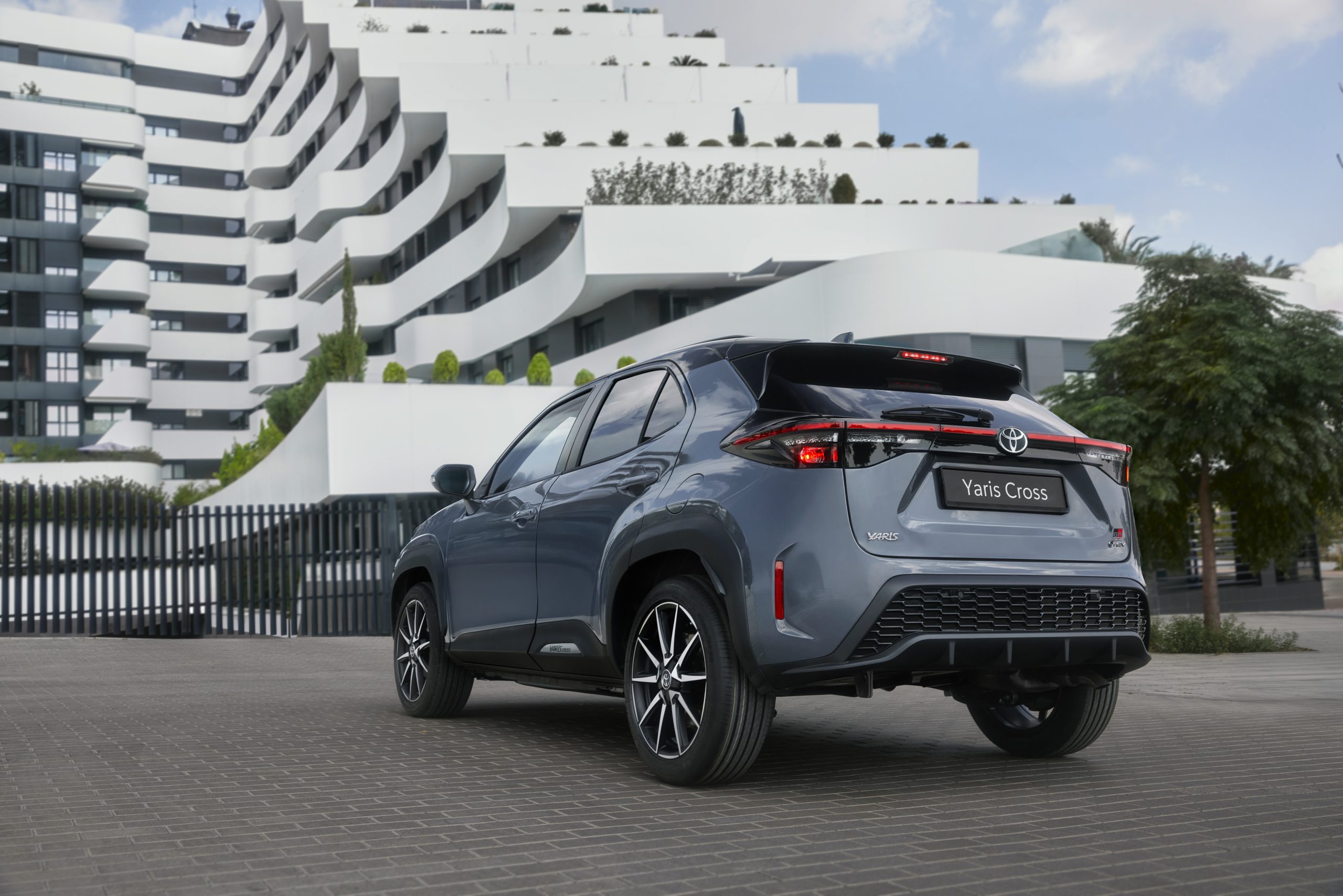
Toyota Yaris Cross Hybrid, from €26,450
It remains the consumption benchmark in its segment, and not by chance: its hybrid system has been refined for more than two decades. In town it easily drops below 4.5 l/100 km, something few rivals on this list manage to match. Standard equipment at entry level includes the full Toyota Safety Sense package, something other brands reserve for higher trims.
What is less convincing is the feel of its e-CVT gearbox under hard acceleration, with that high-revs drone that gives away its hybrid nature. For urban or moderate interurban use, it hardly notices.
| Power (kW) | Power (hp) | Real consumption | Label | Fuel |
|---|---|---|---|---|
| 85 kW | 116 CV | 5.0 l/100 km | ECO | Hybrid |
You can read the full review of the Toyota Yaris Cross in our review, where we go deeper into its behaviour in the city.
Hyundai Kona Hybrid, from €28,700
The hybrid Kona has matured with its redesign: more space, better sound insulation and real consumption of around 5.2 l/100 km in mixed driving. What really makes the difference is the equipment: a 12.3-inch dual screen, two-zone air conditioning and advanced assistance systems already in the entry trim, something that only appeared in top-of-the-range versions a few years ago.
The boot, however, is somewhat small compared with the Sportage or ZR-V. If cargo volume weighs heavily in your decision, bear this in mind.
| Power (kW) | Power (hp) | Real consumption | Label | Fuel |
|---|---|---|---|---|
| 104 kW | 141 CV | 5.2 l/100 km | ECO | Hybrid |
KIA Sportage Hybrid, from €35,900
More expensive than the rest of the list, yes, but also the one that delivers the most for what it asks. The Sportage Hybrid fits the most powerful hybrid 1.6 T-GDI powertrain in the group, with 215 combined CV that are clearly felt when overtaking and under full load, something the other hybrids in this comparison cannot match with the same ease.
Real consumption ranges from 5.3 to 5.7 l/100 km depending on use, slightly higher than the Yaris Cross, but offset by interior space and technology equipment that play in a different league: a 12.3-inch curved screen, available ventilated seats and a quality of materials that surprises at this price point.
| Power (kW) | Power (hp) | Real consumption | Label | Fuel |
|---|---|---|---|---|
| 158 kW | 215 CV | 5.5 l/100 km | ECO | Hybrid |
If you are torn between this option and its sibling the Hyundai, in the KIA Sportage Hybrid review we break down why it remains the benchmark for value for money.
Honda ZR-V e:HEV, from €39,500
The most expensive of the six, and the one that least convinces on pure price-to-equipment value. But there are nuances: its two-motor e:HEV hybrid offers a smoother and quieter drive than any other on this list, without the slipping typical of traditional CVT gearboxes.
Real consumption is around 5.3 l/100 km, good for its 184 CV, although the entry price puts it out of reach for many buyers looking purely for savings. Here you are paying for refinement, not just efficiency.
| Power (kW) | Power (hp) | Real consumption | Label | Fuel |
|---|---|---|---|---|
| 135 kW | 184 CV | 5.3 l/100 km | ECO | Hybrid |
Suzuki S-Cross Strong Hybrid, from €30,300
The most understated on the list, and probably the most underrated. Suzuki does not stand out in marketing, but the S-Cross Strong Hybrid offers something almost nobody else has in this segment: AllGrip all-wheel drive available in the hybrid range, unthinkable in most of this ranking.
Consumption rises slightly compared with Toyota or Hyundai, to 5.6 l/100 km in real use, a reasonable cost if you opt for the extra traction. The technology equipment is not the flashiest, but it covers the essentials without frills.
| Power (kW) | Power (hp) | Real consumption | Label | Fuel |
|---|---|---|---|---|
| 85 kW | 116 CV | 5.6 l/100 km | ECO | Hybrid |
Renault Captur E-Tech full hybrid, from €27,450
The French model surprises with its smooth town driving, thanks to a clutchless multimode gearbox that eliminates jerkiness. Real consumption is close to 5.0 l/100 km in urban journeys, among the best in the comparison outside the Yaris Cross.
Standard equipment includes the OpenR Link multimedia system with integrated Google from the entry trim, a point in its favour against rival proposals that reserve the most advanced systems for higher ranges.
| Power (kW) | Power (hp) | Real consumption | Label | Fuel |
|---|---|---|---|---|
| 118 kW | 160 CV | 5.0 l/100 km | ECO | Hybrid |
Summary table: comparison of the 6 hybrid compact SUVs 2026
| Model | Price from | Power | Real consumption | Score (1-10) |
|---|---|---|---|---|
| Toyota Yaris Cross Hybrid | €26,450 | 116 CV | 5.0 l/100 km | 9.2 |
| Hyundai Kona Hybrid | €28,700 | 141 CV | 5.2 l/100 km | 8.7 |
| KIA Sportage Hybrid | €35,900 | 215 CV | 5.5 l/100 km | 8.9 |
| Honda ZR-V e:HEV | €39,500 | 184 CV | 5.3 l/100 km | 7.8 |
| Suzuki S-Cross Strong Hybrid | €30,300 | 116 CV | 5.6 l/100 km | 8.1 |
| Renault Captur E-Tech full hybrid | €27,450 | 160 CV | 5.0 l/100 km | 8.5 |
If you only look at the price tag, the Yaris Cross wins without question. If what you want is space and power for a family, the Sportage comes out ahead despite costing more. There is no absolute winner: there are six different answers to the same question.
Frequently asked questions
Which hybrid compact SUV has the lowest real-world consumption in 2026?
The Toyota Yaris Cross Hybrid remains the most efficient in real use, with figures around 5.0 l/100 km in mixed driving and potentially below 4.5 l/100 km in town.
Is it worth paying more for the KIA Sportage Hybrid over cheaper options?
If you need real space for a family and more power for motorway driving, yes: its 215 CV and technology equipment justify the price difference over the Kona or S-Cross.
Are there public subsidies for buying a hybrid SUV in Spain in 2026?
State direct incentive schemes focus on vehicles with the CERO label (pure electric and plug-in hybrids), so conventional hybrids (ECO label) are excluded from these direct subsidies, although they do benefit from municipal discounts on the vehicle circulation tax and manufacturer dealer discounts.
What distinguishes a conventional hybrid from a PHEV in this ranking?
All six models on this list are non-plug-in hybrids: they generate their own electricity without needing a charger, whereas PHEVs require a plug to make use of their electric range.
Technical specifications of the cars in this article

 Kia offers an electric range of 10 models, 50 versions and 400 possible combinations
 The seven finalists for the 2027 European Car of the Year (COTY) are exclusively electric
 Peugeot E-208 GTi: a battery-powered toy that revives the spirit of the 1980s sports cars
Deja un comentario