Caravelle Volkswagen Furgonetas Buying Guides Review
Review of the Volkswagen Caravelle: why it remains the benchmark for premium passenger transport in 2026
 Iván Navarro
10 November 2026
6 min.
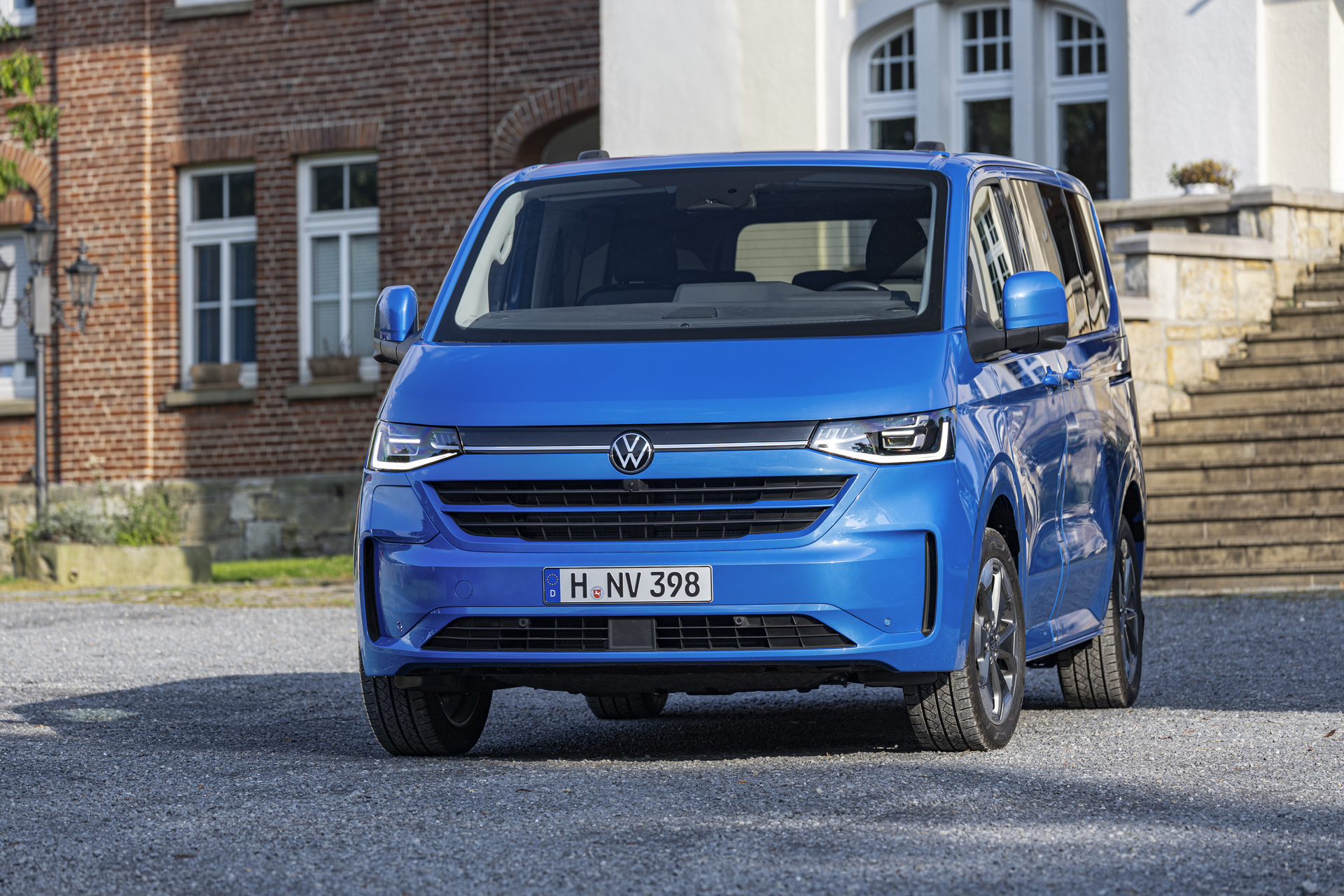
We analyse the 2026 Volkswagen Caravelle with its 110 hp 2.0 TDI, from around €47,300 RRP, and compare it with the Multivan, Vito Tourer, Tourneo Custom and Traveller for ride-hailing fleets and premium transport.
Some cars reinvent themselves every generation to survive. Others simply refine what already worked. The Volkswagen Caravelle belongs to the second group, and in 2026 that is still a virtue, not a limitation.
Volkswagen Caravelle 2026: technical specifications and price from €47,250
The short-wheelbase variant arriving in Spain is fitted with a 110 hp (81 kW) 2.0 TDI, with a top speed of 155 km/h and a homologated consumption of 7.3 l/100 km, which equates to 191 g/km of CO₂. The entry price is €47,250 RRP. It is worth clarifying from the outset that this figure is the manufacturer’s recommended price, excluding dealer discounts, one-off campaigns and incentives such as the Plan Auto+, which can significantly change the final price.
| Model | Fuel | Power (kW) | Power (hp) | Top speed | Consumption | CO₂ | Price from |
|---|---|---|---|---|---|---|---|
| Volkswagen Caravelle 2.0 TDI 110 (short wheelbase) | Diesel | 81 kW | 110 hp | 155 km/h | 7.3 l/100 km | 191 g/km | €47,250 |
Design and interior space: modularity that is beyond dispute
The first thing you notice on climbing in is the sense of industrial robustness, in the best sense. Individual sliding seats, swivelling on versions prepared for it, and a flat floor that allows the cabin to be reconfigured in minutes. It is not the most elegant van from the outside —here the Multivan has the aesthetic advantage— but inside it resolves something many rivals still do not master: the feeling that every screw is exactly where it should be.
2.0 TDI 110 hp engine: consumption and real-world behaviour
With 110 hp you will not win any traffic-light sprints, and that needs saying plainly. But this engine is not designed for that. It is designed to move up to seven passengers smoothly, keep consumption under control —those homologated 7.3 l/100 km come reasonably close to reality on mixed journeys— and cover kilometres without mechanical jolts. It is the classic recipe of the working diesel: usable torque from low revs, a gearbox that does not hunt for high revs, and a consumption curve that rewards steady motorway driving over stop-start urban traffic.
Consumption and environmental label
The C label restricts its access to certain low-emission zones, a nuance that professional fleets operating in large cities already keep firmly in mind when planning routes. It is not a decisive handicap today, but it is a variable to watch as urban mobility regulations evolve over the coming years.
Professional use: the benchmark for ride-hailing fleets
This is where the Caravelle earns its keep. We are talking about a vehicle designed to run eight, ten, twelve hours a day, with passengers who pay to feel comfortable and drivers who need a car that does not spring surprises in the workshop. The service network Volkswagen, the availability of spare parts and a mechanical layout well known to any general mechanic in Spain are arguments that weigh as much as ride comfort. We have already analysed in detail the 8-seat vehicles with the lowest real-world consumption for ride-hailing fleets, and the Caravelle appears there repeatedly, and not by chance.
Caravelle vs Multivan: which to choose?
This is the question we are asked most often. The Multivan takes a more car-like approach, with more refined finishes and a less “commercial” image. The Caravelle, by contrast, prioritises raw functionality: more robust, designed to cover many kilometres without wear showing up as much in your wallet. If use is professional and intensive, the Caravelle wins. If you are after a family vehicle that can also serve private use with a touch more sophistication, the Multivan makes sense. We have already compared in depth the premium approach of large people-carrying MPVs and SUVs in our analysis of how to choose a large MPV or SUV for transporting passengers on long journeys, where rear comfort and noise levels account for much of the decision.
Against the competition: Vito Tourer, Tourneo Custom and Traveller
The Mercedes-Benz Vito Tourer plays the card of brand prestige and a slightly more refined interior finish. The Ford Tourneo Custom responds with a more agile, almost car-like driving dynamic. And the Peugeot Traveller opts for a more modern design and a more accessible entry price. However, none of the three matches the after-sales network or the long-term reliability reputation that the Caravelle has built among Spanish professional fleets, something that becomes especially noticeable beyond 150,000 km, when the real differences between manufacturers start to emerge.
Reliability and total cost of ownership
Here is the real selling point. It is not the cheapest car to buy, but it is one of those that best retains its value in the used market for commercial vehicles adapted for passengers. Predictable maintenance, thoroughly proven mechanics and a second-hand demand that never collapses. For a ride-hailing fleet calculating the cost per kilometre over five years, that weighs more than any difference in initial equipment.
Comparative summary table
| Model | Segment | Engine | Price from | Highmotor rating (1-10) |
|---|---|---|---|---|
| Volkswagen Caravelle | 7-seat MPV | Diesel 2.0 TDI 110 hp | €47,250 | 8.5 |
| Volkswagen Multivan | Premium MPV | Diesel / plug-in hybrid | Not specified | 8.0 |
| Mercedes-Benz Vito Tourer | Premium MPV | Diesel | Not specified | 7.8 |
| Ford Tourneo Custom | MPV | Diesel | Not specified | 7.5 |
| Peugeot Traveller | MPV | Diesel | Not specified | 7.3 |
Highmotor verdict
It is not the most desirable car in its segment, nor the one that looks best in a catalogue photo. But for anyone who needs to move people professionally, with guaranteed reliability and controlled cost of ownership, the Caravelle remains the safest bet on the Spanish market in 2026. And in this business, safety is worth more than shine.
Frequently asked questions
How much does the Volkswagen Caravelle 2026 cost in Spain?
The entry price is €47,250 manufacturer’s recommended RRP for the 110 hp 2.0 TDI in the short wheelbase, excluding dealer discounts and public incentives.
What is the real-world consumption of the Caravelle 2.0 TDI 110?
Homologated consumption stands at 7.3 l/100 km, with emissions of 191 g/km of CO₂, figures that remain reasonably stable on motorway journeys.
Is the Caravelle or the Multivan better for professional use?
For ride-hailing fleets and intensive transport, the Caravelle is more suitable thanks to its robustness and predictable maintenance costs. The Multivan is more oriented towards mixed family use with more refined finishes.
What environmental label does the Volkswagen Caravelle have?
With diesel engines, the Caravelle 2.0 TDI 110 carries a C label, which restricts its access to certain low-emission zones in large Spanish cities.
Technical specifications of this car

 Kia offers an electric range of 10 models, 50 versions and 400 possible combinations
 The seven finalists for the 2027 European Car of the Year (COTY) are exclusively electric
 Peugeot E-208 GTi: a battery-powered toy that revives the spirit of the 1980s sports cars
Deja un comentario