Transporter Volkswagen Furgonetas Buying Guides Tests Review
Review of the Volkswagen Transporter T7: why the new German mid-size van remains a benchmark for self-employed workers in 2026
 Iván Navarro
25 November 2026
5 min.
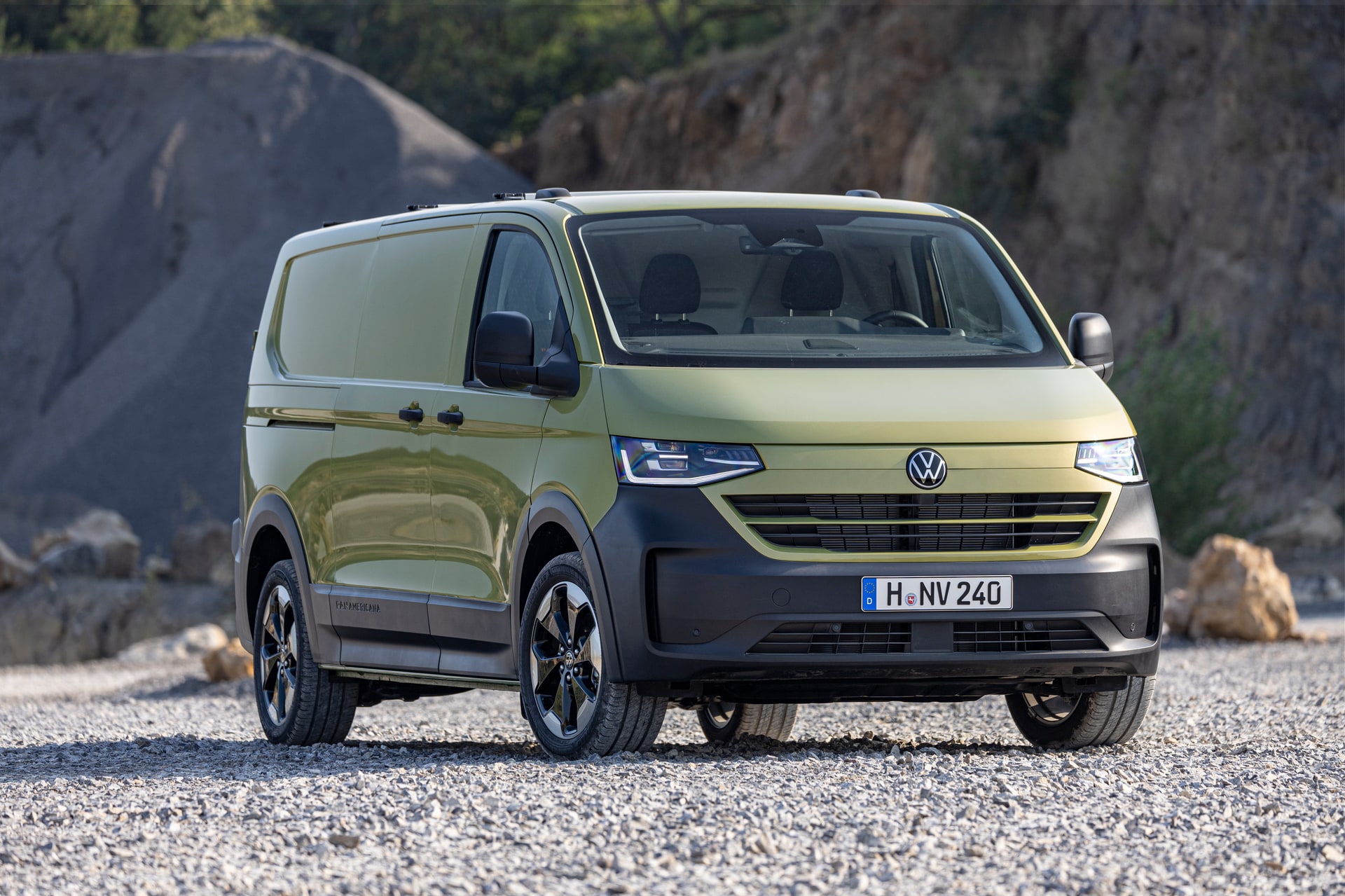
There are vans you buy from the catalogue and vans you buy out of habit. The Volkswagen Transporter has belonged to the second group for more than seventy years, and the T7 generation does not break that inertia — it confirms it. In 2026, with the mid-size van market more competitive than ever, this review analyses whether the Short Wheelbase Van 2.0 TDI 110 CV still deserves the premium the Hannover brand has historically charged.

Design and bodywork: the Short Wheelbase Van as a daily work tool
The four-door bodywork is not trying to surprise. It aims to fit narrow garages, city-centre streets and the daily routine of a plumber, an electrician or a delivery SME that needs to get in and out of loading zones without drama. The result is a van that feels more agile than its size suggests when you look at it from outside.

Interior and technology: the driving position you can feel
Here the Transporter T7 plays in a different league. The dashboard, inherited from the design language we already saw in the Volkswagen Caravelle, delivers a car-like feel that few rivals in this segment match. It is not a van cab in disguise: it is a driving position designed to spend eight hours a day without your body feeling it at the end of the shift.
Engine and mechanics: the 2.0 TDI 110 in depth
The unit tested fits the 110 CV (81 kW) 2.0 TDI diesel, with a top speed of 155 km/h. It is not the most powerful variant in the range, but it makes the most sense for urban deliveries and short intercity trips — the engine is more than enough to cruise at motorway pace without strain, although you should not expect the sporty punch of a fully loaded van.
| Model | Power (CV) | Power (kW) | Top speed | Consumption | CO₂ | Fuel |
|---|---|---|---|---|---|---|
| Volkswagen Transporter T7 Short Wheelbase Van 2.0 TDI 110 | 110 CV | 81 kW | 155 km/h | 7.1 l/100 km | 186 g/km | Diesel |
Real-world consumption and environmental label
The homologated 7.1 l/100 km comes fairly close to what it delivers in real mixed use, provided the van is not constantly loaded to its limit. With 186 g/km of CO₂ there are no surprises: this is a conventional diesel, with no pretensions to an ECO label, aimed at those who need range and reliability above any other consideration.
Payload and versatility for self-employed workers and SMEs
This is where the Transporter T7 earns its keep. The Short Wheelbase Van configuration is especially practical for anyone delivering in urban environments who needs to enter areas with height or length restrictions. For an installer who loads materials every day, the difference between a well-designed van and a poorly used one shows up by the end of the week, not on the first day.
Price and RRP: how much the Transporter T7 costs in 2026
The Short Wheelbase Van 2.0 TDI 110 starts from an indicative RRP of €42,205. It is worth clarifying something many buyers overlook: this figure is the manufacturer’s recommended price, without dealer discounts, one-off campaigns or purchase incentives — the real price you end up paying is almost always different, and it is worth negotiating before signing.
Comparison against its rivals in Spain
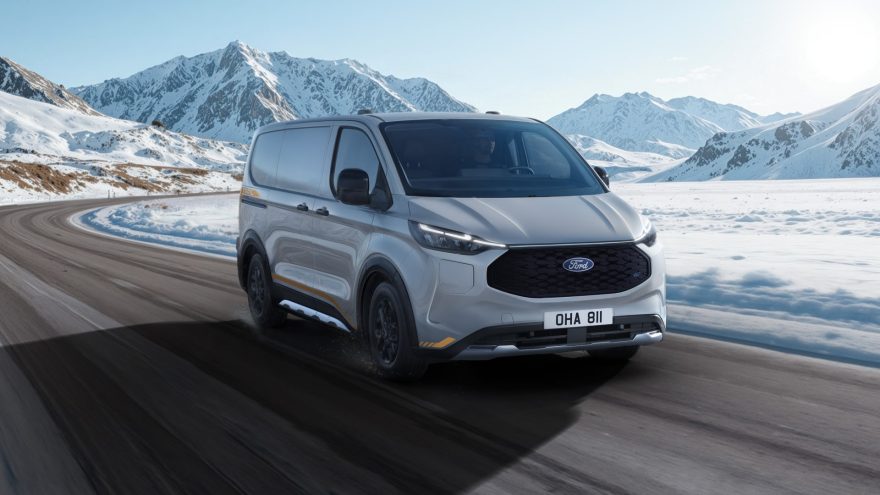
In the mid-size van segment, the Transporter T7 does not compete alone. The Ford Transit Custom remains the most direct rival in sales volume and in its reputation for robustness. The Renault Trafic offers a very widespread dealer network and a focus more oriented to cost per kilometre. The Peugeot Expert and the Opel Vivaro, mechanical cousins within the Stellantis group, stand out for very flexible body configurations and a technological equipment level that has improved considerably in recent years. None of them, though, matches the interior finish feel of the German van — although they also don’t charge the premium demanded by the Volkswagen badge.
For those who want to dig deeper into this comparison with concrete figures for several mid-size diesel vans, Highmotor’s ranking of mid-size diesel vans by payload-to-price ratio is a good starting point.
After-sales network and total cost of ownership
The Volkswagen Commercial Vehicles workshop network in Spain is one of the strongest arguments for a self-employed worker: parts availability, specialised labour and resale values that have historically held their residual value better than many of its rivals. Total cost of ownership is not measured by the initial invoice alone — it is measured by how many times the van is left standing waiting for a part.

Is the Volkswagen Transporter T7 worth it for a self-employed worker in 2026?
It depends on use. If the only criterion is entry price, there are rivals that look cheaper on paper. If the criteria include durability, comfort on long driving days and resale value, the Transporter T7 remains hard to dethrone. It is not the cheapest or the most spectacular option, but it is the one that gives the fewest surprises over a five-year horizon.
| Model | Indicative price | Engine available in Spain | Highmotor rating (1-10) |
|---|---|---|---|
| Volkswagen Transporter T7 Short Wheelbase Van 2.0 TDI 110 | From €42,205 | Diesel | 8.5 |
| Ford Transit Custom | Diesel range depending on version | Diesel | 8 |
| Renault Trafic | Diesel range depending on version | Diesel | 7.5 |
| Peugeot Expert | Diesel range depending on version | Diesel | 7.5 |
| Opel Vivaro | Diesel range depending on version | Diesel | 7.5 |
Frequently asked questions
How much does the Volkswagen Transporter T7 2.0 TDI 110 consume?
According to the official specifications, the homologated consumption is 7.1 l/100 km, with emissions of 186 g/km of CO₂.
What is the price of the Transporter T7 in 2026?
The Short Wheelbase Van 2.0 TDI 110 starts from an indicative RRP of €42,205, the manufacturer’s price without discounts or incentives applied.
Is it better than the Ford Transit Custom or the Renault Trafic?
There is no absolute winner: the Transporter T7 stands out for interior finish and resale value, while its Stellantis rivals and the Ford compete strongly on acquisition cost and dealer network.
Who is the Transporter T7 designed for?
For self-employed workers and SMEs that prioritise durability, comfort on long working days and a well-established after-sales network over the lowest entry price.

 Kia offers an electric range of 10 models, 50 versions and 400 possible combinations
 The seven finalists for the 2027 European Car of the Year (COTY) are exclusively electric
 Peugeot E-208 GTi: a battery-powered toy that revives the spirit of the 1980s sports cars
Deja un comentario