Captur Renault Hybrid Cars Tests Review SUV
Review Renault Captur E-Tech full hybrid: the French urban SUV that redefines city fuel consumption in 2026
 Iván Navarro
10 November 2026
5 min.
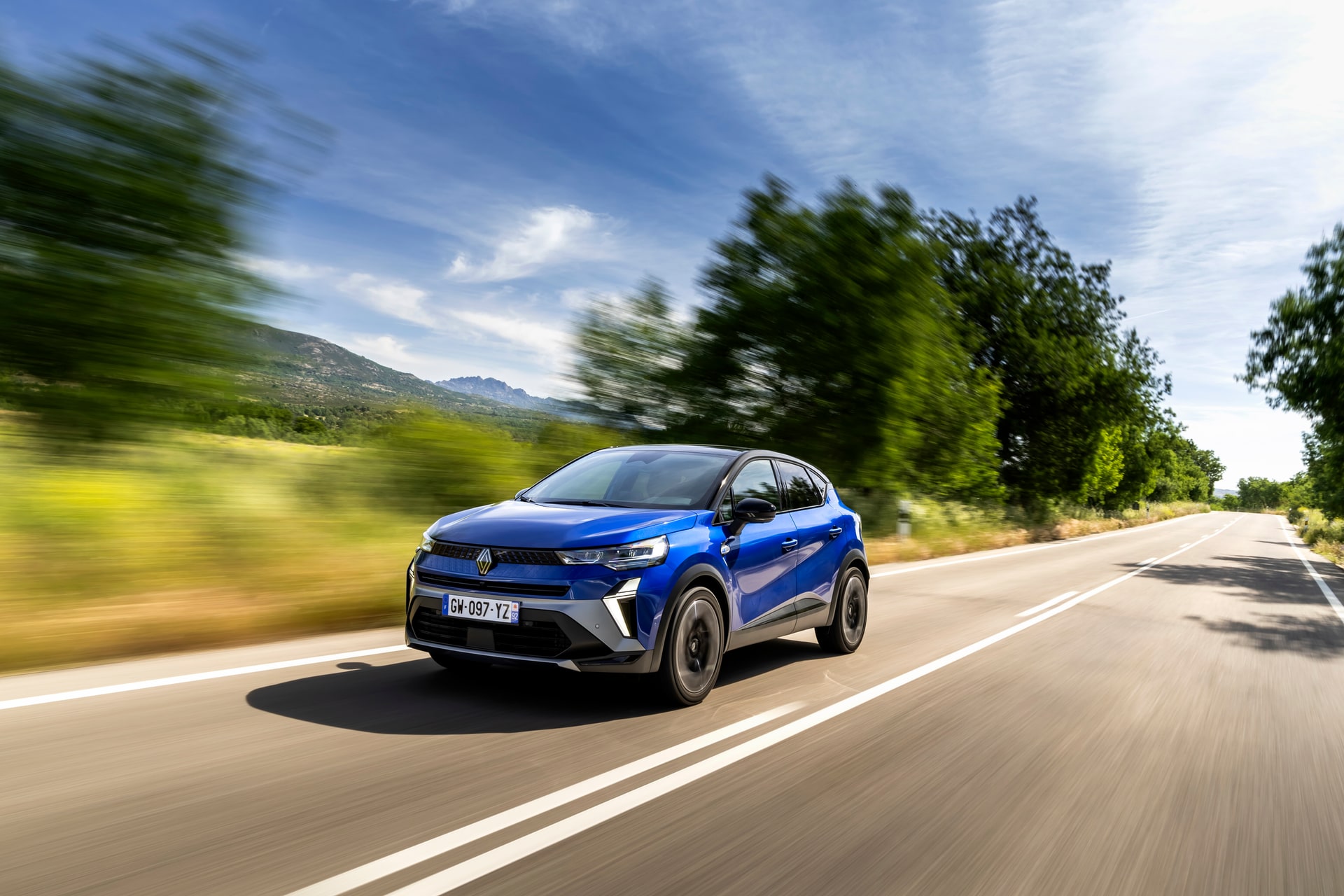
There are cars that do their job, and there are cars that also change the conversation within their segment. The Renault Captur E-Tech full hybrid belongs to the second category. We spent a week with it around Madrid, alternating roundabouts, traffic jams and the occasional trip to the mountains, and the impression it leaves is clear: the French B-SUV has stopped glancing sideways at the Toyota Yaris Cross and now stands toe to toe with it.
Exterior design: the Captur that conquers the city
The bodywork has not changed radically from previous generations, and, to our taste, that is a good decision. The lines remain crisp, with that C-shaped light signature that is already a hallmark of Renault. In the city it moves with an agility that surprises for its roughly 4.2 metres: it parks without drama and the mirrors offer an honest field of view, something not every urban SUV manages.
Interior and on-board technology
The digital instrument cluster and the vertical central screen — inherited from the rest of the Renault range — work smoothly, although the climate control menu is still hidden a couple of steps deeper than we would like. That said, the materials have taken a leap: there are areas with soft-touch trim where there used to be hard plastic, and the whole feels up to what buyers of an urban SUV expect in 2026.
The full hybrid heart: 160 hp and intelligent electric management
Here is the real news. The E-Tech system combines a 1.8 petrol engine with two electric motors and a multimode gearbox without a clutch, delivering a combined output of 160 hp. In practice, Renault states that the car can run up to 80% of the time in electric mode on a typical urban journey, something we noticed in our heavy-traffic tests in the city centre: the combustion engine kicked in almost imperceptibly, especially below 50 km/h.
Renault Captur E-Tech full hybrid technical data sheet
| Version | Power | Top speed | Homologated consumption | CO₂ emissions | Fuel | Starting price |
|---|---|---|---|---|---|---|
| E-Tech full hybrid 1.8 160 Evolution 5dr S/S CVT | 117 kW / 160 hp | 180 km/h | 4.4 l/100 km | 99 g/km | Hybrid (petrol/electric) | €27,935 |
Real-world city consumption: the numbers that matter
The homologated figure of 4.4 l/100 km is, in our experience, fairly replicable in moderate urban traffic. On mixed journeys with some motorway driving, consumption rises, as expected, to around 5.3–5.5 l/100 km. Likewise, on long continuous motorway runs, the full hybrid loses part of its advantage over a modern diesel. In any case, for the use that 80% of buyers in this segment actually make of it — city, commuting, the occasional trip — the Captur E-Tech more than fulfils its role.
Driving behaviour: city and road
The multimode gearbox, which does away with a conventional clutch, takes a moment to get used to: the gear changes are not as instantaneous as in a classic automatic, although once you find the rhythm it is comfortable and quiet. In corners the Captur does not aim to be sporty — it isn’t, and it doesn’t need to be — but the steering is precise and the front end inspires confidence even when loaded.
Price and versions: from €27,935
The indicative RRP starts at around €27,935 for the E-Tech 1.8 160 Evolution version. It is worth remembering that this figure corresponds to the manufacturer’s recommended price, without dealer discounts, one-off campaigns or purchase grants. Buyers looking to reduce that outlay can check the current conditions of the Plan Auto+, the current public aid framework for buying electrified vehicles in Spain.
Renault Captur versus its direct rivals
Toyota Yaris Cross
The Japanese model remains the historical benchmark for real-world consumption, as we already analysed in our review of the Toyota Yaris Cross. Its hybrid system is more conservative in output, although extremely refined after years of development.
Hyundai Kona HEV
The Korean car opts for a more daring design and a technologically generous interior. Its approach as a conventional hybrid positions it as an interesting alternative for anyone who prioritises equipment over the share of urban electric driving.
Nissan Juke Hybrid
The Juke Hybrid, with its strong aesthetic personality, competes more on character than on consumption figures. It is the choice for anyone who wants to stand out visually without giving up the ECO label.
Comparative summary table
| Model | Segment | Engine | Highmotor score (1–10) |
|---|---|---|---|
| Renault Captur E-Tech | B-SUV | Full hybrid | 8.7 |
| Toyota Yaris Cross | B-SUV | Hybrid | 8.5 |
| Hyundai Kona HEV | B-SUV | Hybrid | 8.0 |
| Nissan Juke Hybrid | B-SUV | Hybrid | 7.8 |
Highmotor verdict
The Renault Captur E-Tech full hybrid does not invent a new concept, but it executes it with a maturity it did not previously have. For anyone who mainly drives in the city and on short trips — as we already explained in our guide to hybrid cars for short journeys — it is, in our view, one of the most balanced options on the Spanish market in 2026.
Frequently asked questions
How much does the Renault Captur E-Tech full hybrid really consume in the city?
In our urban tests it comes quite close to the homologated figure of 4.4 l/100 km, provided traffic frequently allows driving below 50 km/h.
Is it better than the Toyota Yaris Cross?
There is no absolute winner: the Yaris Cross remains the benchmark for pure consumption, but the Captur offers more combined power (160 hp) and a more modern interior.
How much does the Renault Captur E-Tech full hybrid cost?
The indicative RRP starts at €27,935, not counting dealer discounts or public aid such as the Plan Auto+.
Can the Renault Captur E-Tech drive in fully electric mode?
It is not a plug-in: it cannot be charged from an external socket, but its full hybrid system allows it to run in electric mode up to 80% of the time on urban journeys, according to manufacturer data.
Technical specifications of this car

 Kia offers an electric range of 10 models, 50 versions and 400 possible combinations
 The seven finalists for the 2027 European Car of the Year (COTY) are exclusively electric
 Peugeot E-208 GTi: a battery-powered toy that revives the spirit of the 1980s sports cars
Deja un comentario