SUV and off-roader: do you know the differences between the two vehicles?
 Victor Alós Yus @sepelaci
30 April 2023
3 min.
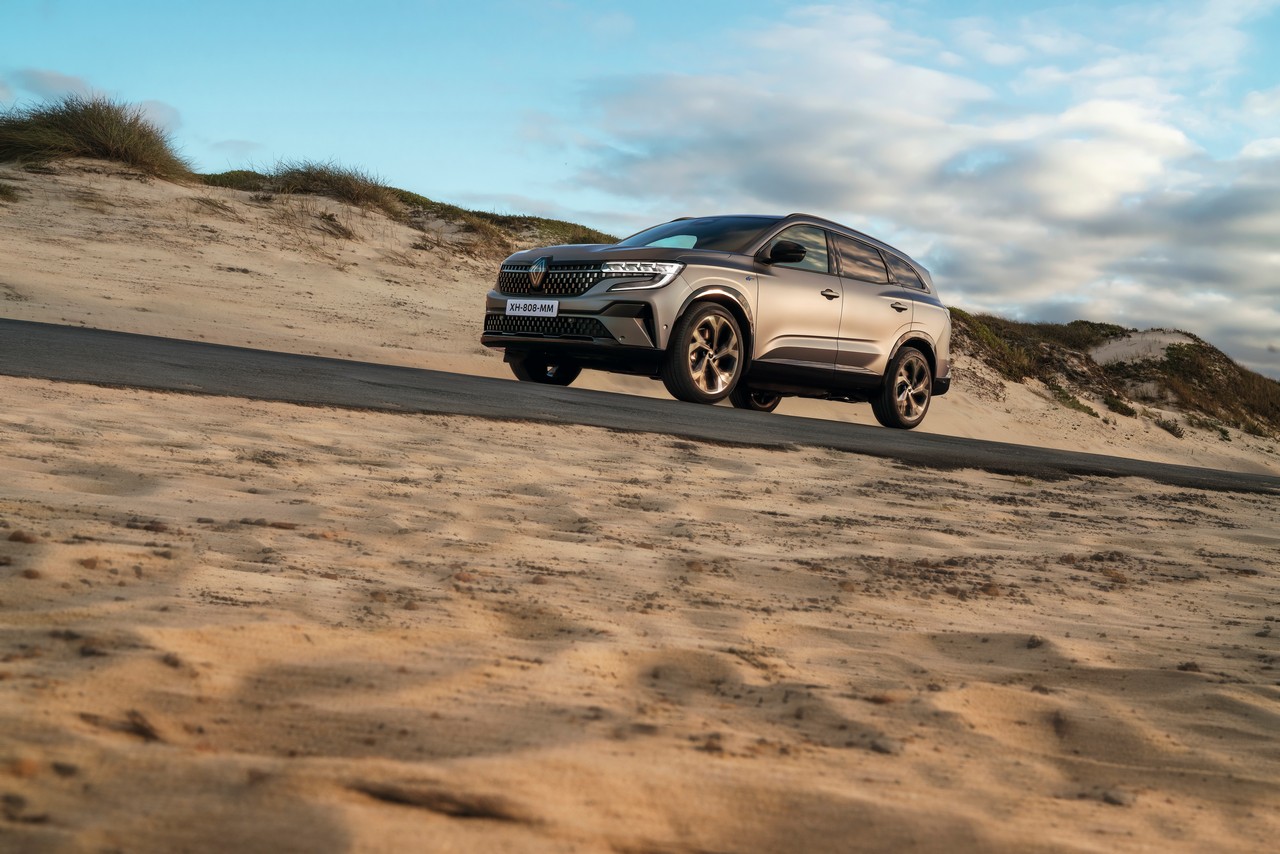
Although SUVs are often seen as off-roaders, the truth is that, although they have crossover capabilities, they do not offer all the features of the latter.
In recent years, the use of SUVs has become fashionable. These vehicles aim to offer a more capable look off the road than a compact or a saloon. However, these models are far from being an off-road vehicle, even though they want to look like one. Do you know the most important differences between an SUV and an off-roader? We are going to explain them to you.
The SUV, a road car with crossover capabilities
SUVs are not off-roaders but rather crossovers. This means they can handle driving on unpaved tracks, although they are not vehicles capable of tackling very difficult terrain. They have a greater ground clearance than more traditional cars, such as saloons or compacts.
This will allow safer driving on unpaved roads. But that does not mean it can tackle larger obstacles, such as potholes and sinkholes. This is because they normally do not have all-wheel drive. This is essential for an off-roader and is not usually necessary for an SUV.
Furthermore, it does not have protective elements on its bodywork. It is a body designed for road driving, which may include some minor protection that turns out to be very fragile when venturing into really rough terrain. So, although it may look like an off-road vehicle, it does not have the elements that would allow it to drive safely across rural terrain.
The off-roader, with more capabilities than the SUV
Unlike SUVs, an off-roader has all-wheel drive. In addition, it has a low-range transfer case, which allows it to overcome obstacles where an SUV would get stuck. The tyres are also off-road tyres and allow access to terrain where considerable effort is required to make progress. The suspension also has greater travel, something necessary for moving across such terrain.
It has more ground clearance, which in many cases is considerable. Furthermore, the bodywork elements are usually more practical than flashy. There are protective elements that cover the most delicate and fragile areas, to prevent them from being damaged by the impact of a stone, branches or any other element that could become a projectile striking the bodywork.
With all this, an off-road vehicle can climb very steep slopes, wade through water crossings of a certain depth and do other things that an SUV cannot overcome, even with fairly complete equipment for its range. You should never confuse an SUV with an off-roader, because if you want to go off-roading with one of these crossovers, you may find that it is not the most suitable vehicle for that purpose.


 Peugeot E-208 GTi: a battery-powered toy that revives the spirit of the 1980s sports cars
 New Lexus ES: luxury grows and goes electric
 First contact with the Dacia Sandero Hybrid 155: power and efficiency from €19,890
Deja un comentario